Skip to content
WAnimals
  • Map
  • Species
  • Parks
  • Diving
Log inCreate account
WAnimals

The guide for travellers and animal lovers: discover, plan and share your wild adventures around the world.

Discover wildlife

  • Species
  • Ecosystems
  • Glossary
  • Tags

Explore places

  • Map
  • Countries
  • Parks
  • Diving

Plan experiences

  • Guides

Learn

  • Blog

Resources

  • About us
  • How we build our profiles
  • Help centre
  • Contact
  • Install the app

Follow us

Account

  • Log in
  • Create account

© 2026 WAnimals. All rights reserved.

Terms of servicePrivacyCookiesLegal notice
MapSpeciesParksDiving
  1. Home
  2. Species
  3. Species groups
  4. Anteaters

Species group · Mammals

Anteaters

WAnimals has 3 species of anteater, in the family Myrmecophagidae.

3 species
1 family
21 countries
110 parks
Weight
3.2 kg – 45.5 kg
Length
47 cm – 2.2 m
Lifespan
9 – 15 years

Ranges calculated from the profiles that record the figure, not from all 3.

All 3 species of anteaters on WAnimals

Each one has its own full profile. This group does not replace them: it brings them together.
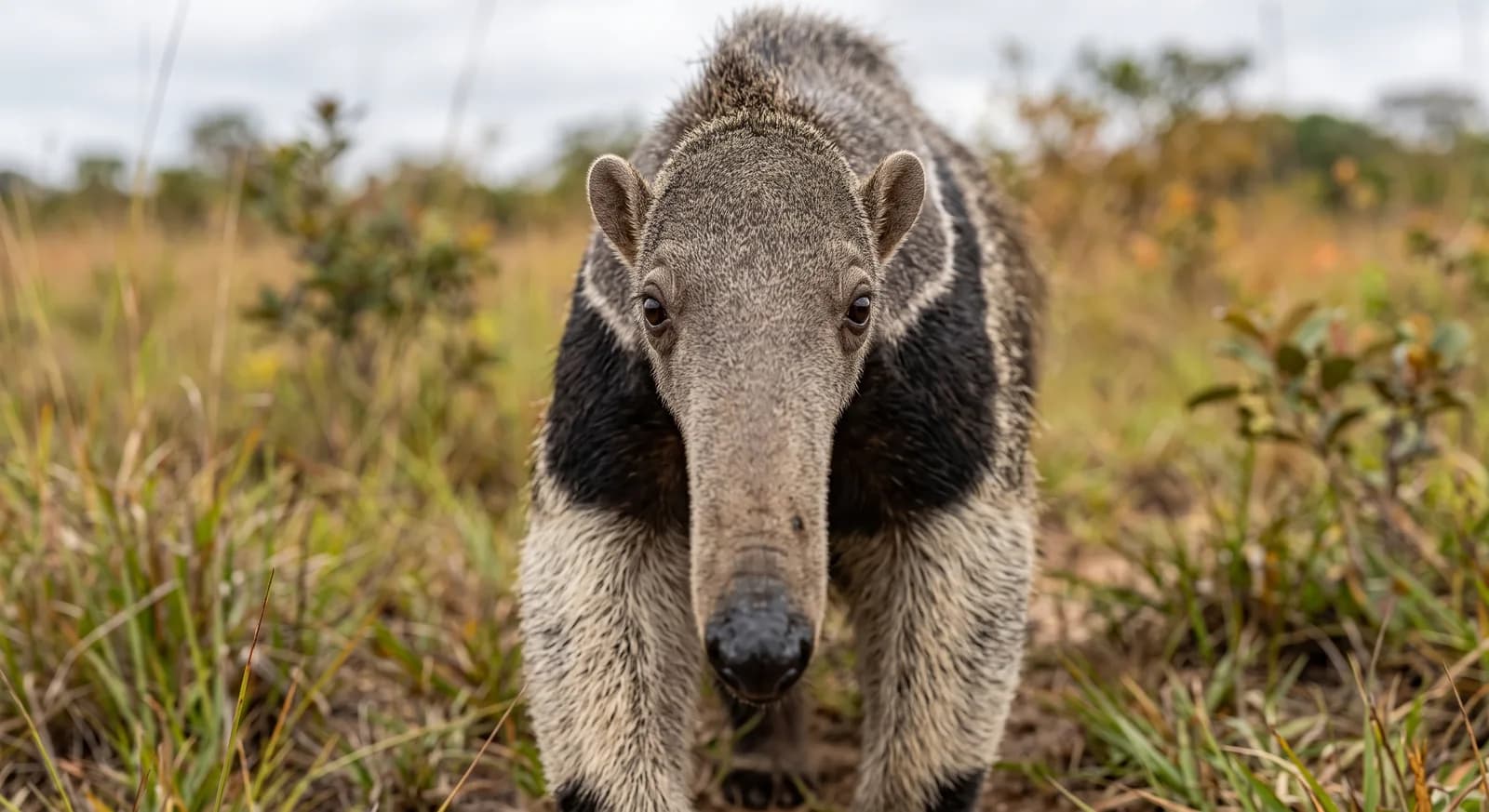
Giant AnteaterVulnerable

Giant Anteater

Myrmecophaga tridactyla

20 countries23 parks
Southern TamanduaLeast Concern

Southern Tamandua

Tamandua tetradactyla

12 countries67 parks
Least Concern

Northern Tamandua

Tamandua mexicana

12 countries46 parks

Conservation status

2 Least Concern1 Vulnerable

1 species in this group is in a threatened category according to the IUCN.

Where they live

Recorded in 21 countries. The ones with the most species in the group:

  • Colombia3
  • Ecuador3
  • Peru3
  • Venezuela3
  • Argentina2
  • Belize2
  • Bolivia2
  • Brazil2
  • Costa Rica2
  • El Salvador2
  • Guatemala2
  • Guyana2
  • Honduras2
  • Mexico2
  • Nicaragua2
  • Panama2
  • Paraguay2
  • Suriname2
  • Trinidad and Tobago2
  • French Guiana1
  • Uruguay1

Where to see them

  • Alto Purús2 species
  • Amacayacu2 species
  • Amboró2 species
  • Bahuaja-Sonene2 species
  • Canaima2 species
  • Central Suriname Nature Reserve2 species
  • Chaco2 species
  • Chapada Diamantina2 species
  • Chiribiquete2 species
  • Copo2 species
  • Defensores del Chaco2 species
  • El Tuparro2 species

Did you know…?

  • It eats up to 30,000 ants and termites a day with a tongue that extends up to 61 cm.

    From Giant Anteater

  • It carries its pup on its back for about a year, the youngster's stripes lining up with its own as camouflage.

    From Giant Anteater

  • It never destroys a nest completely, so that it can come back and feed from the same colony.

    From Giant Anteater

  • When it feels threatened it rears up on its hind legs and tail, spreads its arms and waits motionless with its claws ready, a very characteristic defensive posture.

    From Southern Tamandua

  • It is selective about its prey: it deliberately avoids the most aggressive ants, such as army ants, and prefers species with a less painful bite.

    From Southern Tamandua

  • It can eat several thousand ants and termites a day, but visits each nest for only a few minutes: that way it does not exhaust the nest and avoids collecting too many bites from the soldiers.

    From Northern Tamandua

  • It has not a single tooth: it grinds insects in a muscular gizzard with the help of swallowed grains of sand, just as birds do.

    From Northern Tamandua

Ecosystems

  • Rainforest3
  • Savanna2
  • Grassland1
  • Temperate forest1

See every species group · Explore the species one by one

This page in other languages: Español · Deutsch · Français · Português · Italiano