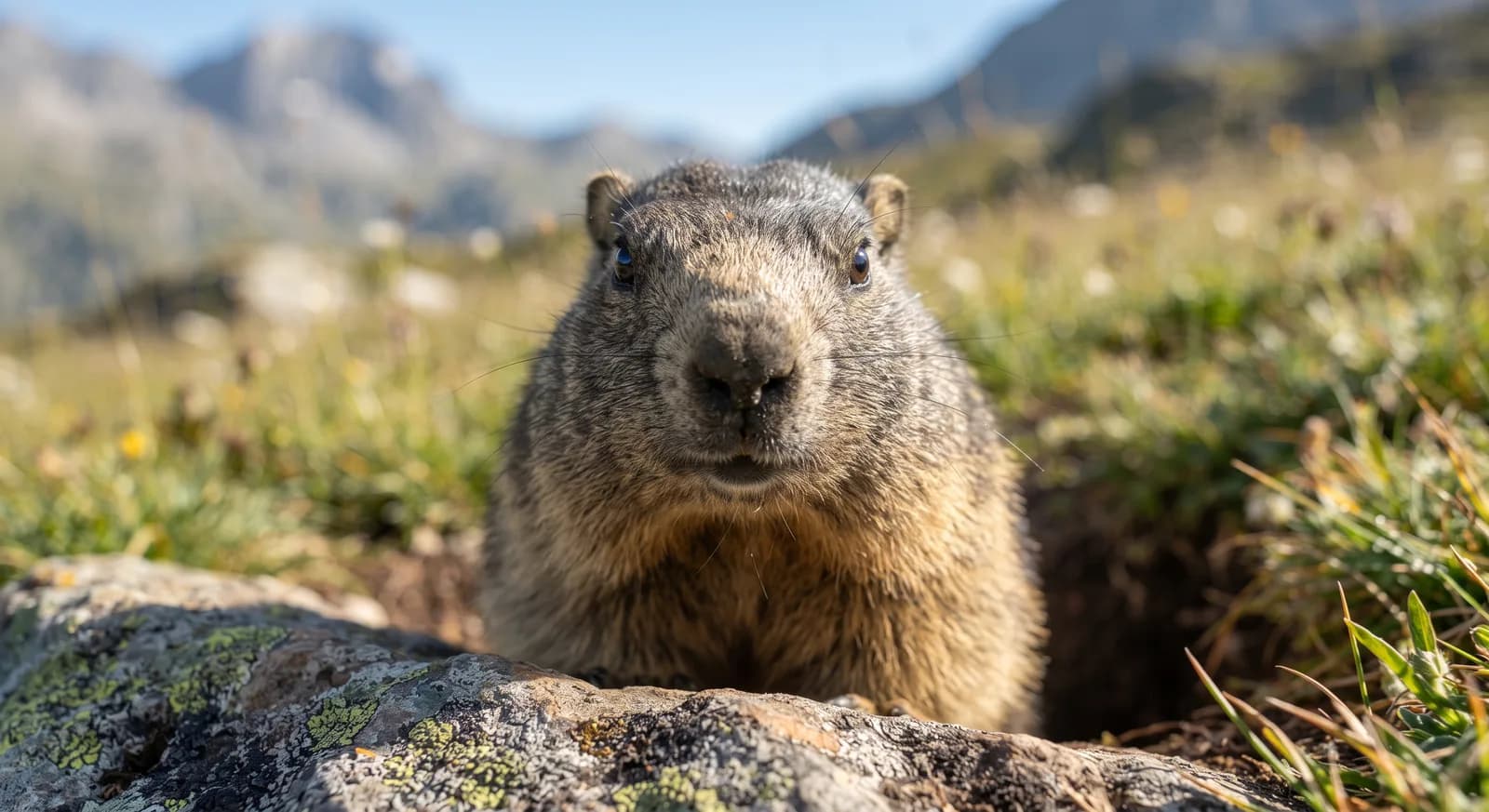
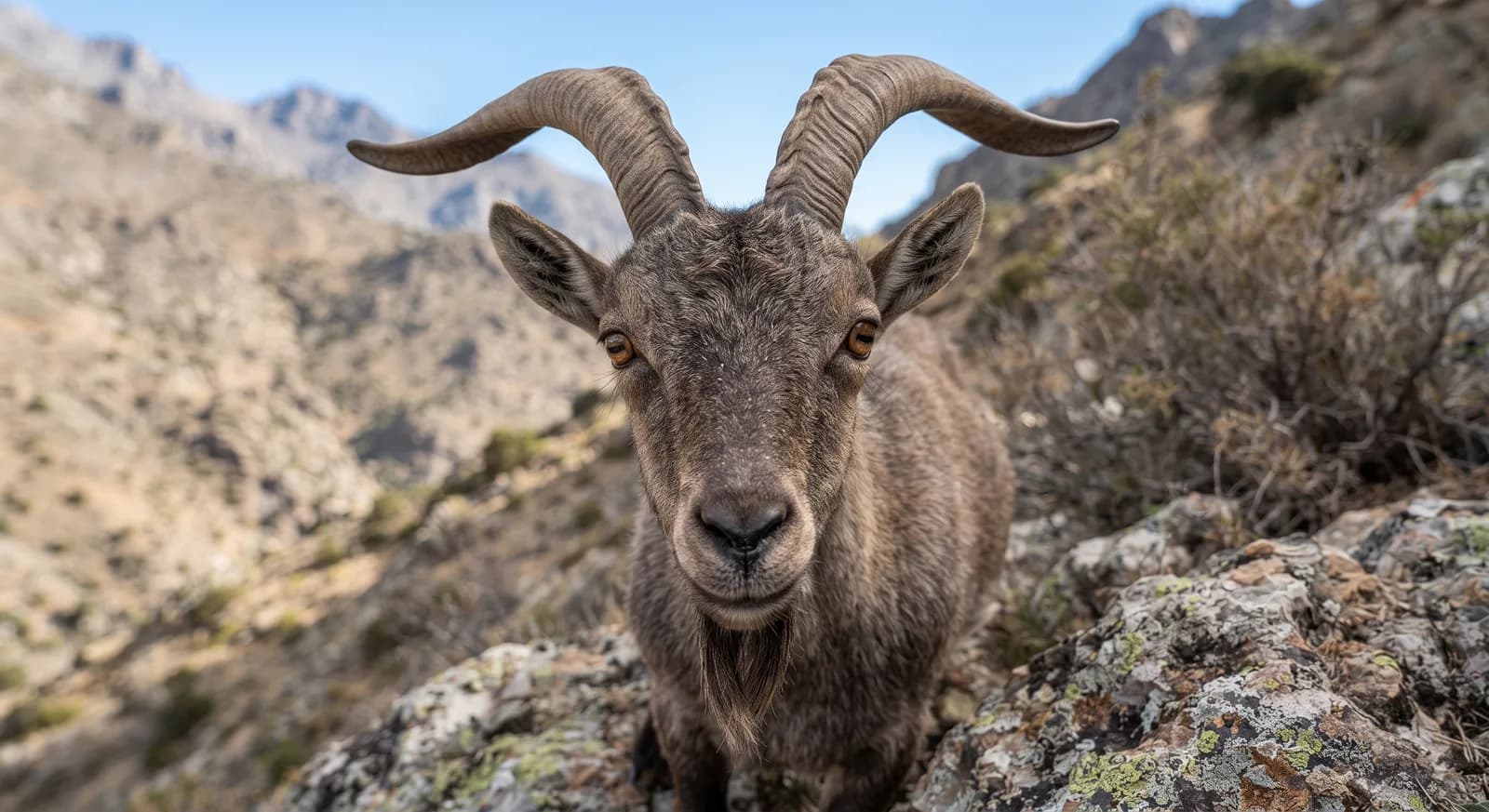
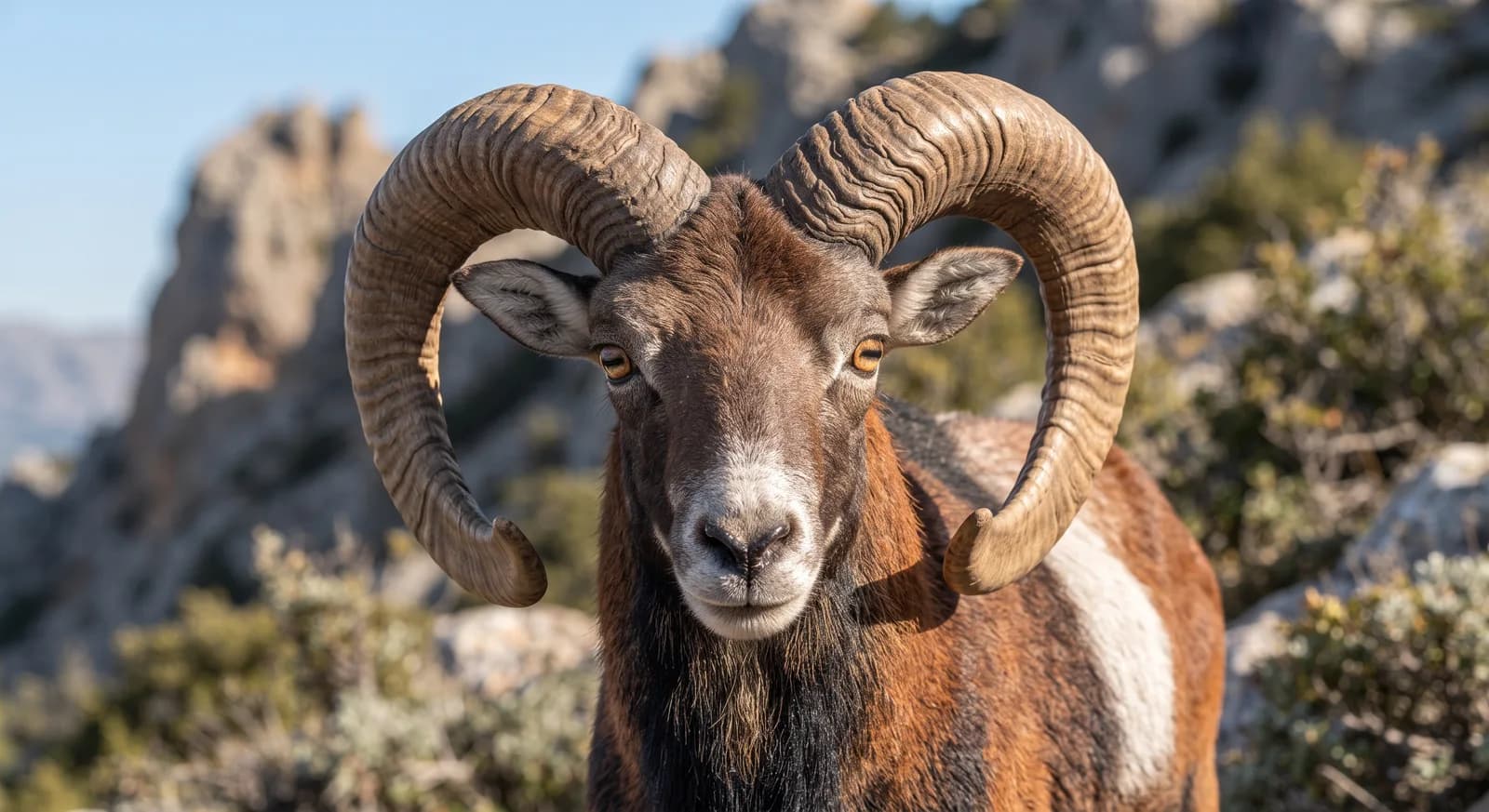
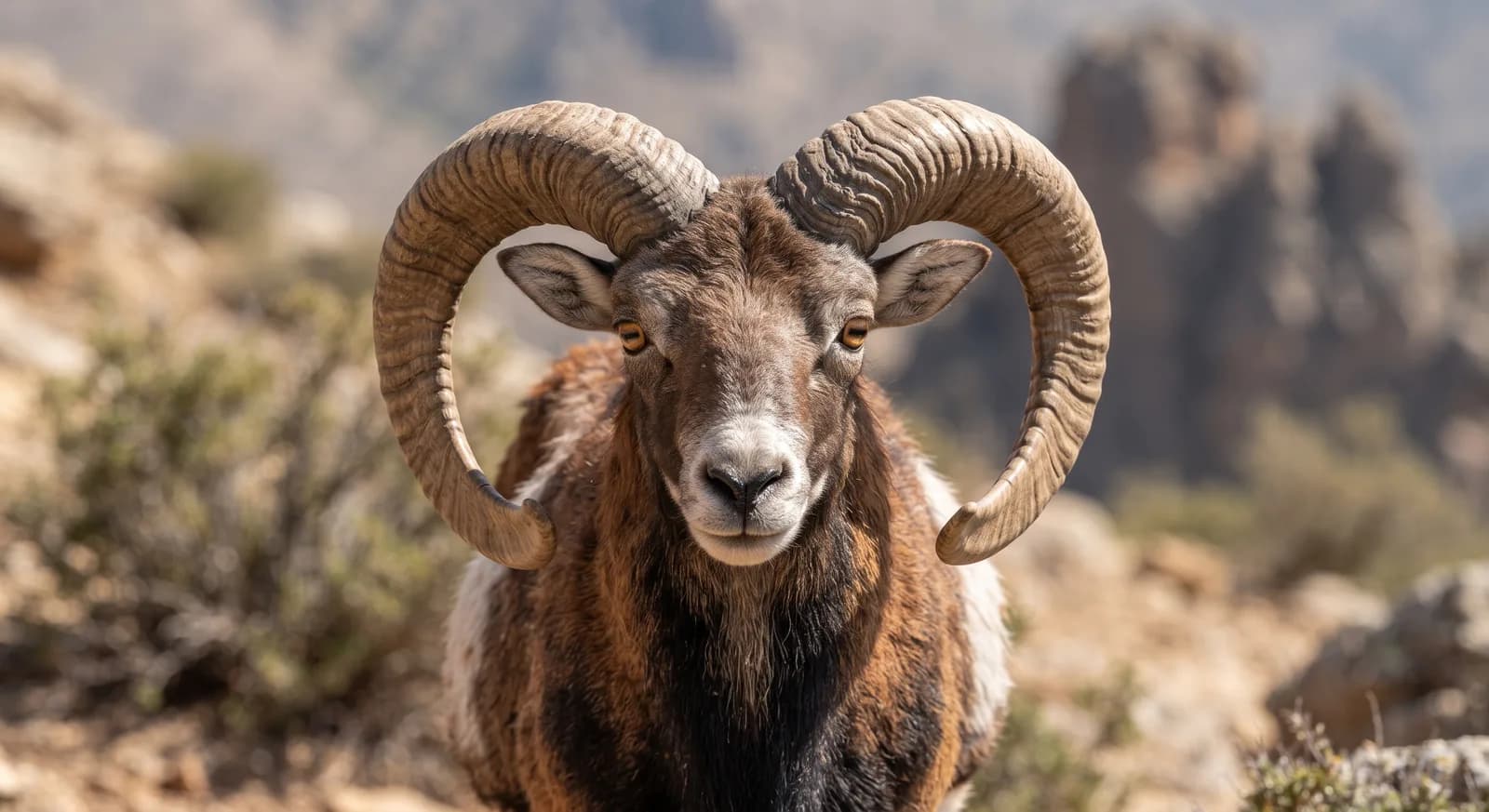
 Least Concern
Mouflon
Ovis orientalis
Mammals · Artiodactyla · Bovidae
Rupicapra rupicapra
The species is abundant and widely distributed; it faces no significant short-term risk.
Its hooves have a unique combination of hard rims for gripping rock and elastic central pads that work like suction cups.
Weight
20 kg – 60 kg
Size
1 m – 1.4 m
Life expectancy
20 years
Diet
Herbivore
Feeds mainly on plants.
Activity
Diurnal
Active mainly during the day.
Social structure
Herd
Lives in large groups as a strategy against predators.
Sources consulted: A-Z Animals · Animal Diversity Web · AnAge (genomics.senescence.info) · Springer (Northern and Southern Chamois chapter) · Wikipedia (Rupicapra) · PMC (population viability analysis table)
Best time: From October to December, during the rut, when the males chase each other across the slopes; in summer it climbs to the tops and in winter it drops down into the woods.
Parks and dive sites where this species has been documented — showing 10 of 11.
Other species in the catalogue with the most in common with Northern Chamois — same habitat, park, country, tags or family.
Based on what we already know about northern chamois.
The pins mark the parks where its presence is documented.