Bony fish · Anguilliformes · Anguillidae
American Eel
Anguilla rostrata
It faces a very high risk of extinction in the wild in the near future. See full glossary
The American eel is a migratory fish found on the eastern coast of North America. The American eel has a slender, snake-like body and is covered by a layer of mucus, which makes the eel appear slimy despite the presence of very small scales. A long dorsal fin runs from the middle of the back and continues into a similar ventral fin. The pelvic fins are absent, and the pectoral fin is relatively small and can be found near the midline, followed by the head and the gills, which are covered. There is variation in colouring, from olive green and brown to a yellowish-green shading and pale grey or white on the belly. Eels living in clear water are paler than those from dark streams.
Weight
4 kg on average
Size
up to 1.5 m
Lifespan
50 years
Activity
Nocturnal
Active mainly at night.
Social structure
Solitary
Lives and hunts alone, joining others only to breed.
Sighting difficulty
Hard
Fun facts
- reproducciónLike its European relative, it travels thousands of kilometres to the Sargasso Sea to breed once and then die.
- The entire species breeds in a single place: the Sargasso Sea. It is panmictic — that is, it functions as a single breeding population in which any individual can mate with any other, whether from Greenland or from Venezuela.
- The larvae, called leptocephali, are transparent and shaped like a willow leaf, and drift with the currents for up to a year before reaching the coast.
- It is semelparous: it breeds only once and dies afterwards.
- The age of maturity is set not by the clock but by size, and size depends on the water: freshwater individuals grow more slowly and take far longer to mature than those in brackish water.
- Its decline has three mutually reinforcing causes: the dams that block its way upstream, the glass-eel fishery and changes in ocean currents.
- Asian demand for eel is a global factor: when one species in the genus is overexploited, the pressure shifts to the next.
Life cycle & biology
- Skeleton type
- Vertebrate - internal bony skeleton (bony fish)
- Habitat & environment
- Catadromous: it lives in rivers, estuaries and lakes on the Atlantic side of the Americas and migrates to the Sargasso Sea to spawn and die
- Sexual maturity
- 4.5 years
Sources consulted: https://es.wikipedia.org/wiki/Anguilla_rostrata
Where to find it
See its range on the interactive mapWhere to watch it
Parques y spots de buceo donde se ha documentado esta especie — se muestran 19 de 44 documentados.
Related species
Other species in the catalogue with the most in common with American Eel — same habitat, park, country, tags or family.
Longnose Gar
Lepisosteus osseus
Channel Catfish
Ictalurus punctatus
 Least Concern
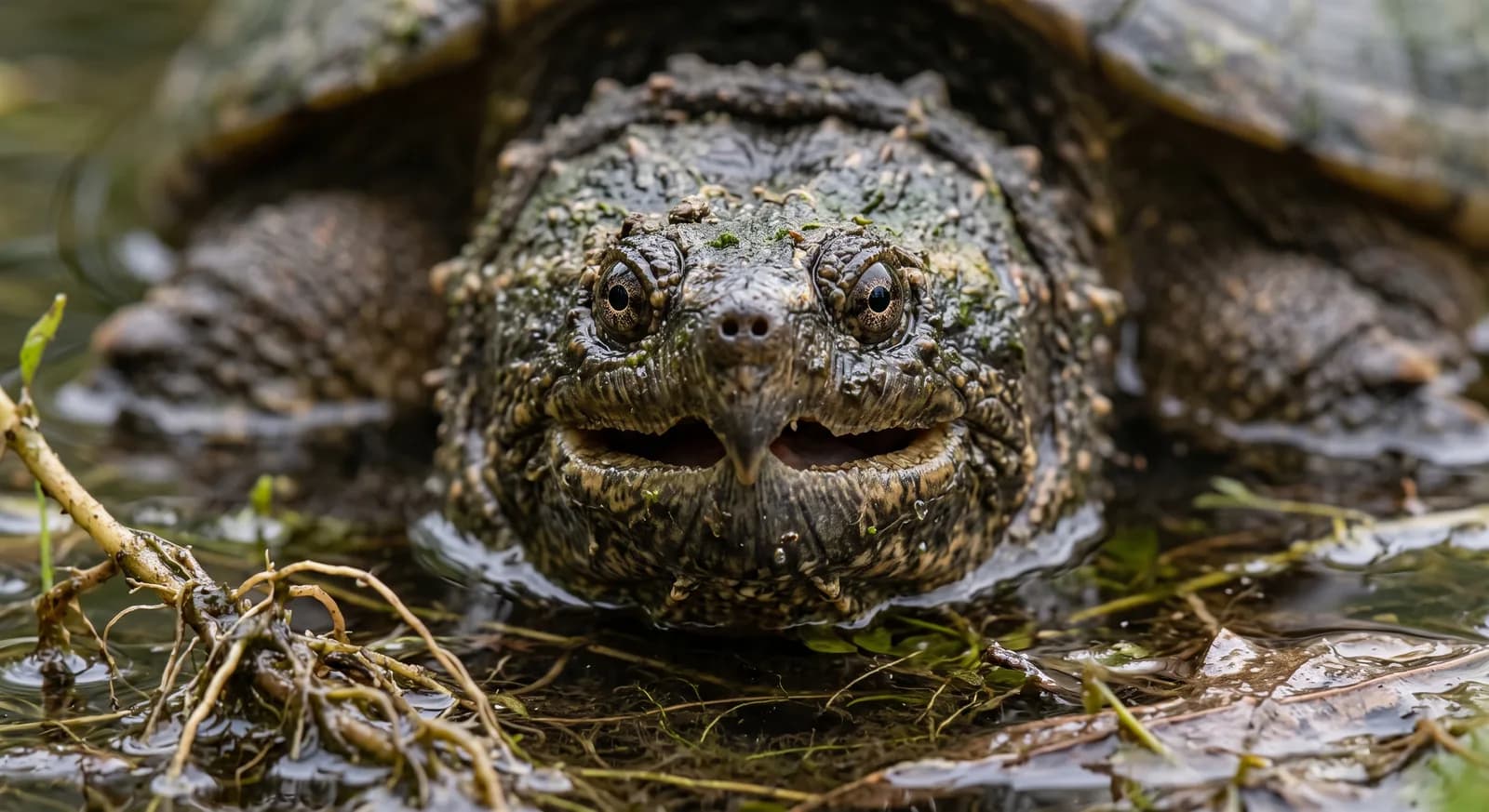
Common Snapping Turtle
Chelydra serpentina
Alligator Snapping Turtle
Macrochelys temminckii
American Bullfrog
Lithobates catesbeianus
Greater Siren
Siren lacertina
How to help
The american eel is classified as endangered. Organizations such as UICN, WWF y Wildlife Conservation Society work specifically on its conservation and that of its habitat; looking into their programs is a good starting point if you want to get involved.
It's documented in 9 real protected areas — part of why protecting these places matters for its conservation.
Keep exploring
Based on what we already know about american eel.
Comments
Share an experience, a fun fact or a tip for seeing the american eel.
Be the first to comment.