One of the 4 hawk-moths on WAnimals
Insects · Lepidoptera · Sphingidae
Carolina Sphinx
Manduca sexta
It has not yet been assessed against the IUCN criteria. See full glossary
Manduca sexta is an American lepidopteran of the family Sphingidae, also known as the tobacco hornworm. In its larval stage it feeds on potato, tobacco, tomato and other plants of the family Solanaceae, and as an adult it takes nectar from certain flowers. It is a holometabolous insect commonly used as a model organism in neurobiology, because of its accessible nervous system, its short life cycle and the fact that it is relatively easy to keep in the laboratory. The larval stages are the most used, because they are easy to dissect and to isolate organs from.
Size
9 cm – 12 cm
Diet
Herbivore
Feeds mainly on plants.
Activity
Nocturnal
Active mainly at night.
Social structure
Solitary
Lives and hunts alone, joining others only to breed.
Sighting difficulty
Unknown
Fun facts
- It is one of the classic model organisms in insect physiology: its size makes it easy to dissect and instrument, and many aspects of insect metamorphosis, flight and nervous system were first studied in it.
- Its caterpillar sequesters the nicotine from tobacco and exhales it through lateral pores, which drives off the wolf spiders that would prey on it: a literal case of defensive bad breath.
- The adults feed while hovering and pollinate long-tubed night-flowering plants, with which they have coevolved.
- It is one of the most widely used model insects in the world in physiology and neurobiology: its large size, easy rearing and accessible nervous system have made it the entomological equivalent of the laboratory mouse.
- Much of what we know about the hormones of insect metamorphosis was discovered with it.
- Its caterpillar sequesters nicotine from the tobacco it eats and breathes it out through lateral pores; that nicotine-laden breath drives off the wolf spiders that prey on it. The mechanism was described in 2013 and christened defensive halitosis.
- The adult sips nectar while hovering, with a very long proboscis, and is an important pollinator of long-trumpeted night-blooming flowers.
- The caterpillar has a horn at its rear end, harmless despite its appearance, which gives it the name of hornworm.
Life cycle & biology
- Skeleton type
- Invertebrate - chitin exoskeleton (insect)
- Habitat & environment
- Crops and open ground in the Americas with nightshades
Sources consulted: https://es.wikipedia.org/wiki/Manduca_sexta
Where to find it
See its range on the interactive mapWhere to watch it
Parques y spots de buceo donde se ha documentado esta especie — se muestran 10 de 70 documentados.
Related species
Other species in the catalogue with the most in common with Carolina Sphinx — same habitat, park, country, tags or family.
Ord's Kangaroo Rat
Dipodomys ordii
Hispid Cotton Rat
Sigmodon hispidus
Garden Tiger
Arctia caja
Black-tailed Jackrabbit
Lepus californicus
Antelope Jackrabbit
Lepus alleni
 Least Concern
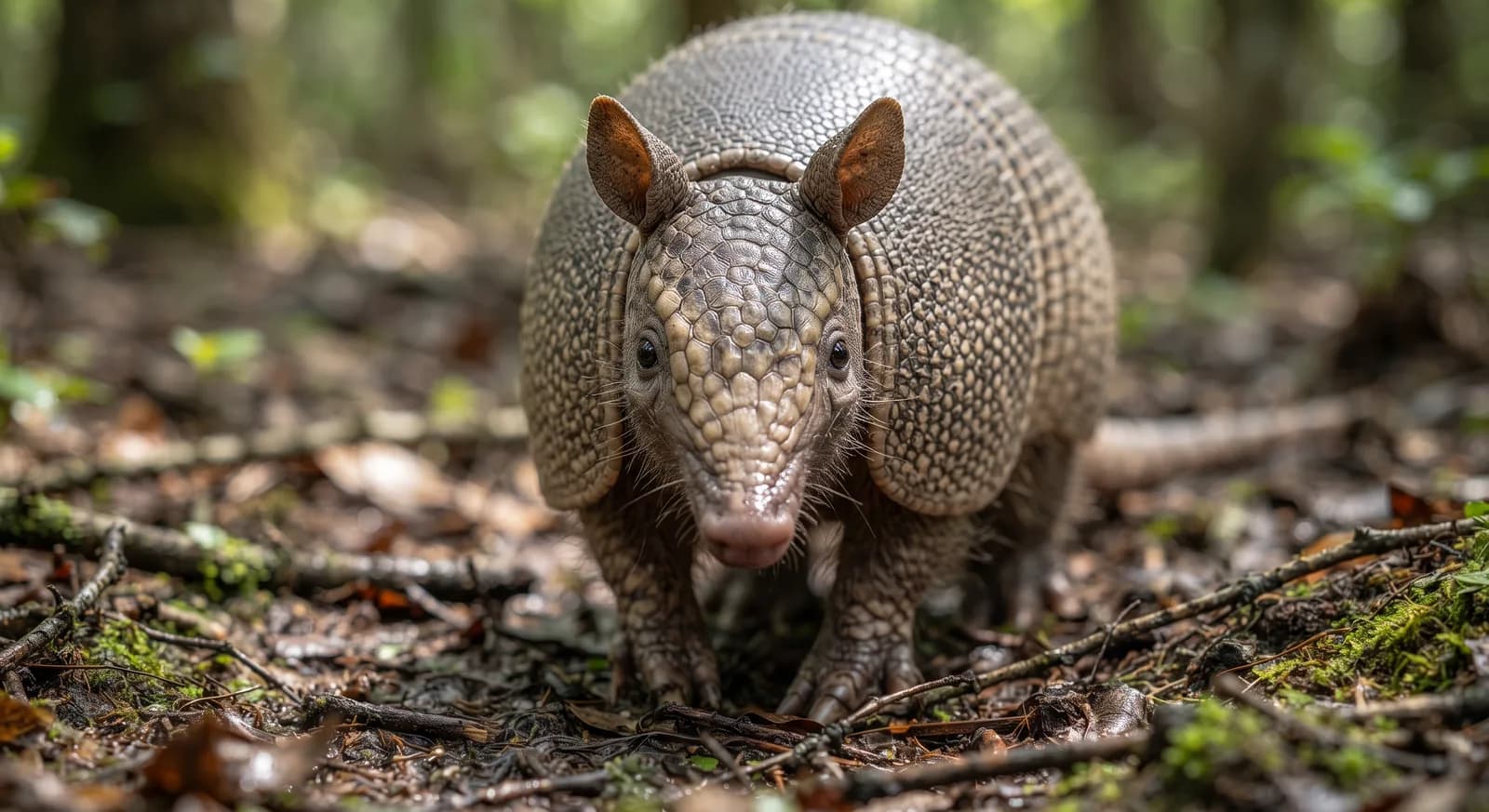
Nine-banded Armadillo
Dasypus novemcinctus
Keep exploring
Based on what we already know about carolina sphinx.
Comments
Share an experience, a fun fact or a tip for seeing the carolina sphinx.
Be the first to comment.