Species group · Birds
Hummingbirds
WAnimals has 11 species of hummingbird, all in the family Trochilidae.
- 11 species
- 1 family
- 24 countries
- 114 parks
- Weight
- 2 g – 24 g
- Length
- 7 cm – 25 cm
- Lifespan
- 5 – 8 years
Ranges calculated from the entries that record the figure, not from all 11.
All 11 species of hummingbirds on WAnimals
Each one has its own full entry. This group does not replace them: it brings them together.
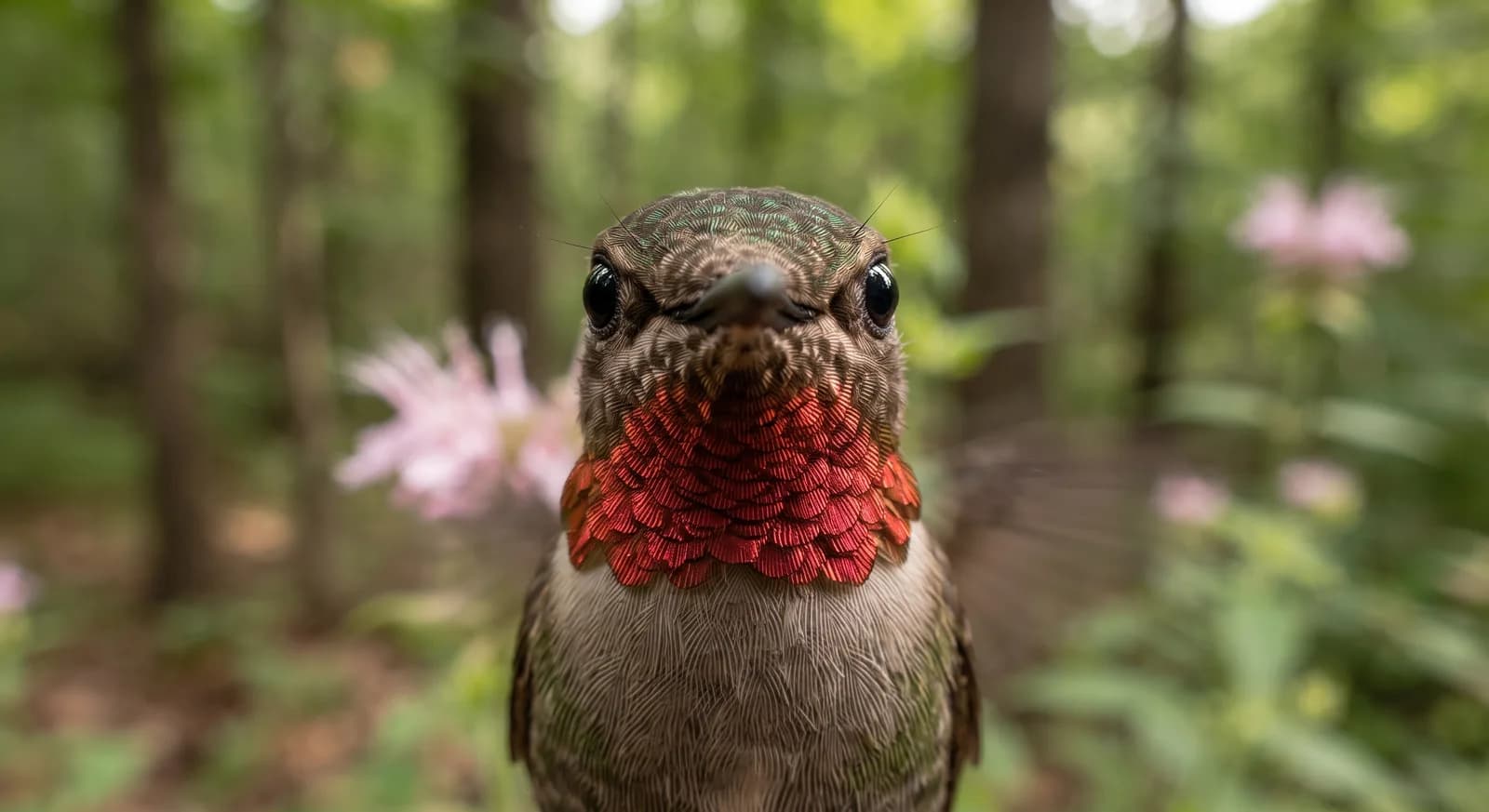 Least Concern
Ruby-Throated Hummingbird
Archilochus colubris
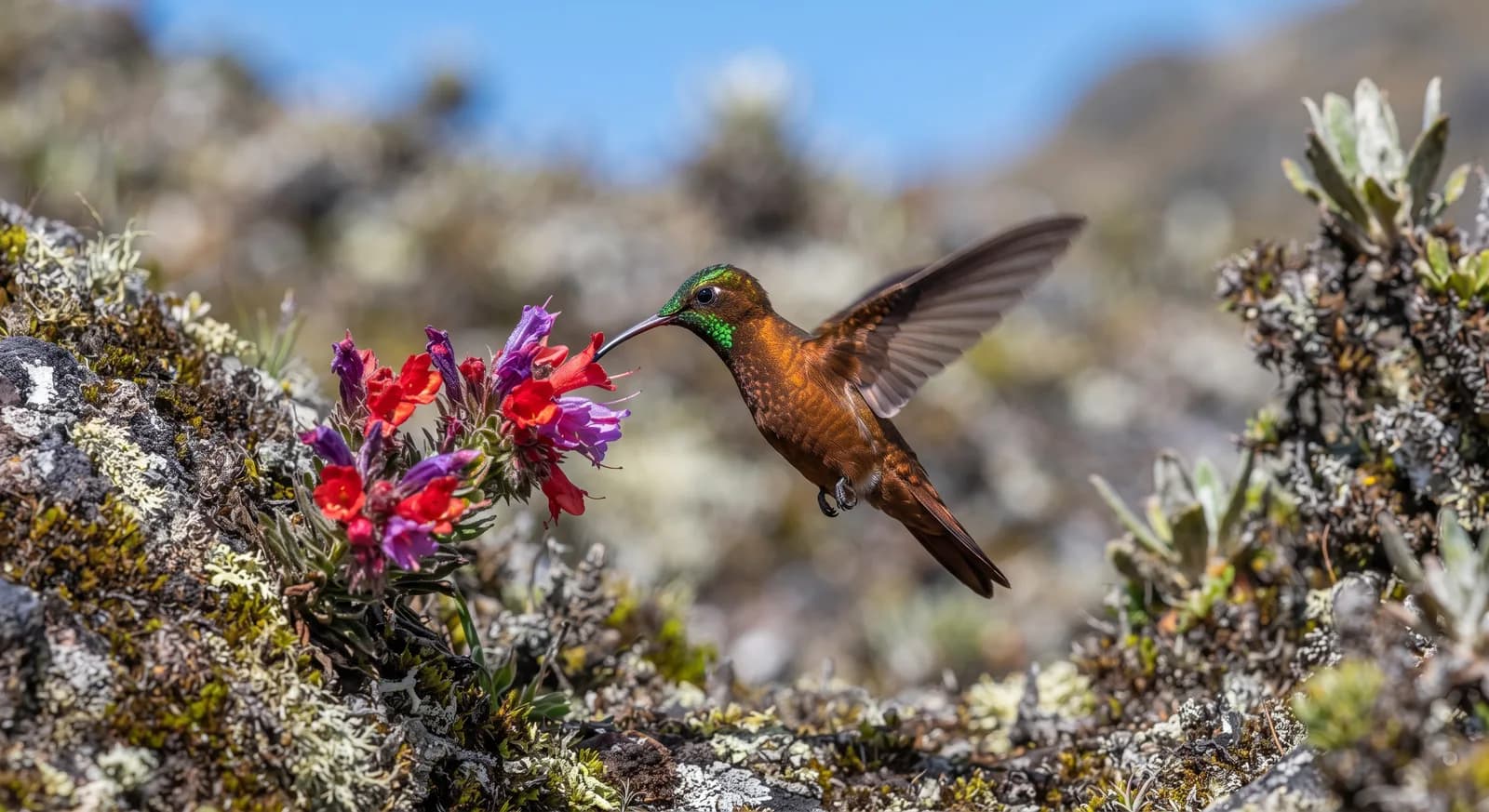 Least Concern
Shining Sunbeam
Aglaeactis cupripennis
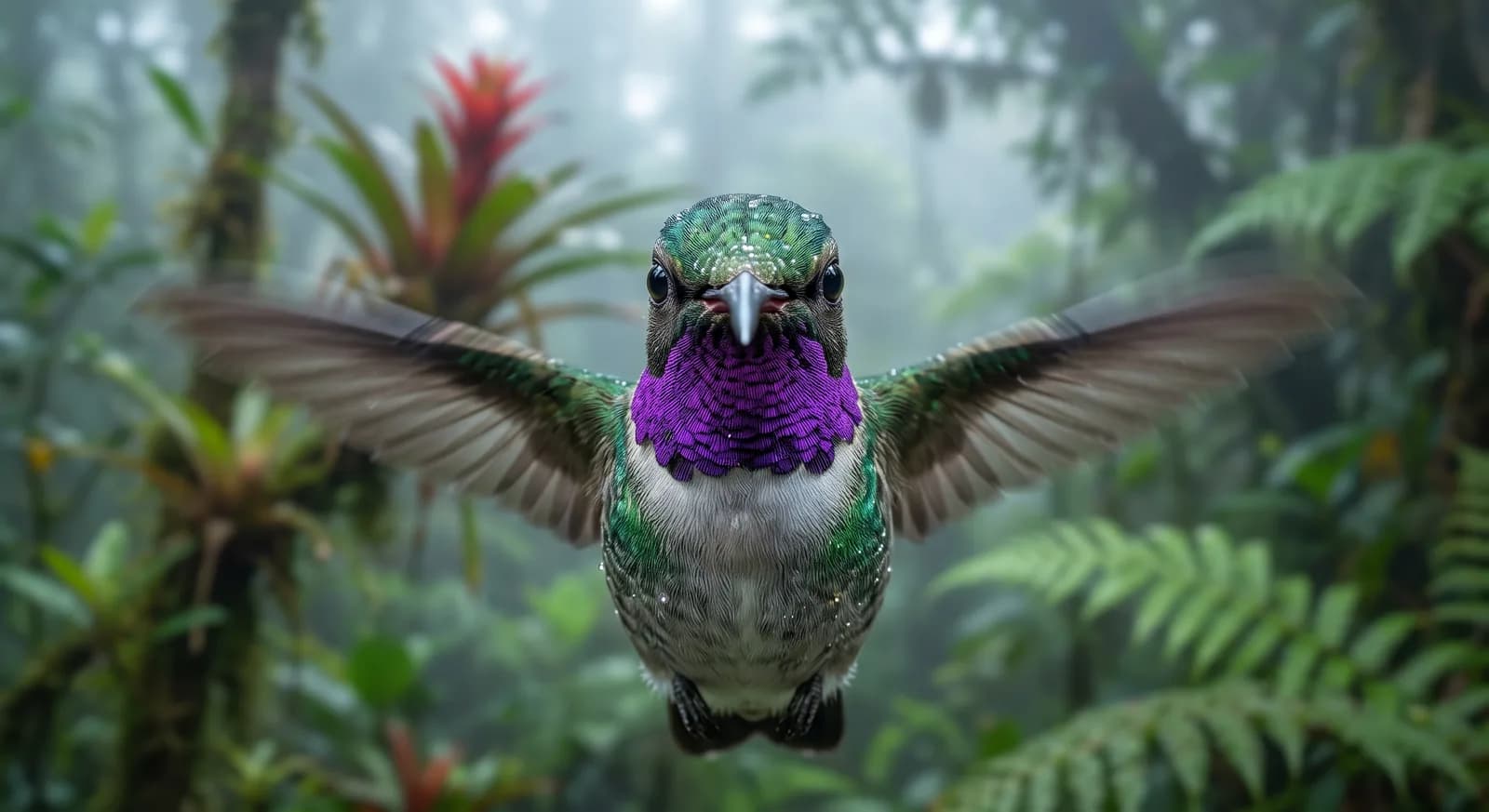 Least Concern
Purple-throated Mountain-gem
Lampornis calolaemus
Sword-billed Hummingbird
Ensifera ensifera
Crimson Topaz
Topaza pella
Anna's Hummingbird
Calypte anna
Giant Hummingbird
Patagona gigas
Volcano Hummingbird
Selasphorus flammula
Lucifer Hummingbird
Calothorax lucifer
Juan Fernandez Firecrown
Sephanoides fernandensis
Marvelous Spatuletail
Loddigesia mirabilis
Conservation status
2 especies in this group están en alguna categoría de riesgo real según la UICN.
See the global conservation statusWhere they live
Recorded in 24 countries. The ones with the most species in the group:
Where to see them
Did you know…
Its heart can beat up to 1,200 times a minute in flight.
It migrates non-stop for more than 800 km across the Gulf of Mexico.
It feeds on nectar, taking small insects for protein.
Its iridescence is on the rump, not the throat: from the front it looks like a plain brown hummingbird, and only when it turns does it show a flash of copper and violet.
From Shining Sunbeam
It lives above 4,000 metres at some points in the Andes, where the night-time temperature drops below zero all year round, and it depends on nightly torpor to survive.
From Shining Sunbeam
It pollinates the frailejones (Espeletia) and other páramo plants, an ecosystem that exists only in the northern Andes and that is the main regulator of that region's water supply.
From Shining Sunbeam
It is one of the commonest species at the feeders of the Costa Rican reserves, and its territorial behaviour means a single male can monopolise a feeder by driving off dozens of other birds.
It pierces the base of tubular flowers to steal the nectar without pollinating them, behaviour known as nectar robbing that it shares with several short-billed hummingbirds.