One of the 3 peccaries on WAnimals
Mammals · Artiodactyla · Tayassuidae
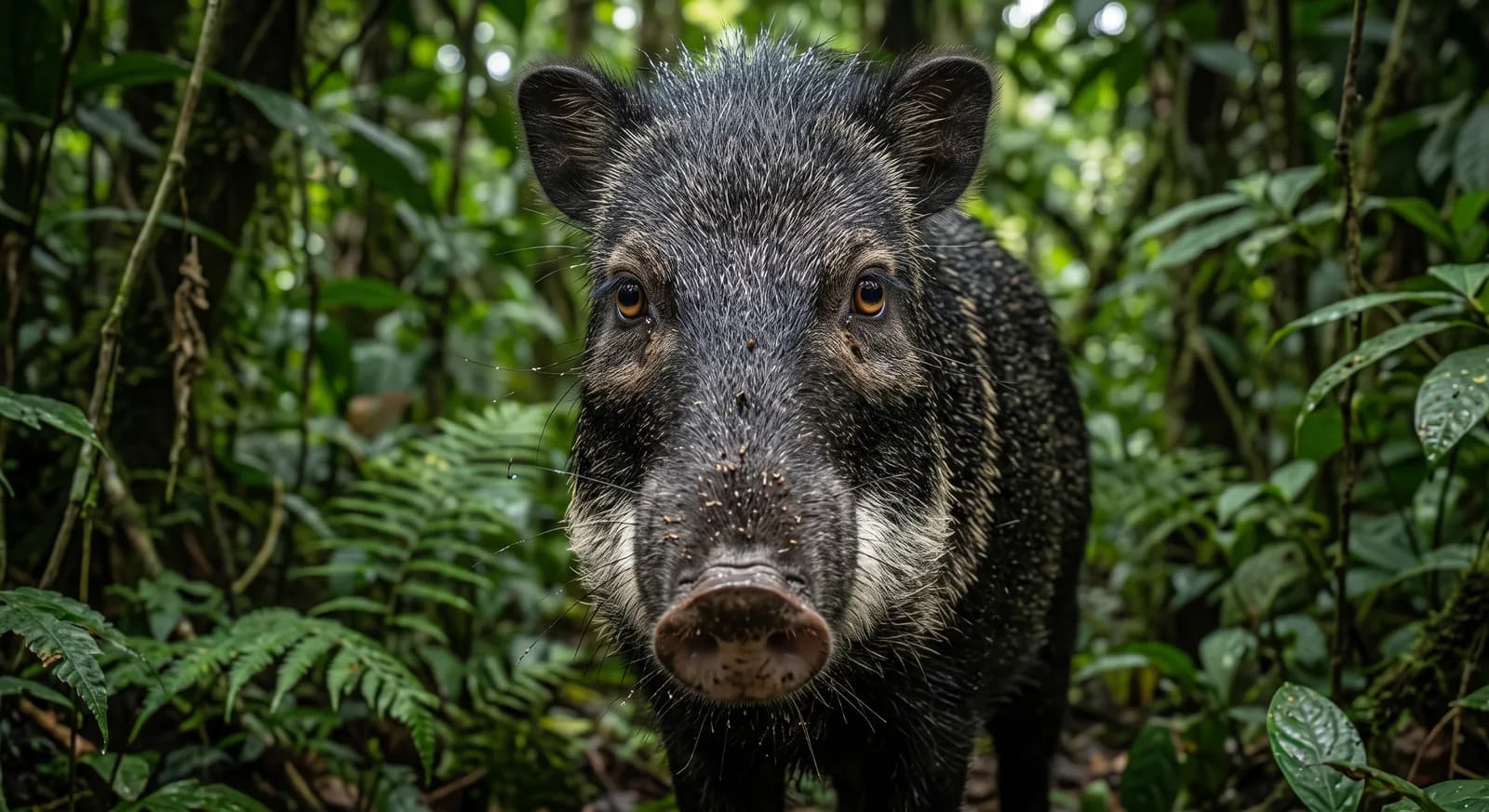
White-Lipped Peccary
Tayassu pecari
It faces a high risk of extinction in the wild over the medium term. See full glossary
The white-lipped peccary forms the largest herds of any Neotropical ungulate: groups of fifty to several hundred animals that move through the forest together, turning over the leaf litter in search of fruit, roots and invertebrates. It owes its name to the white patch on its lips. Its passage leaves the ground churned and the pools wallowed, and those wallows are essential microhabitats for amphibians and reptiles. It needs large, continuous forests, and disappears as soon as they are fragmented.
Weight
25 kg – 40 kg
Size
90 cm – 1.4 m
Lifespan
13 years
Diet
Omnivore
Combines animal and plant food depending on availability.
Activity
Diurnal
Active mainly during the day.
Sighting difficulty
Moderate
Fun facts
- When the herd feels threatened it clashes its canines together, producing a collective clattering that carries a long way and that has made more than one jaguar back off.
- Its wallows, the pools it opens and maintains as it passes, work as breeding grounds for frogs and invertebrates: where the white-lipped peccary disappears, several amphibian species disappear with it.
Life cycle & biology
- Skeleton type
- Vertebrate - internal bony skeleton (mammal)
- Habitat & environment
- Continuous rainforest, dry forest and wetlands of Central and South America
- Sexual maturity
- 18 months
- Gestation / incubation
- 5.2 months
- Litter / clutch size
- 2
Sources consulted: https://es.wikipedia.org/wiki/Tayassu_pecari
Where to find it
See its range on the interactive mapWhere to watch it
Parques y spots de buceo donde se ha documentado esta especie — se muestran 10 de 15 documentados.
Related species
Other species in the catalogue with the most in common with White-Lipped Peccary — same habitat, park, country, tags or family.
Chacoan Peccary
Catagonus wagneri
 Vulnerable
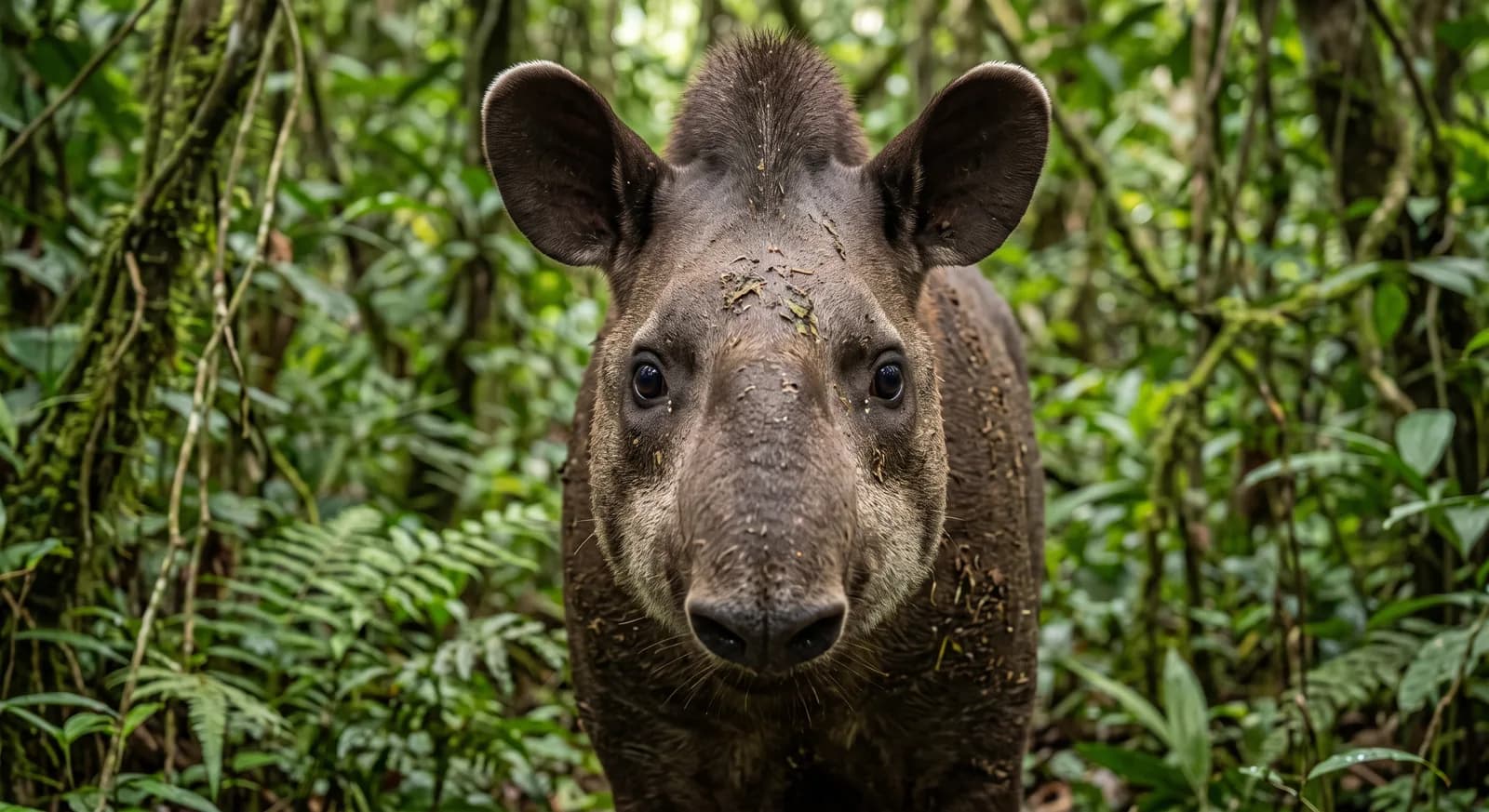
Lowland Tapir
Tapirus terrestris
 Vulnerable
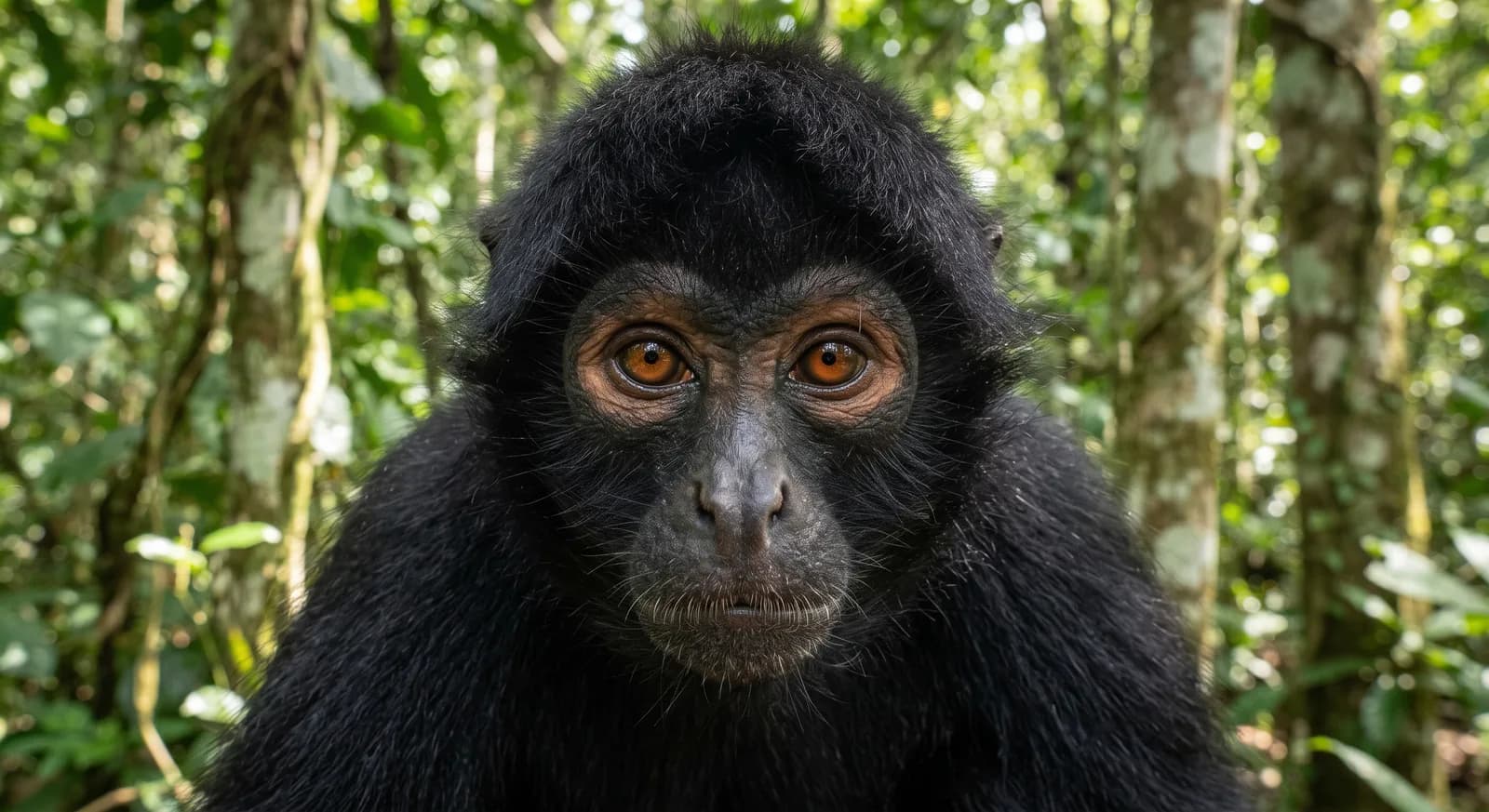
Red-faced Black Spider Monkey
Ateles paniscus
Northern Pygmy Marmoset
Cebuella pygmaea
Red-Footed Tortoise
Chelonoidis carbonarius
 Vulnerable
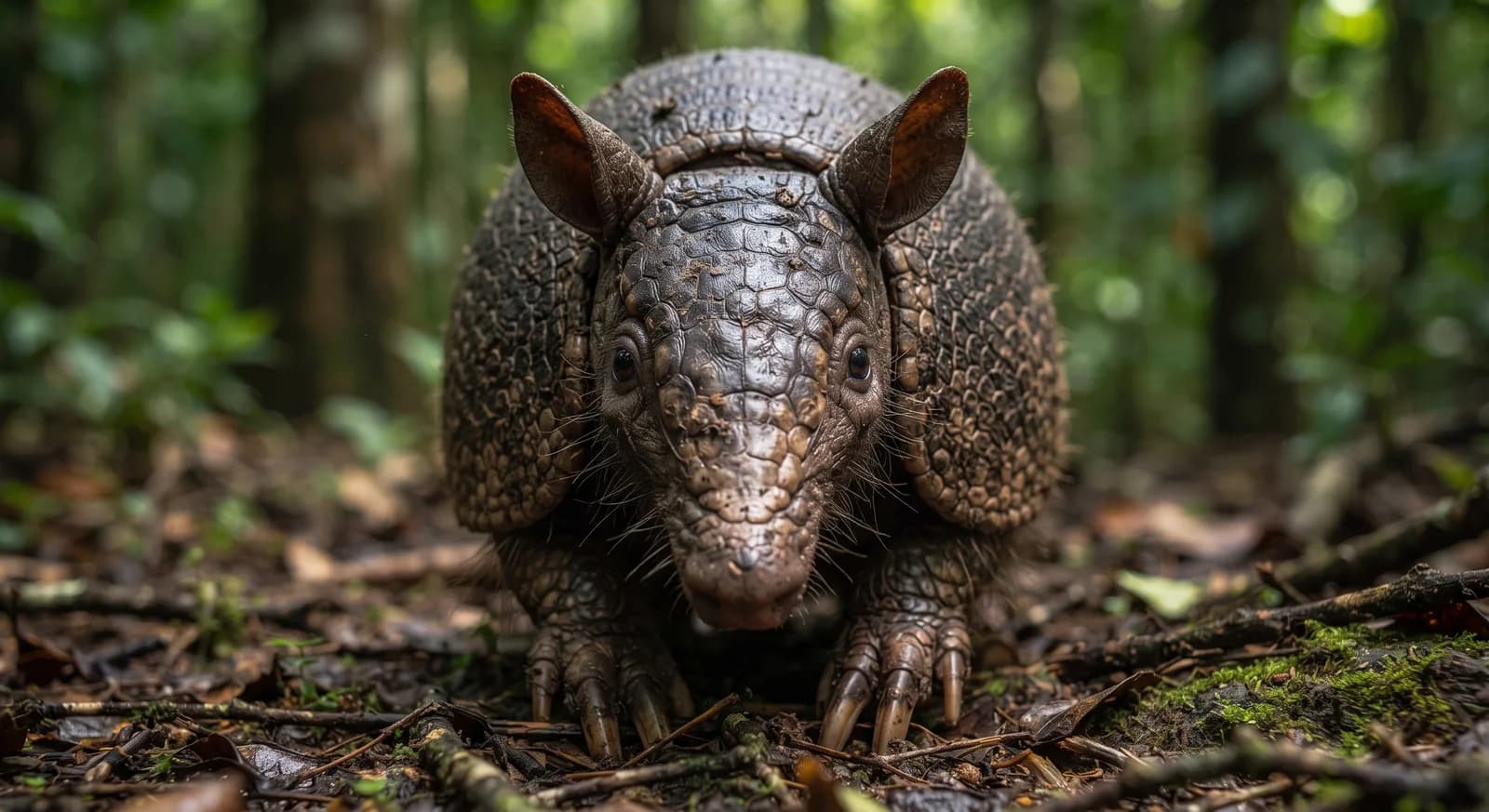
Giant Armadillo
Priodontes maximus
How to help
The white-lipped peccary is classified as vulnerable. Organizations such as UICN, WWF y Wildlife Conservation Society work specifically on its conservation and that of its habitat; looking into their programs is a good starting point if you want to get involved.
It's documented in 10 real protected areas — part of why protecting these places matters for its conservation.
Keep exploring
Based on what we already know about white-lipped peccary.
Comments
Share an experience, a fun fact or a tip for seeing the white-lipped peccary.
Be the first to comment.