 Not Evaluated
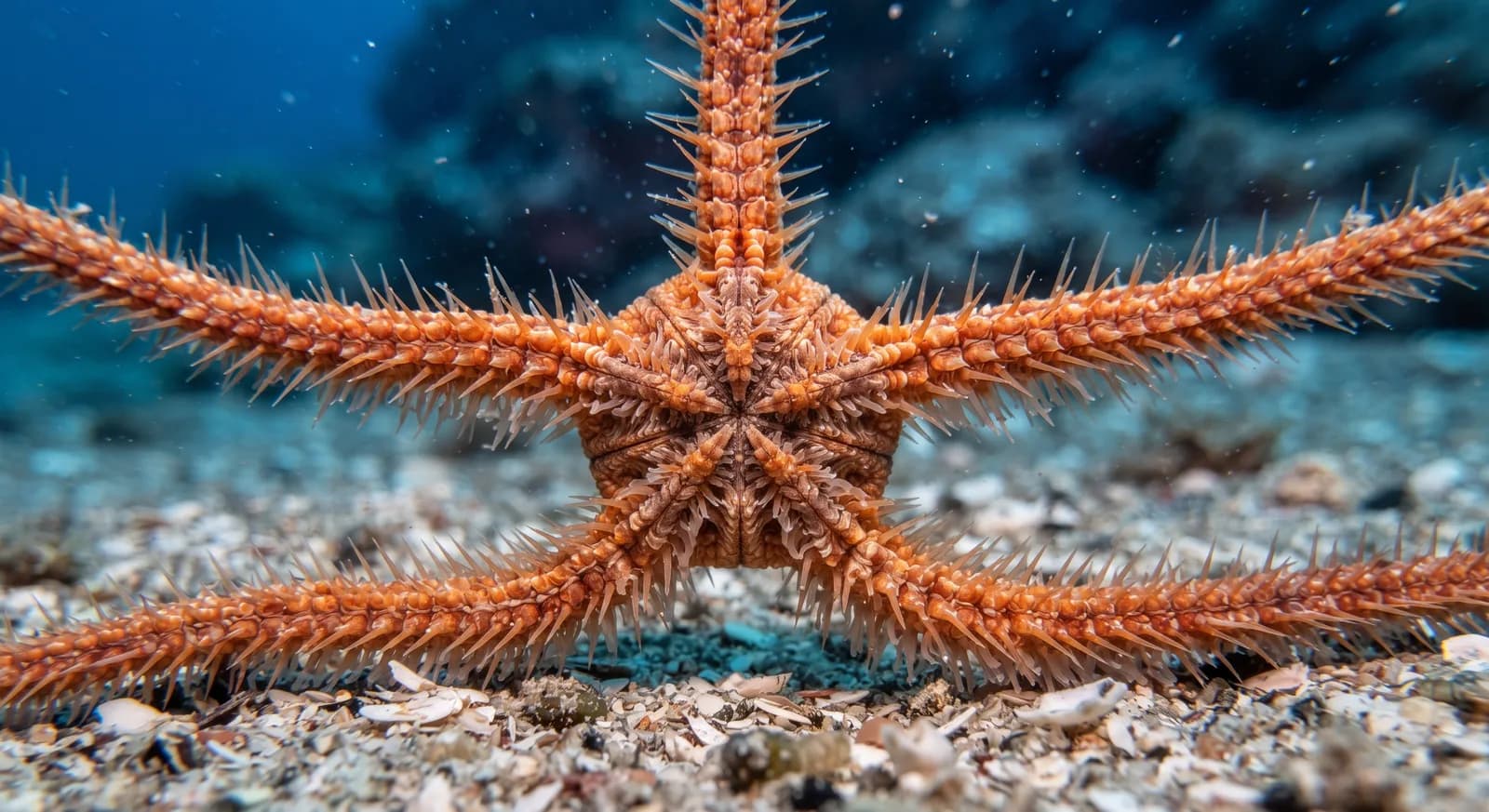
Common Brittlestar
Ophiothrix fragilis
31 countries47 parks83 dive sites
Species group · Brittle stars
WAnimals has 2 species of brittlestar, spread across 2 families (Amphiuridae, Ophiotrichidae).
Ranges calculated from the profiles that record the figure, not from all 2.
Each one has its own full profile. This group does not replace them: it brings them together.
No species documented in this group is genuinely at risk according to the IUCN, with the data available today.
Recorded in 31 countries. The ones with the most species in the group:
Its beds can exceed a thousand individuals per square metre and cover kilometres of seabed, forming a living carpet that filters the water and reshapes the sediment.
From
It breaks with extraordinary ease: at the slightest tug it sheds an arm, which it later regrows, and hence its name.
From
Unlike sea stars, it does not move on tube feet but by snaking its arms, a fast and surprisingly agile motion.
From
It is one of the animals that contribute most to turning over and oxygenating the muddy bottoms of the north-eastern Atlantic, and its densities can exceed a thousand individuals per square metre.
From
It is bioluminescent: the arms emit blue flashes when something touches them, probably to give the predator away to a larger one.
From
Fish and crustaceans constantly nip off the tips of the arms that protrude, and the brittle star regrows them endlessly; that cycle of loss and regeneration is in itself a pathway of energy transfer to the rest of the community.
From
·