Skip to content
WAnimals
  • Map
  • Species
  • Parks
  • Diving
Log inCreate account
WAnimals

The guide for travellers and animal lovers: discover, plan and share your wild adventures around the world.

Discover wildlife

  • Species
  • Ecosystems
  • Glossary
  • Tags

Explore places

  • Map
  • Countries
  • Parks
  • Diving

Plan experiences

  • Guides

Learn

  • Blog

Resources

  • Help centre
  • Contact
  • Install the app

Follow us

Account

  • Log in
  • Create account

© 2026 WAnimals. All rights reserved.

About usHow we build our profilesTerms of servicePrivacyLegal notice
MapSpeciesParksDiving
  1. Home
  2. Species
  3. Species groups
  4. Mayflies

Species group · Insects

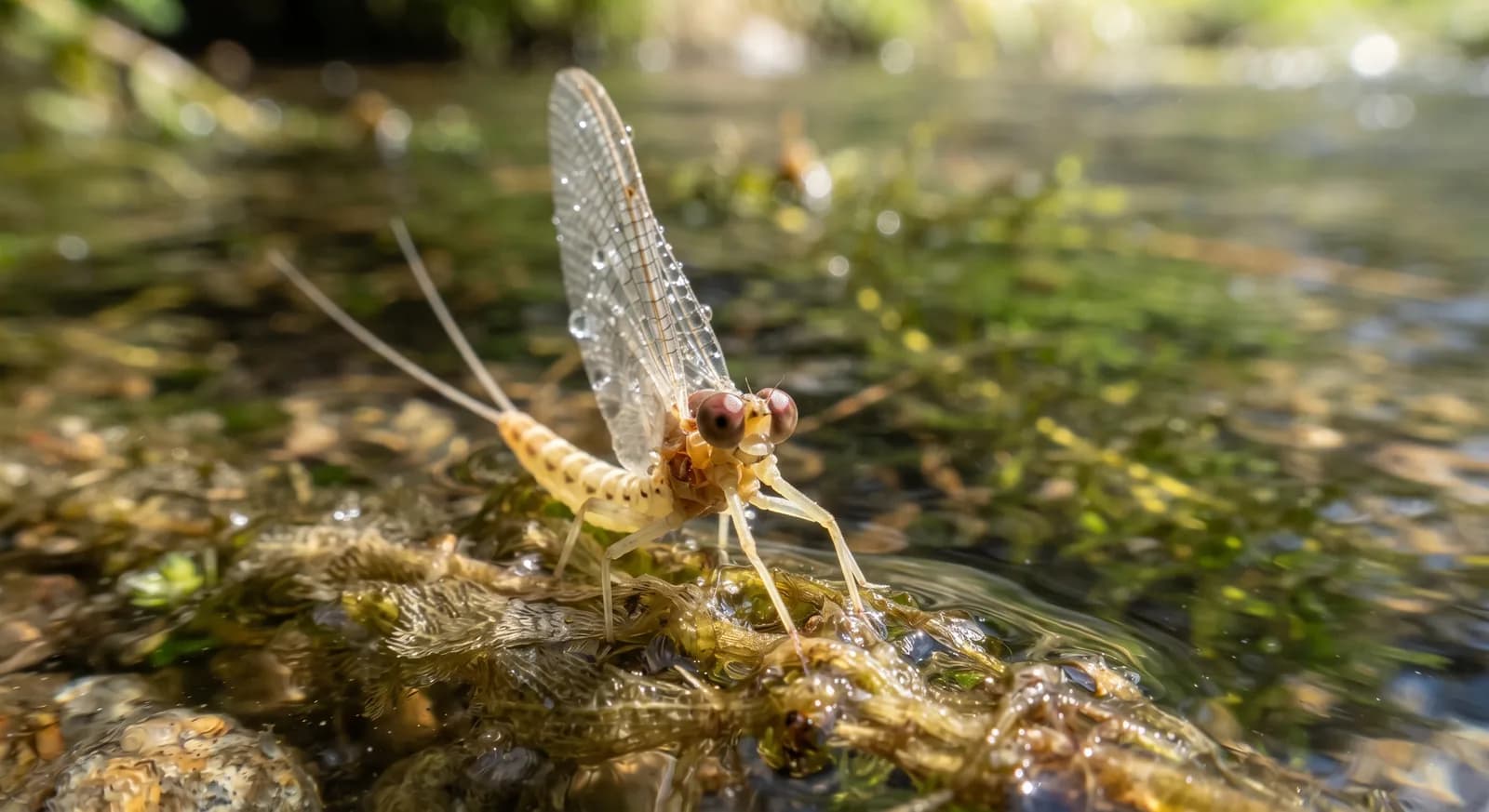
Mayflies

WAnimals has 2 species of mayfly, spread across 2 families (Baetidae, Ephemeridae).

2 species
2 families
46 countries
167 parks
Length
1.5 cm – 2.5 cm

Ranges calculated from the profiles that record the figure, not from all 2.

All 2 species of mayflies on WAnimals

Each one has its own full profile. This group does not replace them: it brings them together.

Conservation status

2 Not Evaluated

No species documented in this group is genuinely at risk according to the IUCN, with the data available today.

Where they live

Recorded in 46 countries. The ones with the most species in the group:

Where to see them

Did you know…?

  • It belongs to the only insect order that passes through an intermediate winged stage, the subimago: it emerges from the water with wings and able to fly, but is not yet sexually mature and must moult once more.

    From

  • Together with stoneflies and caddisflies it forms the so-called "big three" of water-quality assessment: its presence indicates clean water and its disappearance, pollution.

    From

  • Mayflies, dragonflies and damselflies are the most primitive winged insects alive: they cannot fold their wings over the abdomen, a trait inherited from the Carboniferous.

    From

  • Mayflies are the only group of insects that moult after having wings: they emerge from the water as a subimago, a dull, matt winged stage, and a few hours later moult again to become the definitive adult.

    From

  • The adult has no functional mouthparts and no working gut: it lives only to breed and dies the same day.

    From

  • Its abundance is a classic indicator of water quality, and the biotic indices used to assess European rivers rest in good part on mayflies like this one.

    From

Ecosystems

·

Green DrakeNot Evaluated

Green Drake

Ephemera danica

45 countries167 parks
Not Evaluated

Large Dark Olive Mayfly

Baetis rhodani

40 countries
Albania2
Andorra2
Austria2
Belarus2
Belgium2
Bosnia and Herzegovina2
Bulgaria2
Croatia2
Czechia2
Denmark2
Estonia2
Finland2
France2
Germany2
Greece2
Hungary2
Ireland2
Italy2
Latvia2
Liechtenstein2
Lithuania2
Luxembourg2
Moldova2
Montenegro2
Abisko1 species
Aggtelek1 species
Aiako Harria1 species
Aiguestortes i Estany de Sant Maurici1 species
Aizkorri-Aratz1 species
Aralar1 species
Archipelago (Saaristomeri)1 species
Armañón1 species
Aukštaitija National Park1 species
Balaton-felvidék1 species
Bannau Brycheiniog (Brecon Beacons)1 species
Bardenas Reales1 species
Green Drake
Green Drake
Green Drake
Large Dark Olive Mayfly
Freshwater2
See every species group
Explore the species one by one
This page in other languages: Español · Deutsch · Français · Português · Italiano