Skip to content
WAnimals
  • Map
  • Species
  • Parks
  • Diving
Log inCreate account
WAnimals

The guide for travellers and animal lovers: discover, plan and share your wild adventures around the world.

Discover wildlife

  • Species
  • Ecosystems
  • Glossary
  • Tags

Explore places

  • Map
  • Countries
  • Parks
  • Diving

Plan experiences

  • Guides

Learn

  • Blog

Resources

  • Help centre
  • Contact
  • Install the app

Follow us

Account

  • Log in
  • Create account

© 2026 WAnimals. All rights reserved.

About usHow we build our profilesTerms of servicePrivacyLegal notice
MapSpeciesParksDiving
  1. Home
  2. Species
  3. Species groups
  4. Urchins

Species group · Sea urchins

Urchins

WAnimals has 4 species of urchin, spread across 4 families (Diadematidae, Echinidae, Spatangidae, Strongylocentrotidae).

4 species
4 families
146 countries
77 parks
Length
5 cm – 17.6 cm
Lifespan
8 – 20 years

Ranges calculated from the profiles that record the figure, not from all 4.

All 4 species of urchins on WAnimals

Each one has its own full profile. This group does not replace them: it brings them together.

Conservation status

3 Not Evaluated1 Near Threatened

No species documented in this group is genuinely at risk according to the IUCN, with the data available today.

Where they live

Recorded in 146 countries. The ones with the most species in the group:

Where to see them

Did you know…?

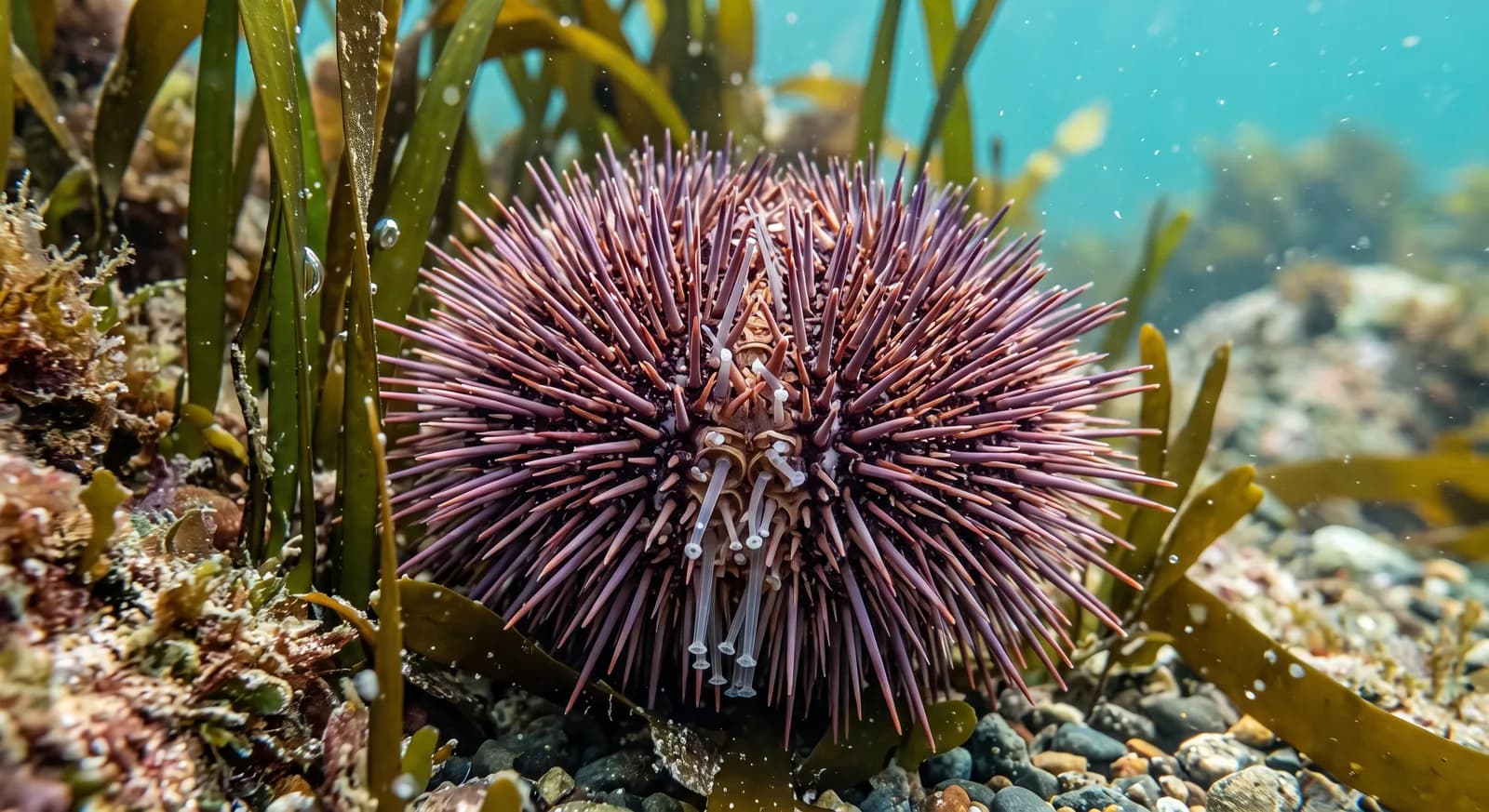
  • It scrapes algae off rocks with its Aristotle's lantern, made up of five calcareous teeth.

    From

  • A large female can release as many as 20 million eggs.

    From

  • It is the only sea urchin listed as Near Threatened by the IUCN.

    From

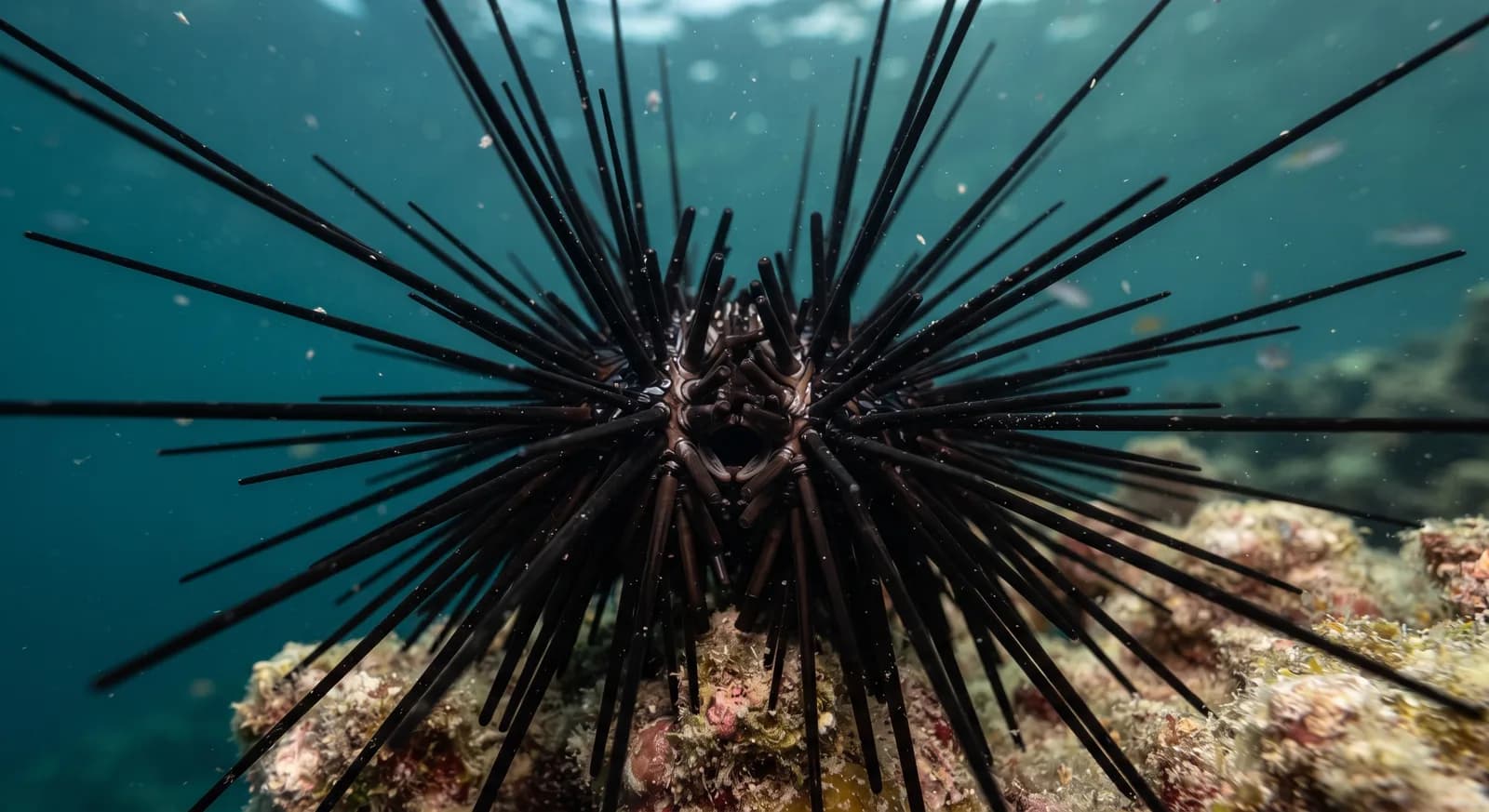
  • Its long hollow spines break off easily inside the skin on contact and release a toxin that causes intense, lasting pain.

    From

  • In 1983 and 1984 a disease of unknown origin killed more than 95% of the Caribbean population in little over a year, and without its grazing many reefs shifted from being dominated by coral to being dominated by algae, a change they have still not recovered from.

    From

  • In 2022 a further mass mortality, attributed to a ciliate protozoan, struck the recovering populations again.

    From

  • It has lost the radial symmetry typical of echinoderms and regained a bilateral one, with a front and a back, an adaptation to a buried and mobile life.

    From

Ecosystems

·

It maintains a clean-water shaft to the surface using specialised tube feet that build and clean the tunnel.

From Purple Heart Urchin
Edible Sea UrchinNear Threatened

Edible Sea Urchin

Echinus esculentus

33 countries43 parks75 dive sites
Long-spined UrchinNot Evaluated

Long-spined Urchin

Diadema antillarum

108 countries27 parks108 dive sites
Not Evaluated

Purple Heart Urchin

Spatangus purpureus

31 countries45 parks83 dive sites
Not Evaluated

Purple Sea Urchin

Strongylocentrotus purpuratus

3 countries12 dive sites
Egypt3
Albania2
Algeria2
Belgium2
Croatia2
Cyprus2
Denmark2
France2
Greece2
Iceland2
Ireland2
Israel2
Italy2
Libya2
Malta2
Mexico2
Monaco2
Montenegro2
Morocco2
Netherlands2
Norway2
Portugal2
Slovenia2
Spain2
Aeolian Islands2 species
Al Hoceima2 species
Alonissos and the Northern Sporades2 species
Alonissos Marine Park2 species
Arcipelago Toscano2 species
Arrábida2 species
Asinara2 species
Brijuni2 species
Burren2 species
Cabo de Gata-Níjar2 species
Cabrera Archipelago2 species
Calanques2 species
Aegadian Islands (Favignana)diving
Aeolian Islands (Panarea/Stromboli)diving
Aeolian Islands (Vulcano)diving
Alboran Islanddiving
Amalfi Coastdiving
Amorgos (Le Grand Bleu wreck)diving
Edible Sea Urchin
Edible Sea Urchin
Edible Sea Urchin
Long-spined Urchin
Long-spined Urchin
Long-spined Urchin
Purple Heart Urchin
Ocean4
See every species group
Explore the species one by one
This page in other languages: Español · Deutsch · Français · Português · Italiano