Skip to content
WAnimals
  • Map
  • Species
  • Parks
  • Diving
Log inCreate account
WAnimals

The guide for travellers and animal lovers: discover, plan and share your wild adventures around the world.

Discover wildlife

  • Species
  • Ecosystems
  • Glossary
  • Tags

Explore places

  • Map
  • Countries
  • Parks
  • Diving

Plan experiences

  • Guides

Learn

  • Blog

Resources

  • Help centre
  • Contact
  • Install the app

Follow us

Account

  • Log in
  • Create account

© 2026 WAnimals. All rights reserved.

About usHow we build our profilesTerms of servicePrivacyLegal notice
MapSpeciesParksDiving
  1. Home
  2. Species
  3. Species groups
  4. Mantises

Species group · Insects

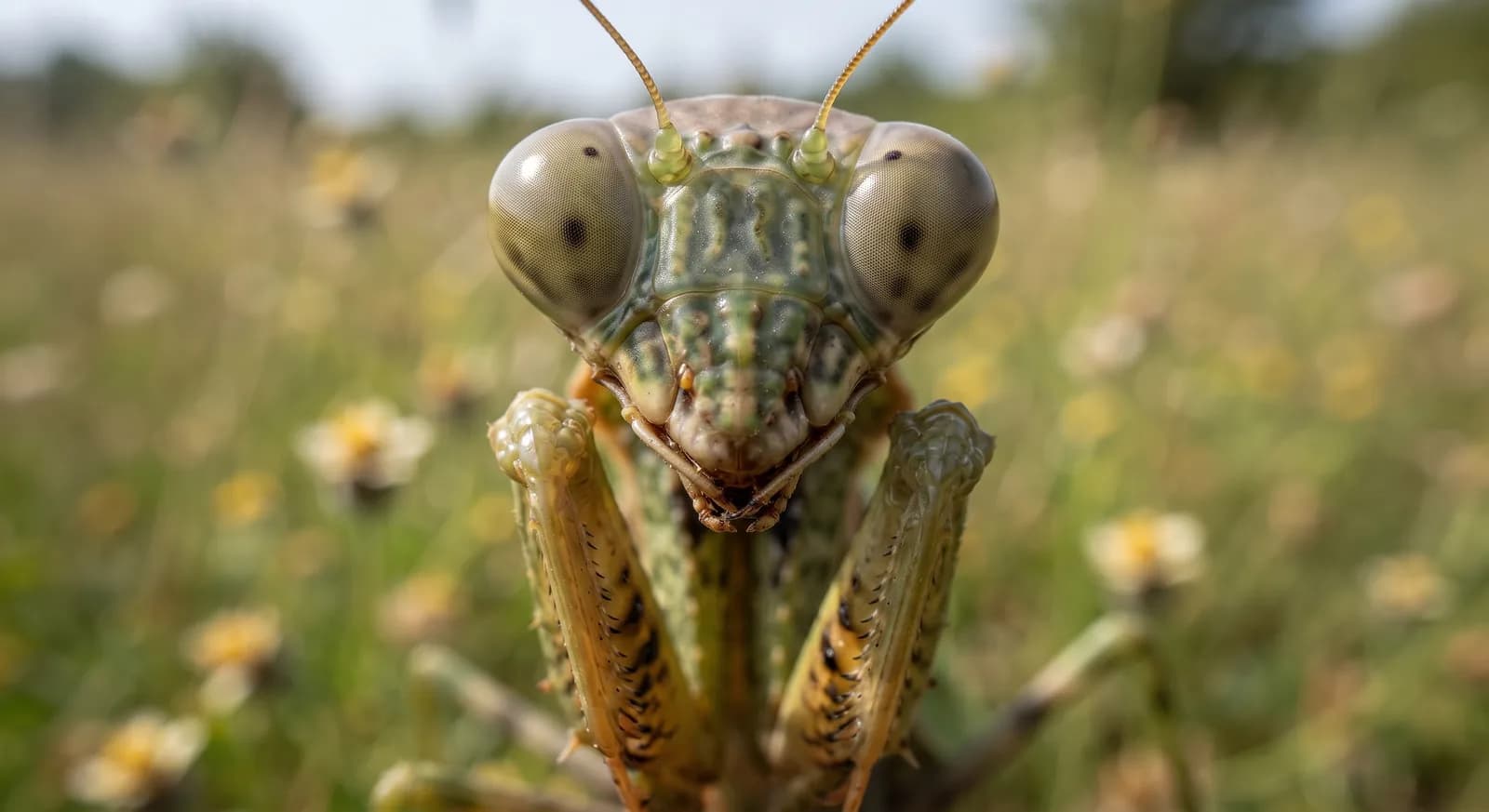
Mantises

WAnimals has 4 species of mantis, spread across 3 families (Empusidae, Hymenopodidae, Mantidae).

4 species
3 families
59 countries
135 parks
Length
2.5 cm – 9 cm
Lifespan
1 years

Ranges calculated from the profiles that record the figure, not from all 4.

All 4 species of mantises on WAnimals

Each one has its own full profile. This group does not replace them: it brings them together.

Conservation status

2 Least Concern1 Data Deficient1 Not Evaluated

No species documented in this group is genuinely at risk according to the IUCN, with the data available today.

Where they live

Recorded in 59 countries. The ones with the most species in the group:

Where to see them

Did you know…?

  • It stalks other insects such as grasshoppers, aphids and small arthropods.

    From

  • It lives in grassland, gardens and open country of Europe, North Africa and western Asia.

    From

  • Its eggs are laid inside a protective ootheca of hardened foam, tough enough to withstand extreme weather right through the winter.

    From

  • When it feels threatened it sways slowly from side to side, mimicking a twig moved by the wind.

    From

  • The male has large, feathery antennae and flies well; the female, being heavier, barely moves about.

    From

  • It overwinters as a nymph on the vegetation and the adults appear in spring, which sets it apart from the European mantis, an insect of late summer.

    From

  • Unlike most European mantises, which overwinter as an ootheca, this one overwinters as a nymph, clinging to the vegetation with its activity almost at a standstill.

    From

  • The males' conspicuous feathery antennae let them locate females by their pheromone from a long way off.

Ecosystems

·

From

Praying MantisLeast Concern

Praying Mantis

Mantis religiosa

51 countries44 parks
Least Concern

Conehead Mantis

Empusa pennata

24 countries81 parks
Data Deficient

Devil's Mare

Empusa fasciata

8 countries22 parks
Not Evaluated

Orchid Mantis

Hymenopus coronatus

8 countries27 parks
Albania3
Bulgaria3
Croatia3
Greece3
Montenegro3
Türkiye3
Algeria2
Bosnia and Herzegovina2
Cyprus2
Egypt2
France2
Gibraltar2
Israel2
Italy2
Lebanon2
Libya2
Malta2
Monaco2
Morocco2
North Macedonia2
Palestine2
Portugal2
San Marino2
Spain2
Beydağları3 species
Al Hoceima2 species
Alta Murgia2 species
Arcipelago Toscano2 species
Bardenas Reales2 species
Cabañeros2 species
Cabo de Gata-Níjar2 species
Calanques2 species
Camargue2 species
Circeo2 species
Dilek Yarımadası2 species
Djurdjura2 species
Praying Mantis
Praying Mantis
Praying Mantis
Conehead Mantis
Conehead Mantis
Conehead Mantis
Devil's Mare
Grassland3
Rainforest1
See every species group
Explore the species one by one
This page in other languages: Español · Deutsch · Français · Português · Italiano
Devil's Mare