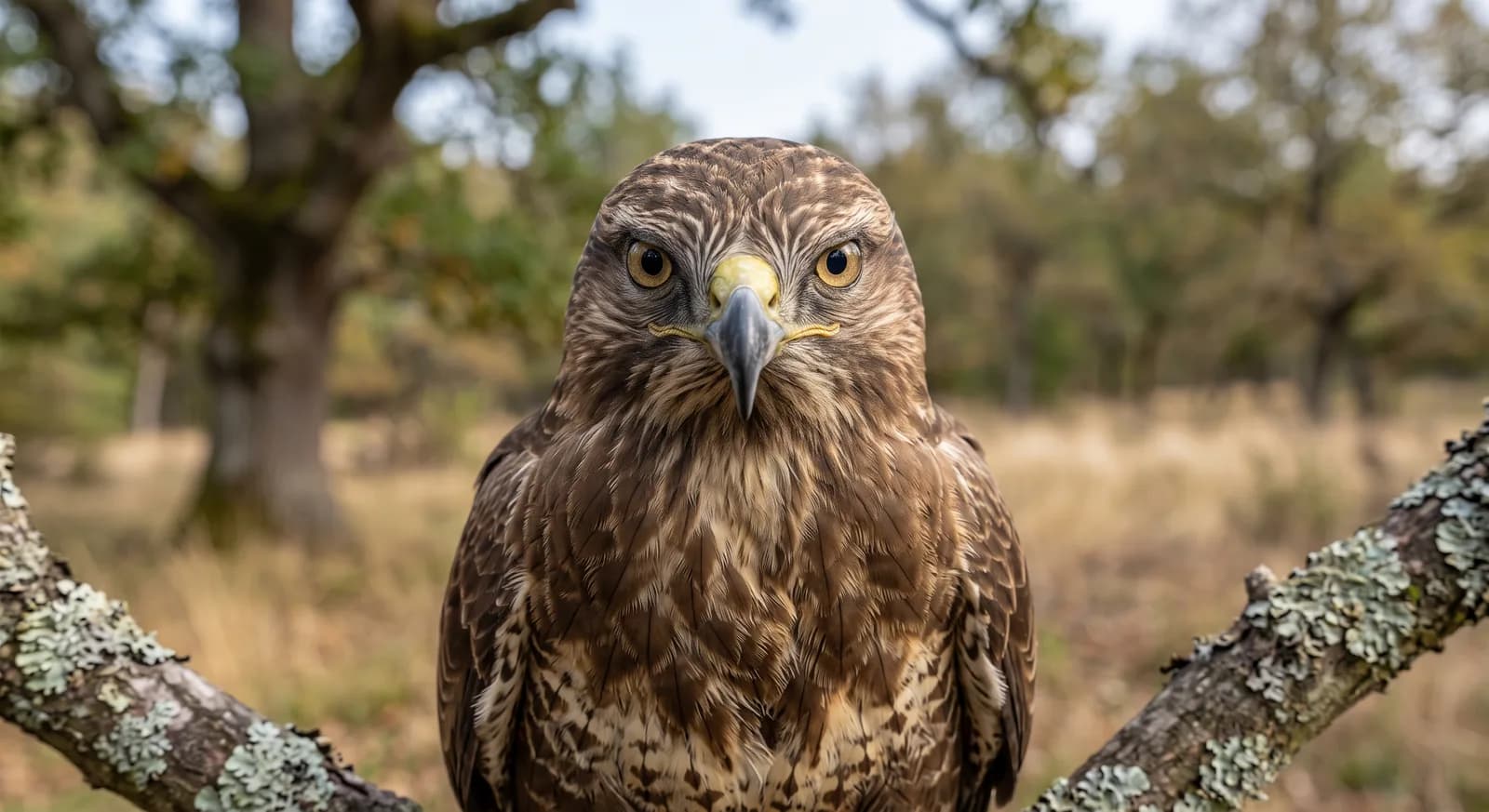
 Least Concern
Common Buzzard
Buteo buteo
One of the 4 mantises on WAnimals
Insects · Mantodea · Empusidae
Empusa pennata
The species is abundant and widely distributed; it faces no significant short-term risk.
The conehead mantis is extremely slender and almost plant-like, with a pointed crown on the head and lobes on the legs and abdomen that break up its outline. It is common in the dry scrub of the Iberian Peninsula and southern France.
Size
4.7 cm – 8 cm
Life expectancy
1 year
Diet
Carnivore
Feeds mainly on other animals.
Activity
Diurnal
Active mainly during the day.
Social structure
Solitary
Lives and hunts alone, joining others only to breed.
Sighting difficulty
Easy
Sources consulted: Battiston et al., Mantids of the Euro-Mediterranean Area; Asociación Española de Entomología; Fauna Ibérica; Fichas naturalistas ibericas de Empusa pennata; B.E.E.S. (Universitat Autonoma de Barcelona), ficha Mantis palo, con datos UICN; Asturnatura; B.E.E.S. (Universitat Autonoma de Barcelona); fichas naturalistas ibericas; Asturnatura, ficha Empusa pennata
Best time: Spring, when the overwintering nymphs reach adulthood
Parks and dive sites where this species has been documented — showing 10 of 81.
Other species in the catalogue with the most in common with Conehead Mantis — same habitat, park, country, tags or family.
Based on what we already know about conehead mantis.
Share an experience, a fun fact or a tip for seeing the conehead mantis.
Be the first to comment.
The pins mark the parks where its presence is documented.