Skip to content
WAnimals
  • Map
  • Species
  • Parks
  • Diving
Log inCreate account
WAnimals

The guide for travellers and animal lovers: discover, plan and share your wild adventures around the world.

Discover wildlife

  • Species
  • Ecosystems
  • Glossary
  • Tags

Explore places

  • Map
  • Countries
  • Parks
  • Diving

Plan experiences

  • Guides

Learn

  • Blog

Resources

  • Help centre
  • Contact
  • Install the app

Follow us

Account

  • Log in
  • Create account

© 2026 WAnimals. All rights reserved.

About usHow we build our profilesTerms of servicePrivacyLegal notice
MapSpeciesParksDiving
  1. Home
  2. Species
  3. Species groups
  4. Storks

Species group · Birds

Storks

WAnimals has 4 species of stork, in the family Ciconiidae.

4 species
1 family
111 countries
146 parks
Weight
2 kg – 5.9 kg
Length
93 cm – 1.2 m
Lifespan
27 years

Ranges calculated from the profiles that record the figure, not from all 4.

All 4 species of storks on WAnimals

Each one has its own full profile. This group does not replace them: it brings them together.

Conservation status

2 Least Concern1 Near Threatened1 Endangered

1 species in this group is in a threatened category according to the IUCN.

Where they live

Recorded in 111 countries. The ones with the most species in the group:

Where to see them

Did you know…?

  • Unlike the white stork it avoids towns, preferring quiet woodland beside rivers, and is far shyer and harder to see.

    From

  • Unlike the white stork, it avoids people altogether and seeks out the most isolated corners in which to breed.

    From

  • On migration between Europe and Africa it avoids long sea crossings and skirts the Mediterranean by way of Gibraltar, Sicily or the Levant.

    From

  • It builds some of the largest nests of any bird, reused year after year.

    From

  • It is the star of the European tale that has storks delivering babies.

    From

  • It winters in sub-Saharan Africa.

    From

  • It hunts by touch, not by sight: it puts its half-open bill into the murky water and sweeps it from side to side until it brushes a fish, a technique known as tactolocation.

    From

  • As it wades it waggles one foot back and forth and suddenly opens the wing on that same side to flush hidden fish.

Ecosystems

·

From

Black StorkLeast Concern

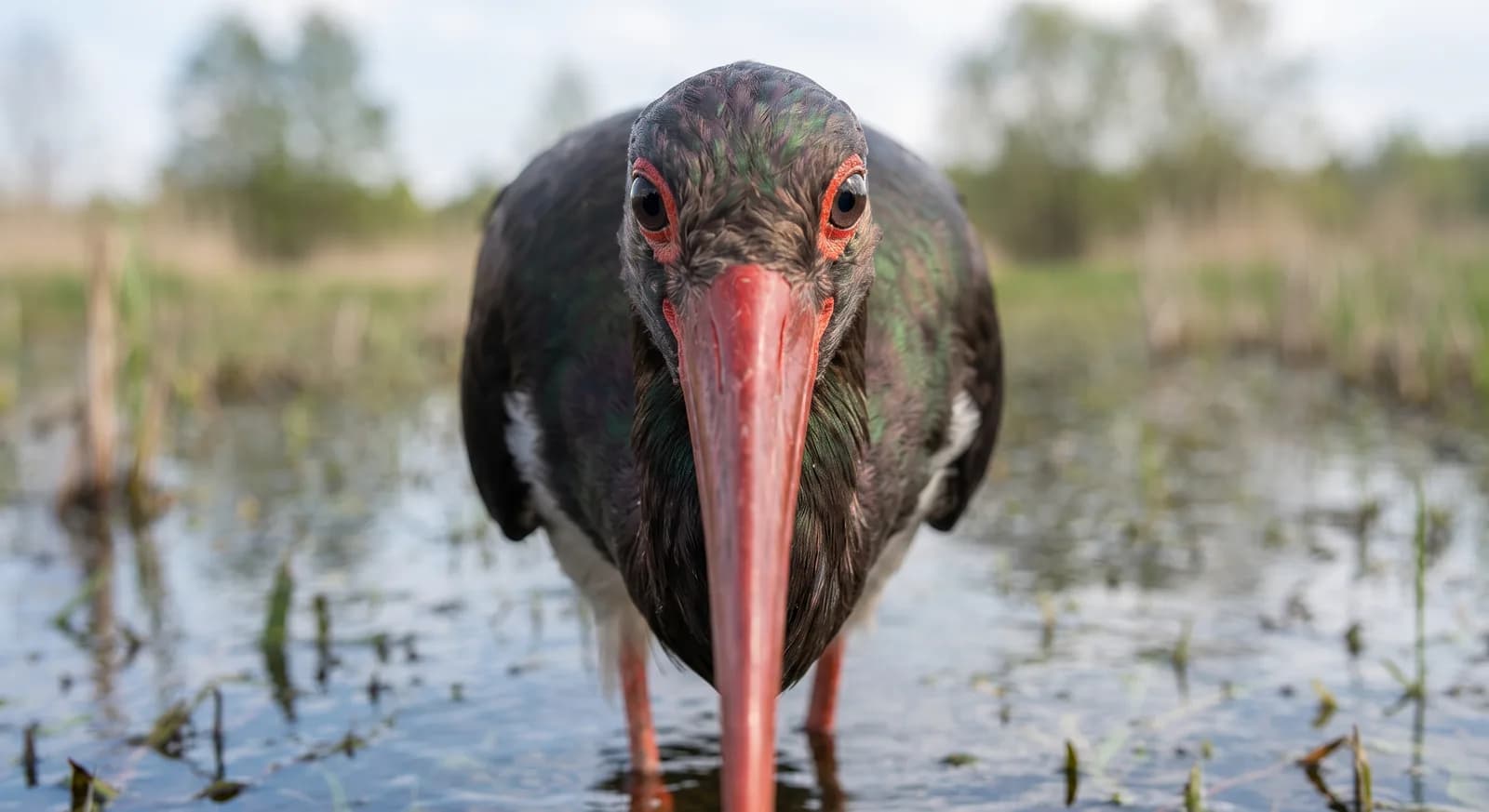
Black Stork

Ciconia nigra

46 countries15 parks
White StorkLeast Concern

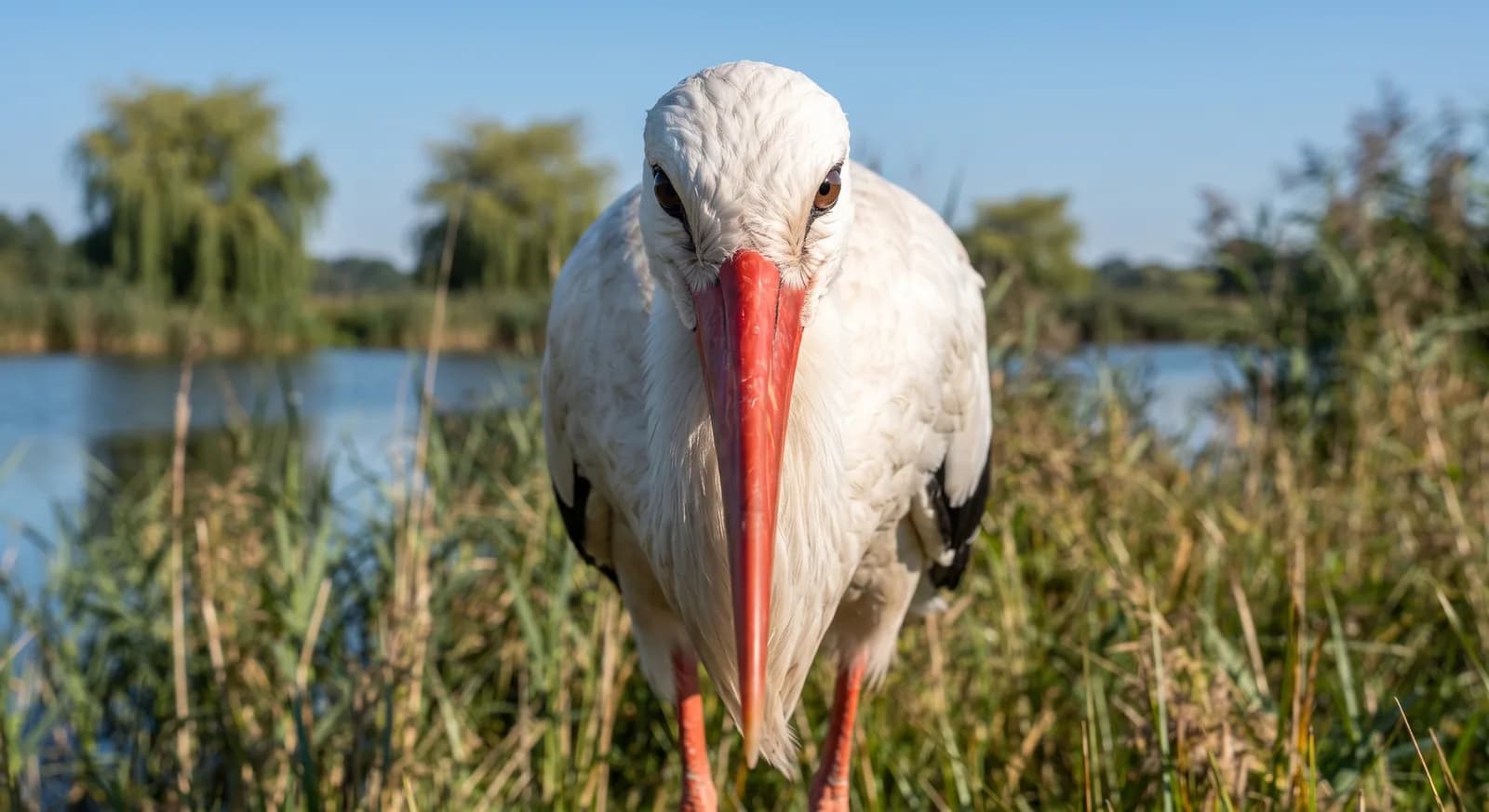
White Stork

Ciconia ciconia

95 countries129 parks
Painted StorkNear Threatened

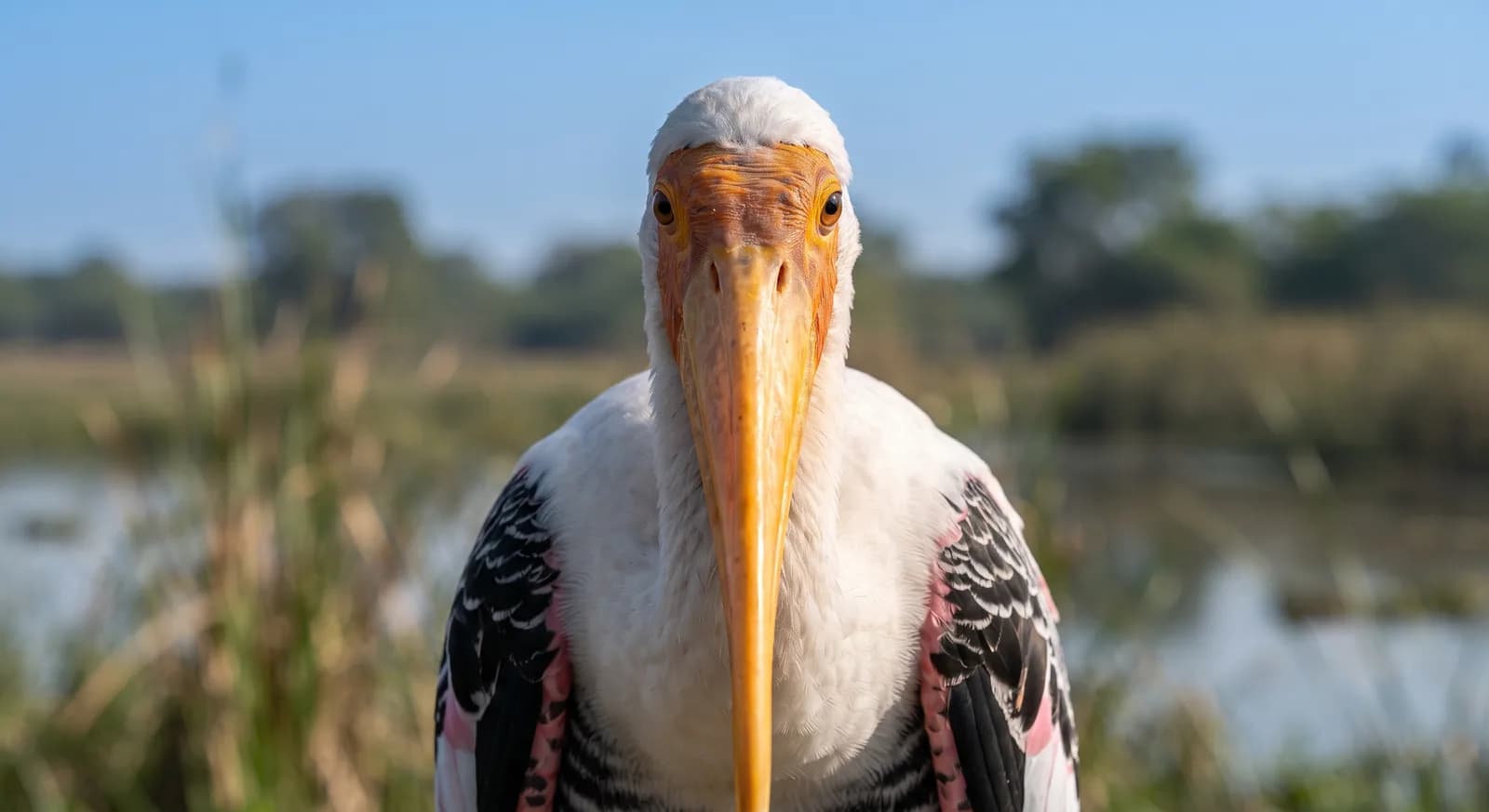
Painted Stork

Mycteria leucocephala

12 countries4 parks
Oriental StorkEndangered

Oriental Stork

Ciconia boyciana

5 countries8 parks
Albania2
Andorra2
Armenia2
Austria2
Azerbaijan2
Belarus2
Belgium2
Bosnia and Herzegovina2
Bulgaria2
China2
Croatia2
Czechia2
Denmark2
Estonia2
Finland2
France2
Georgia2
Germany2
Greece2
Hungary2
Ireland2
Italy2
Kosovo2
Latvia2
Aukštaitija National Park2 species
Białowieża2 species
Bieszczady2 species
Cabañeros2 species
Duero Internacional2 species
Lahemaa2 species
Monfrague2 species
Muritz2 species
Sierra de Guadarrama2 species
Šumava (Bohemian Forest)2 species
Aggtelek1 species
Aiako Harria1 species
Black Stork
Black Stork
Black Stork
White Stork
White Stork
White Stork
Painted Stork
Freshwater2
Grassland1
See every species group
Explore the species one by one
This page in other languages: Español · Deutsch · Français · Português · Italiano
Painted Stork