Skip to content
WAnimals
  • Map
  • Species
  • Parks
  • Diving
Log inCreate account
WAnimals

The guide for travellers and animal lovers: discover, plan and share your wild adventures around the world.

Discover wildlife

  • Species
  • Ecosystems
  • Glossary
  • Tags

Explore places

  • Map
  • Countries
  • Parks
  • Diving

Plan experiences

  • Guides

Learn

  • Blog

Resources

  • About us
  • How we build our profiles
  • Help centre
  • Contact
  • Install the app

Follow us

Account

  • Log in
  • Create account

© 2026 WAnimals. All rights reserved.

Terms of servicePrivacyCookiesLegal notice
MapSpeciesParksDiving
  1. Home
  2. Species
  3. Species groups
  4. Thrushes

Species group · Birds

Thrushes

WAnimals has 4 species of thrush, in the family Turdidae.

4 species
1 family
48 countries
272 parks
Weight
50 g – 160 g
Length
19 cm – 29 cm
Lifespan
3 – 21 years

Ranges calculated from the profiles that record the figure, not from all 4.

All 4 species of thrushes on WAnimals

Each one has its own full profile. This group does not replace them: it brings them together.

Conservation status

4 Least Concern

No species documented in this group is genuinely at risk according to the IUCN, with the data available today.

Where they live

Recorded in 48 countries. The ones with the most species in the group:

Where to see them

Did you know…?

  • It sings through a gale, which earned it the English nickname stormcock.

    From

  • Its scientific name means mistletoe eater, and it is the plant's main disperser in Europe: the seeds pass through its gut and stick to branches when the bird wipes its bill, planting them exactly where they will germinate.

    From

  • A single bird can defend a berry-laden tree all winter, driving off every other thrush and securing the larder until spring.

    From

  • It migrates at night, and its calls carry down to the ground as it passes.

    From

  • In the olive groves of southern Spain a study found that 86% of its winter diet was plant matter, and of that fraction 97% was olives: in the Altiplano of Granada they call it "aceitunero", the olive-eater.

    From

  • It is so nomadic and so unfaithful to its wintering areas that the Iberian wintering population can swing between several million and a few thousand from one year to the next.

    From

  • The colony defends its nests by bombarding predators with droppings.

    From

Ecosystems

·

It defends the colony by bombing predators with droppings: several adults dive at a corvid or a raptor and fire faeces that mat its plumage, and there are documented cases of raptors left unable to fly.

From
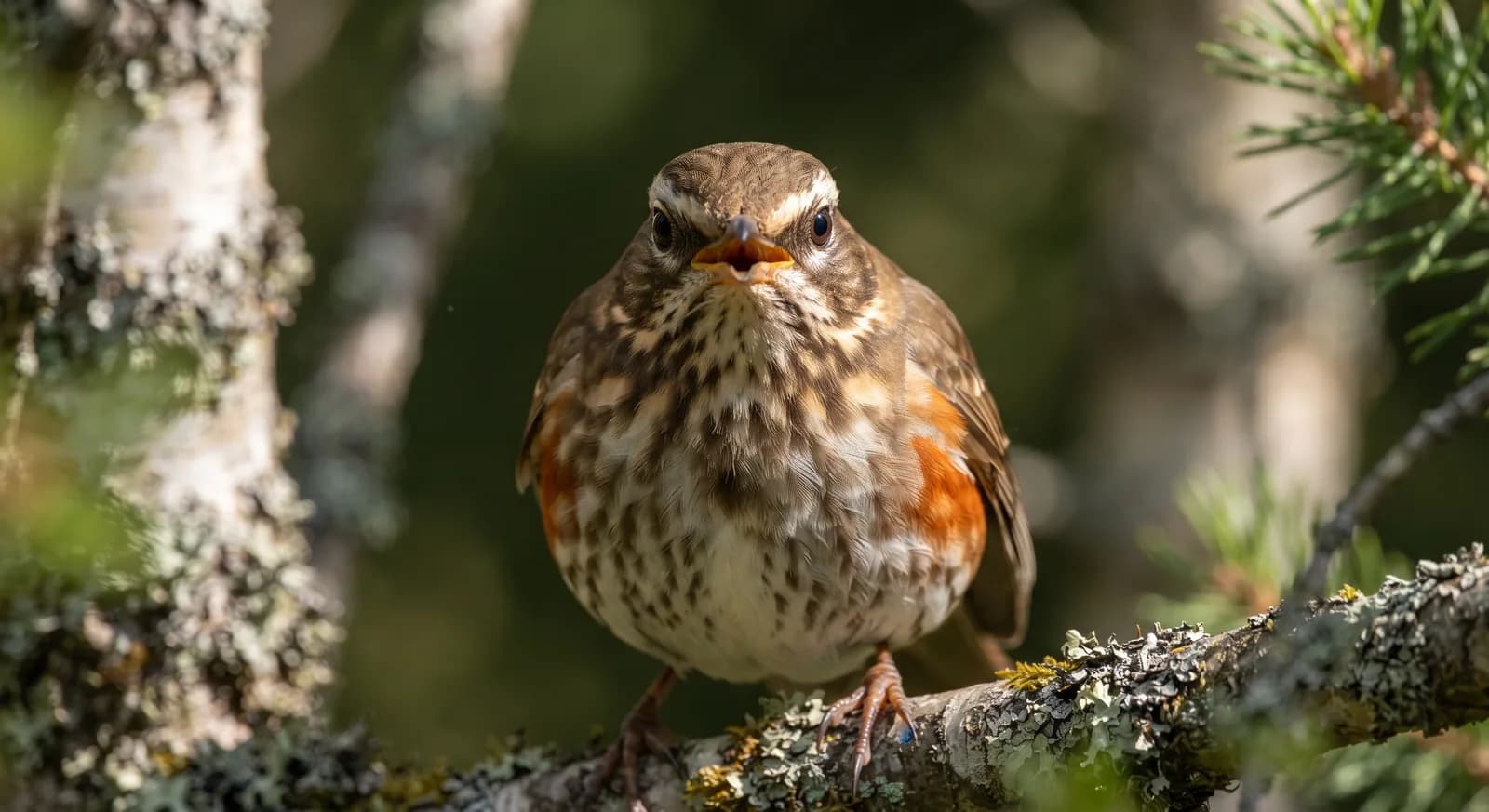
Mistle ThrushLeast Concern

Mistle Thrush

Turdus viscivorus

47 countries259 parks
RedwingLeast Concern

Redwing

Turdus iliacus

46 countries83 parks
Least Concern

Fieldfare

Turdus pilaris

45 countries90 parks
Least Concern

Song Thrush

Turdus philomelos

45 countries249 parks
Albania4
Andorra4
Armenia4
Austria4
Azerbaijan4
Belarus4
Belgium4
Bosnia and Herzegovina4
Bulgaria4
Croatia4
Czechia4
Denmark4
Estonia4
Finland4
France4
Georgia4
Germany4
Greece4
Hungary4
Ireland4
Italy4
Kosovo4
Latvia4
Liechtenstein4
Abisko4 species
Aukštaitija National Park4 species
Białowieża4 species
Biebrzański4 species
Børgefjell4 species
Breheimen4 species
Cairngorms4 species
Camargue4 species
Curonian Spit4 species
Curonian Spit (Russia)4 species
Dovrefjell-Sunndalsfjella4 species
Dzūkija4 species
Mistle Thrush
Mistle Thrush
Mistle Thrush
Redwing
Redwing
Redwing
Fieldfare
Temperate forest4
Grassland2
Mountain1
Tundra1
See every species group
Explore the species one by one
This page in other languages: Español · Deutsch · Français · Português · Italiano
Fieldfare