One of the 4 thrushes on WAnimals
Birds · Passeriformes · Turdidae
Turdus iliacus
The species is abundant and widely distributed; it faces no significant short-term risk.
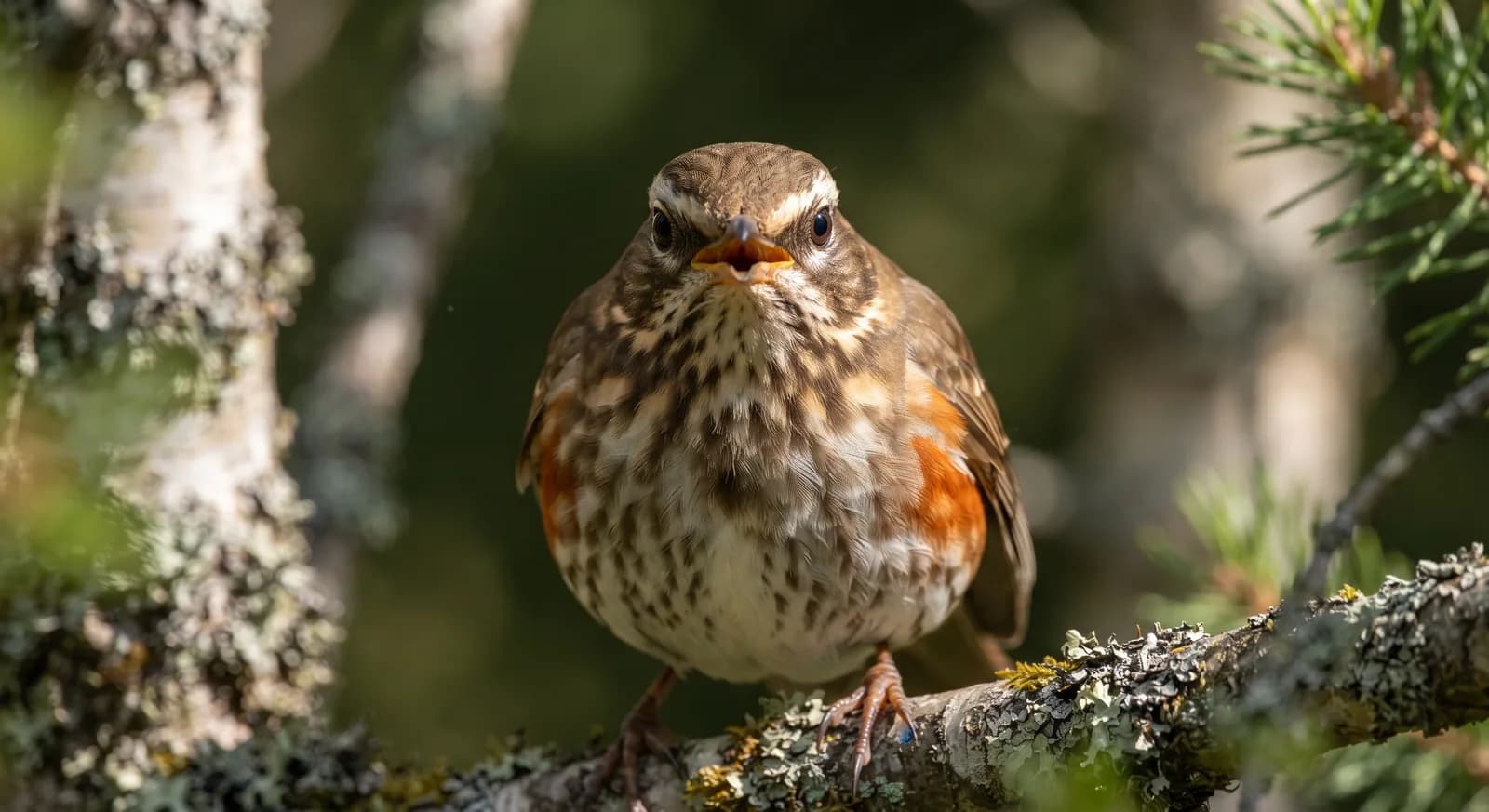
The smallest of the European thrushes, compact and with a relatively short tail. It is identified by the broad whitish eyebrow above the eye and by the rusty red of its flanks and underwing coverts, very visible in flight. Both sexes look alike.
Weight
60 g – 65 g
Size
19 cm – 23 cm
Life expectancy
4 years
Diet
Omnivore
Combines animal and plant food depending on availability.
Activity
Diurnal
Active mainly during the day.
Social structure
In pairs
Usually lives in pairs, sometimes for life.
Sighting difficulty
Easy
Estimated population
The European breeding population is estimated at between 16,200,000 and 28,100,000 mature individuals according to the 2021 European Red List of Birds
AI-generated images: illustrations, not photographs.
Sources consulted: SEO/BirdLife (ficha y III Atlas de las aves en época de reproducción en España); IUCN Red List; Asturnatura; Santos y Tellería 2022, III Atlas; Lista Roja Europea de Aves 2021; Santos 1985; SEO/BirdLife 2012, Atlas de las aves en invierno
Best time: From October to March in Spain, with the bulk of the wintering between November and January
Parks and dive sites where this species has been documented — showing 10 of 83.
Other species in the catalogue with the most in common with Redwing — same habitat, park, country, tags or family.
Based on what we already know about redwing.
Share an experience, a fun fact or a tip for seeing the redwing.
Be the first to comment.
The pins mark the parks where its presence is documented.