Bony fish · Perciformes · Trachinidae
Greater Weever
Trachinus draco
The species is abundant and widely distributed; it faces no significant short-term risk. See full glossary
The greater weever — known in Spanish as pez escorpión, pez araña, faneca brava, escarapote, sabirón or salvario — is a fish of the family Trachinidae, common in the cold waters of the Mediterranean, the Bay of Biscay and the eastern Atlantic. With an average total length of close to 30 cm, it is elongated and compressed. The operculum bears a venomous spine directed backwards. The mouth is large and oblique. The first dorsal fin is short, usually dark or black, with five to seven venomous spines. The second dorsal fin is symmetrical with the anal fin, with 21 to 32 soft rays. The caudal fin is slightly concave. The pelvic fins are set forward of the pectorals. The eyes are very high on the head and close together. It is greenish brown with darker blotches and some oblique yellowish-brown lines, and a black spot on the first dorsal fin. It is benthic and sedentary, living half-buried in sandy or muddy bottoms, down to depths of close to 150 metres.
Size
25 cm – 53 cm
Diet
Carnivore
Feeds mainly on other animals.
Activity
Nocturnal
Active mainly at night.
Social structure
Solitary
Lives and hunts alone, joining others only to breed.
Sighting difficulty
Easy
Fun facts
- It is the commonest cause of fish envenomation on European beaches: a bather treading on a buried individual suffers excruciating pain that can last for hours.
- The standard treatment is to immerse the area in water as hot as can be borne, because the venom is heat-labile and breaks down with warmth.
- It keeps the ability to envenomate for hours after death, so accidents also happen while handling the catch at the fish market.
- It causes most fish stings on European beaches, and almost always through being trodden on: it lies buried in the sand of the shore with only its eyes and spines showing.
- The venom is injected through the spines of the first dorsal fin and through a spine on each gill cover. Its very own toxin is called dracotoxin.
- The pain is excruciating and can last for hours. The recognised first aid is to immerse the area in hot water, up to about 45 °C, for 30 to 90 minutes: the venom is heat-labile and the heat denatures it.
- At night it abandons its camouflage and comes out to hunt invertebrates and small fish.
- Its venom apparatus is a case of evolutionary convergence with that of the stonefish: two families with no close kinship arrived at the same design of grooved spine and gland.
Life cycle & biology
- Skeleton type
- Vertebrate - internal bony skeleton (fish)
- Habitat & environment
- Sandy and muddy bottoms, from the intertidal down to about 150 m
- Sexual maturity
- At one year old, between 12 and 16 cm
- Gestation / incubation
- Pelagic spawning; the eggs measure 1 mm
Sources consulted: https://es.wikipedia.org/wiki/Trachinus_draco
Where to find it
See its range on the interactive mapBest time: Summer, when it moves into shallow sandy bottoms
Where to watch it
Parques y spots de buceo donde se ha documentado esta especie — se muestran 10 de 30 documentados.
Related species
Other species in the catalogue with the most in common with Greater Weever — same habitat, park, country, tags or family.
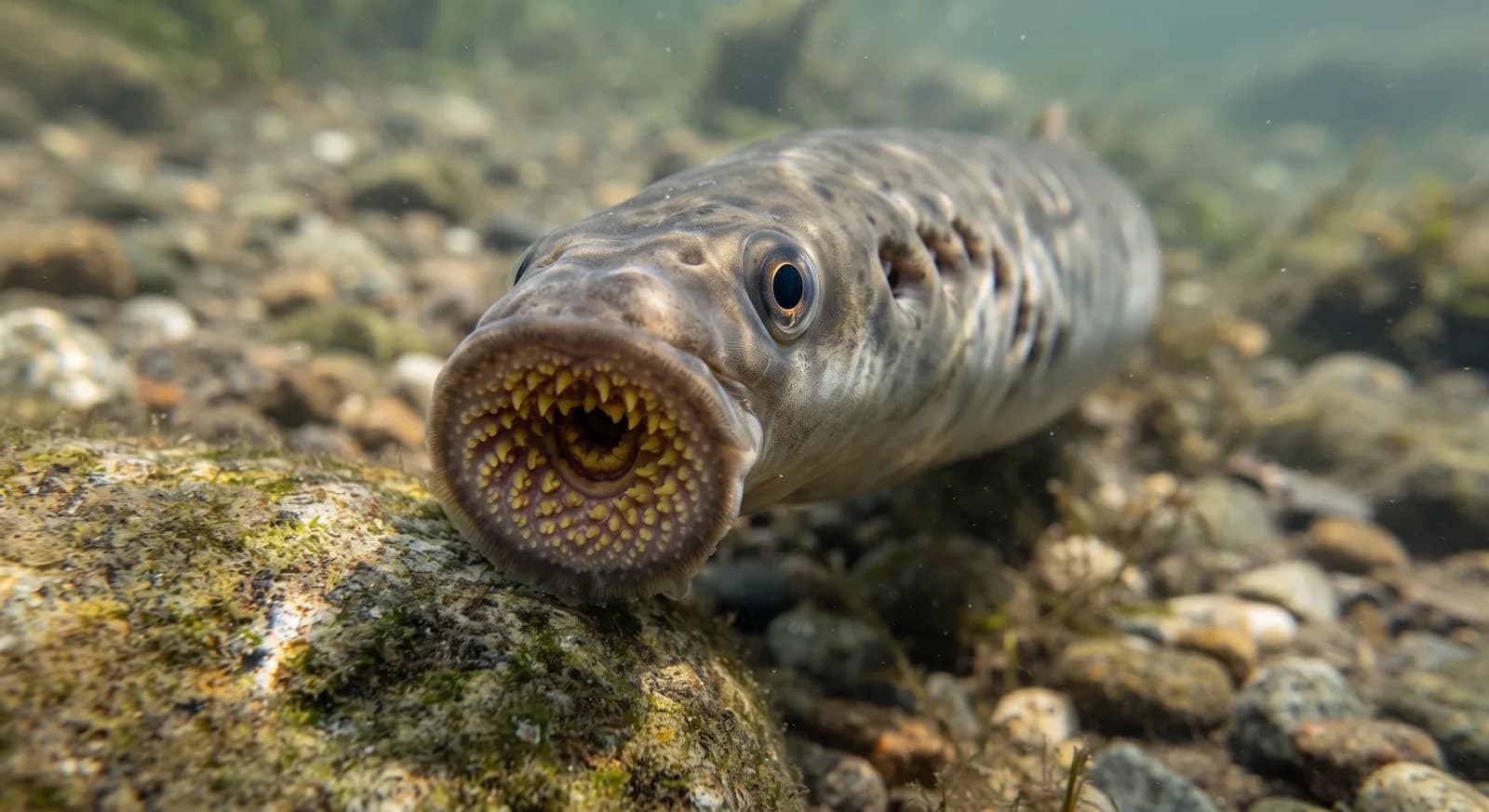 Least Concern
Sea Lamprey
Petromyzon marinus
Hagfish
Myxine glutinosa
Moray Eel
Muraena helena
European Hake
Merluccius merluccius
Angler
Lophius piscatorius
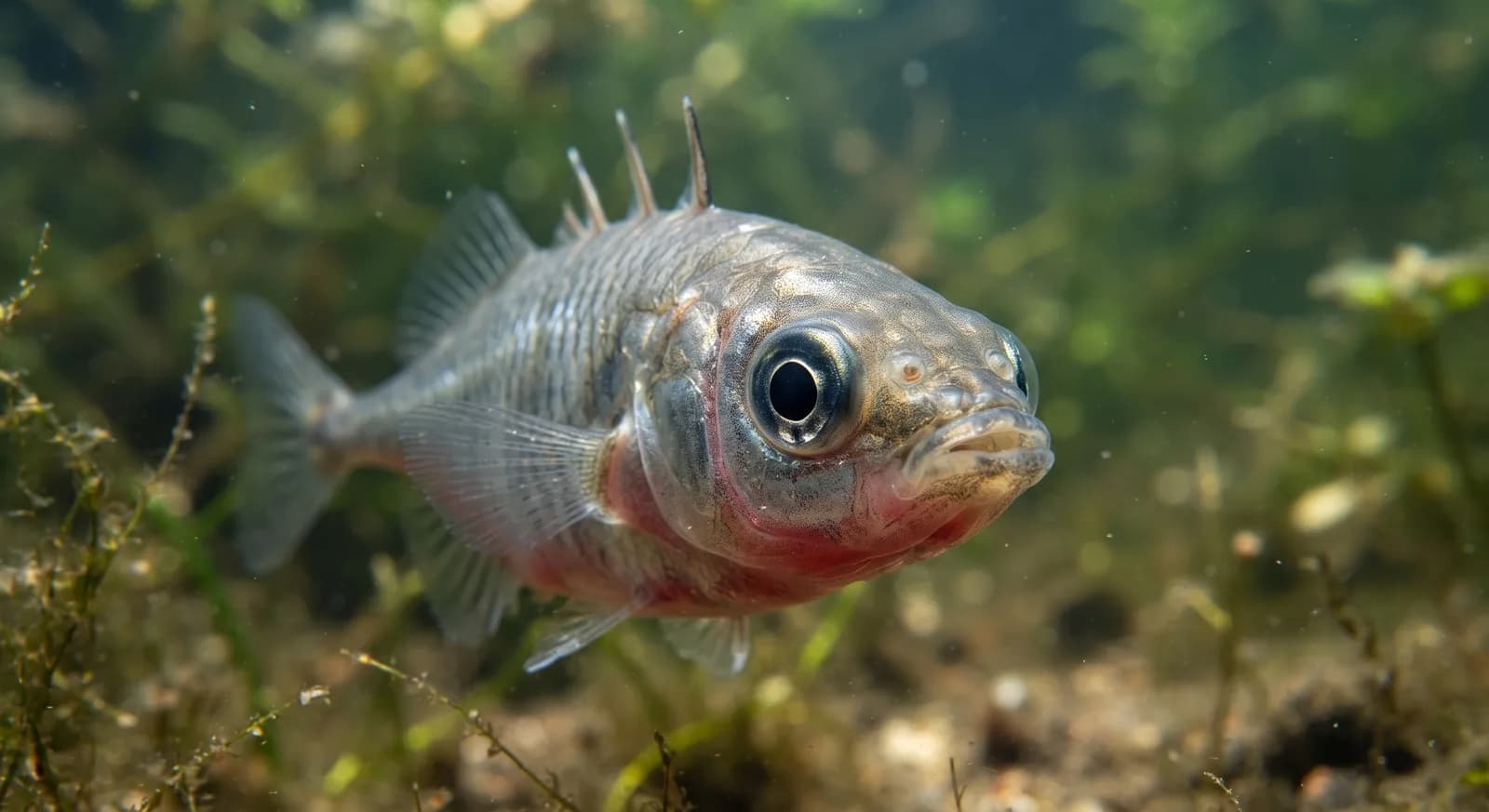 Least Concern
Three-spined Stickleback
Gasterosteus aculeatus
Keep exploring
Based on what we already know about greater weever.
Comments
Share an experience, a fun fact or a tip for seeing the greater weever.
Be the first to comment.