Gastropods · Neogastropoda · Buccinidae
Common Whelk
Buccinum undatum
It has not yet been assessed against the IUCN criteria. See full glossary
A sea snail with a thick, ridged shell, both predator and scavenger: it detects dead fish and crustaceans at a distance with its olfactory siphon and drills into bivalves with its radula. It supports pot fisheries in northern Europe. It lays spongy masses of egg capsules that the sea usually casts up on the beach.
Size
6 cm – 11 cm
Lifespan
10 years
Diet
Carnivore
Feeds mainly on other animals.
Social structure
Colony
Lives in large concentrations, often for breeding reasons.
Sighting difficulty
Unknown
Fun facts
- In each egg mass only a few embryos are ever born: the first to develop devour their siblings and the unfertilised eggs before emerging.
- The masses of empty capsules that turn up on the shore were known aboard ship as sea wash balls, because sailors used them to wash their hands.
- It lays its eggs in spongy masses of capsules that the tides wash up on the beach; they are known as sea wash balls, because sailors used them to wash their hands.
- Only a handful of tiny snails emerge from each capsule: the first embryos to develop eat their siblings.
- It is extremely sensitive to the tributyltin in antifouling paints. That compound causes imposex, the development of male organs in females, which in severe cases sterilises them and wiped out whole North Sea populations. It was one of the pieces of evidence that led to the TBT ban.
- It locates carrion at a distance by smell, orienting itself with its siphon.
- It is an important fishery resource in the United Kingdom, France and Canada, much of it exported to South Korea.
Life cycle & biology
- Habitat & environment
- Sandy, muddy and gravel bottoms of the North Atlantic, from 0 to 1,200 m
- Sexual maturity
- 5-7 years
Sources consulted: Linneo (1758); Marine Life Information Network; Mensink et al. (1996); Organización Marítima Internacional
Where to find it
See its range on the interactive mapWhere to watch it
Parques y spots de buceo donde se ha documentado esta especie — se muestran 20 de 42 documentados.
Related species
Other species in the catalogue with the most in common with Common Whelk — same habitat, park, country, tags or family.
 Least Concern
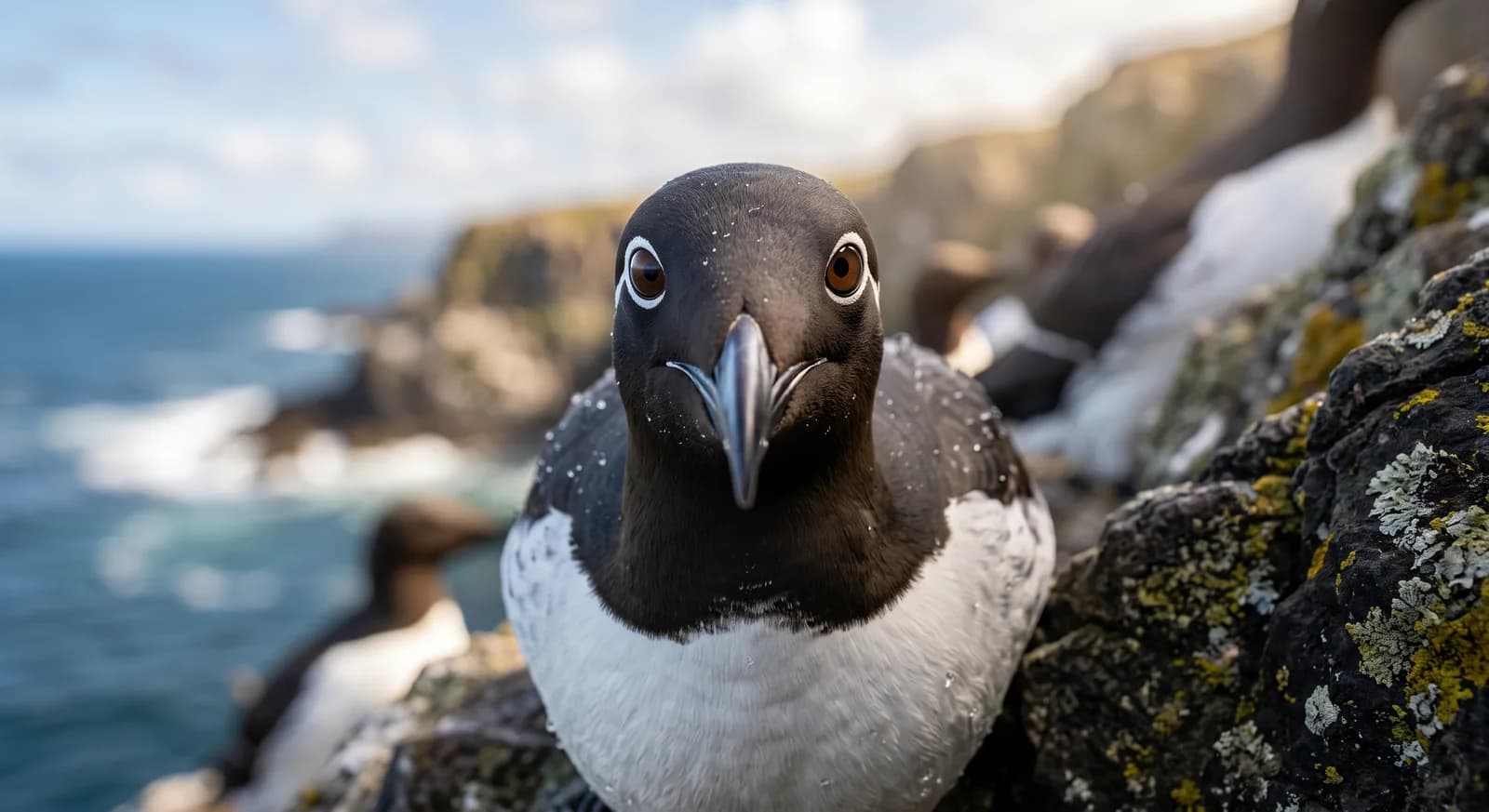
Common Murre
Uria aalge
Hagfish
Myxine glutinosa
Smelt
Osmerus eperlanus
Common Periwinkle
Littorina littorea
Common Oyster
Ostrea edulis
Blue Mussel
Mytilus edulis
Keep exploring
Based on what we already know about common whelk.
Comments
Share an experience, a fun fact or a tip for seeing the common whelk.
Be the first to comment.