Malacostracans · Decapoda · Cancridae
Edible Crab
Cancer pagurus
It has not yet been assessed against the IUCN criteria. See full glossary
It supports the largest crab fishery in western Europe. Berried females stay buried without feeding through the whole incubation, and are protected by law from being taken.
Weight
500 g – 3 kg
Size
10 cm – 25 cm
Lifespan
27 years
Diet
Carnivore
Feeds mainly on other animals.
Activity
Nocturnal
Active mainly at night.
Social structure
Solitary
Lives and hunts alone, joining others only to breed.
Sighting difficulty
Unknown
Fun facts
- It supports the largest crab fishery in western Europe.
- Berried females are protected by law and may not be taken.
- A female can lay as many as 3,000,000 eggs at a time.
Life cycle & biology
- Skeleton type
- Invertebrate - calcified exoskeleton (crustacean)
- Habitat & environment
- Rocky, gravel and sandy bottoms of the north-eastern Atlantic, from Norway to North Africa
- Birth weight
- A tiny zoea larva on hatching, released into the plankton
- Size at birth
- A fast-growing planktonic zoea larva
- Sexual maturity
- Female: 107-132 mm across the carapace | Male: 110-122 mm across the carapace
- Gestation / incubation
- 6-9 months under the female's abdomen before hatching
- Litter / clutch size
- 250,000 to 3,000,000 eggs per clutch, depending on the female's size
Sources consulted: ResearchGate (Skagerrak Kattegat maturity study); Animalia.bio; ICES Journal of Marine Science; ScienceDirect (Scottish waters maturity study); MarLIN; SeaLifeBase; iNaturalist; PMC (electronic tags migration study)
Where to find it
See its range on the interactive mapWhere to watch it
Parques y spots de buceo donde se ha documentado esta especie — se muestran 20 de 42 documentados.
Related species
Other species in the catalogue with the most in common with Edible Crab — same habitat, park, country, tags or family.
Thornback Ray
Raja clavata
Common Stingray
Dasyatis pastinaca
Rabbitfish
Chimaera monstrosa
 Least Concern
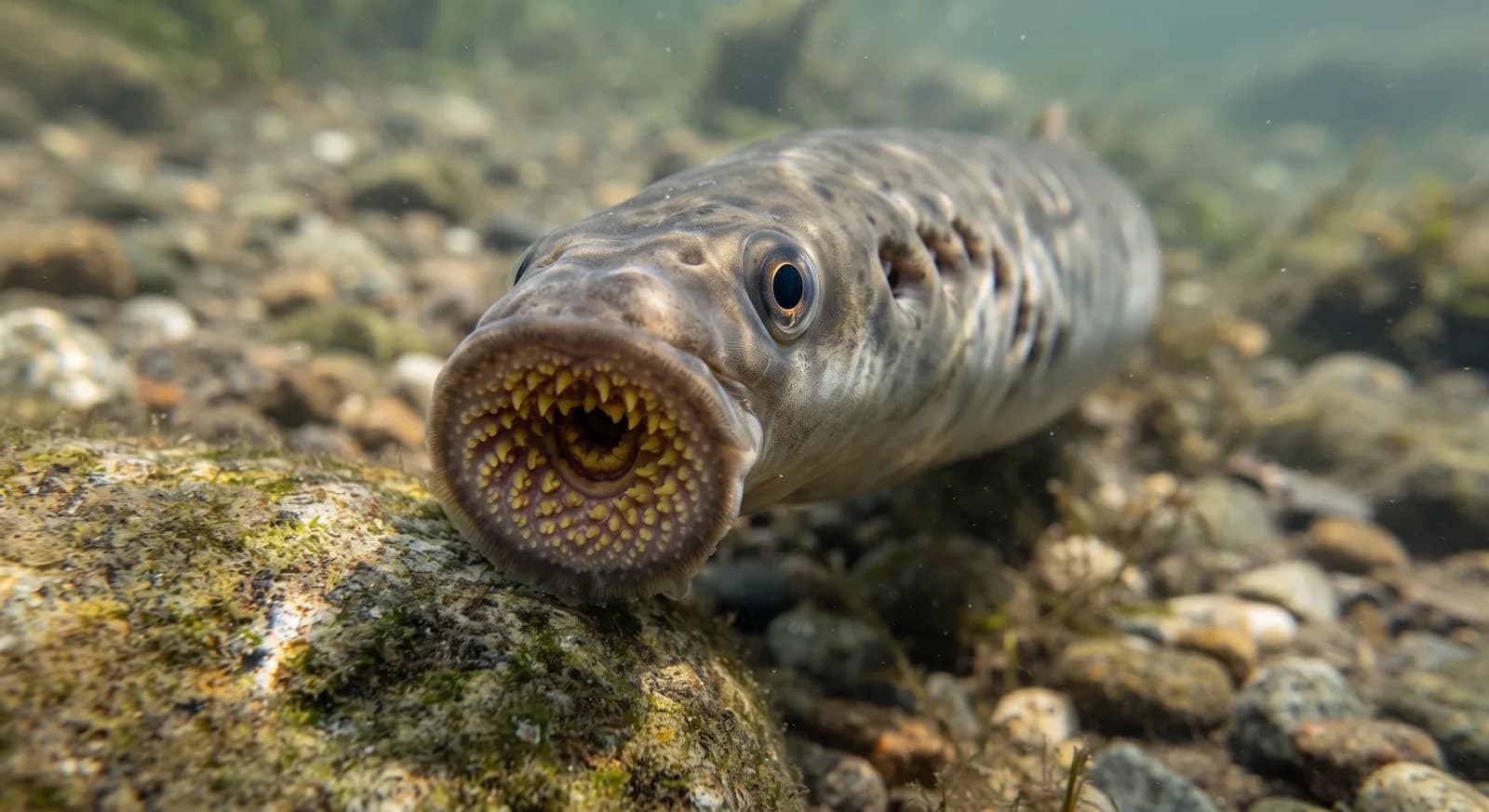
Sea Lamprey
Petromyzon marinus
Moray Eel
Muraena helena
European Hake
Merluccius merluccius
Keep exploring
Based on what we already know about edible crab.
Comments
Share an experience, a fun fact or a tip for seeing the edible crab.
Be the first to comment.