One of the 2 hermit crabs on WAnimals
Malacostracans · Decapoda · Paguridae
Hermit Crab
Pagurus bernhardus
It has not yet been assessed against the IUCN criteria. See full glossary
It depends entirely on the empty shells of sea snails to protect its soft abdomen, so how many shells of the right size it can find sets a direct limit on its growth and its lifespan.
Size
1 cm – 3.5 cm
Lifespan
4 years
Diet
Omnivore
Combines animal and plant food depending on availability.
Activity
Nocturnal
Active mainly at night.
Social structure
Solitary
Lives and hunts alone, joining others only to breed.
Sighting difficulty
Unknown
Fun facts
- comportamientoIt has to change shells several times as it grows, and now and then a group will queue up in order of size to swap shells one after another.
- The shell is its limiting resource, which is why hermit crabs compete intensely for them. An individual assesses an empty shell by inserting a claw, gauging the interior and the weight before deciding on the switch.
- And they form vacancy chains: when a large empty shell turns up, a queue of hermit crabs forms in order of size, and as soon as the largest moves in, each one takes the shell the one before has left. It is a well-documented collective behaviour, much cited in economics as an analogy for housing markets.
- It often carries passengers: anemones of the genus Calliactis settle on its shell and provide chemical protection in exchange for transport and food scraps. The crab itself moves them onto the new shell when it switches.
- Its abdomen is soft, asymmetrical and coiled, adapted to the spiral of the shell.
- It has been used in experiments on pain perception in invertebrates: studies show that it abandons good-quality shells when given shocks, and that this behaviour is not a simple reflex but one that weighs costs against benefits.
Life cycle & biology
- Skeleton type
- Invertebrate - partly calcified exoskeleton, protected by borrowed gastropod shells (crustacean)
- Habitat & environment
- Rocky and sandy bottoms of the north-eastern Atlantic, from the Russian White Sea to Portugal, between the intertidal and 140 m
- Birth weight
- Tiny zoea larva at hatching
- Size at birth
- A planktonic zoea larva with a long development before it settles
- Sexual maturity
- Under a year (early breeding is documented, with females raising young in their first year)
- Gestation / incubation
- The egg develops over a period the sources do not put a figure on
- Litter / clutch size
- Fecundity varies with the female's size (no precise figure found)
Sources consulted: SeaLifeBase; TortoiseTurtle.com; iNaturalist; Cambridge Core (reproduction life history strategy study); MarLIN; Animal Diversity Web; Grokipedia; Reef Life Survey
Where to find it
See its range on the interactive mapWhere to watch it
Parques y spots de buceo donde se ha documentado esta especie — se muestran 20 de 54 documentados.
Related species
Other species in the catalogue with the most in common with Hermit Crab — same habitat, park, country, tags or family.
Edible Crab
Cancer pagurus
Blue Crab
Callinectes sapidus
 Least Concern
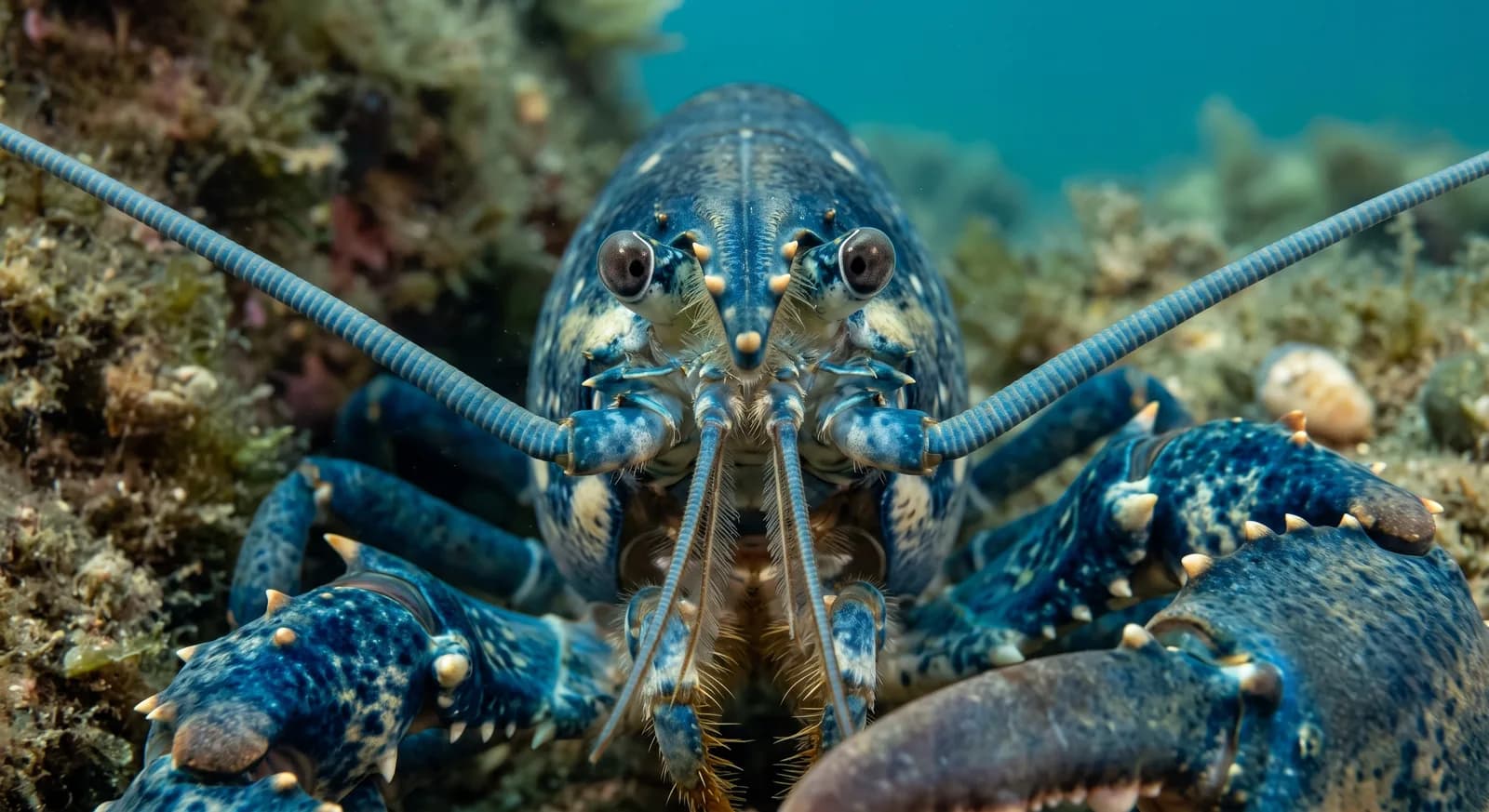
Common Lobster
Homarus gammarus
Common Spiny Lobster
Palinurus elephas
Common Spider Crab
Maja squinado
Marbled Rock Crab
Pachygrapsus marmoratus
Keep exploring
Based on what we already know about hermit crab.
Comments
Share an experience, a fun fact or a tip for seeing the hermit crab.
Be the first to comment.