Species group · Malacostracans
Crabs
WAnimals has 22 species of crab, spread across 15 families (Astacidae, Cambaridae, Coenobitidae, Gecarcinidae, Geryonidae, Grapsidae, Inachidae, Kiwaidae, Lithodidae, Ocypodidae, Paguridae, Portunidae, Raninidae, Varunidae, Xanthidae).
- 22 species
- 15 families
- 171 countries
- 245 parks
- Weight
- 30 g – 19 kg
- Length
- 1 cm – 3.8 m
- Lifespan
- 3 – 60 years
Ranges calculated from the entries that record the figure, not from all 22.
All 22 species of crabs on WAnimals
Each one has its own full entry. This group does not replace them: it brings them together.
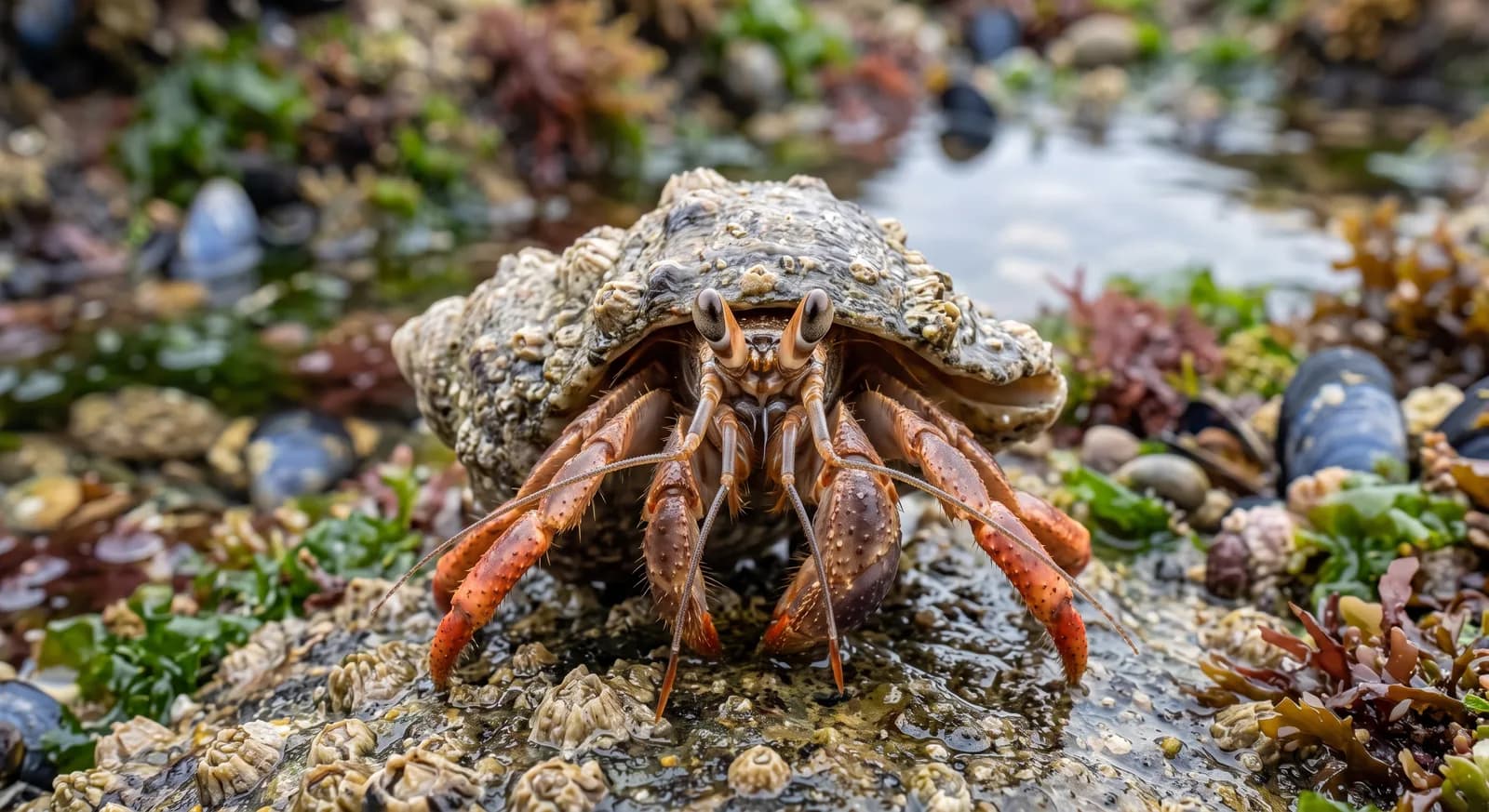 Not Evaluated
Chilean Hermit Crab
Pagurus edwardsii
Coconut Crab
Birgus latro
Moon Crab
Gecarcinus quadratus
Sally Lightfoot Crab
Grapsus grapsus
Marbled Rock Crab
Pachygrapsus marmoratus
Atlantic Ghost Crab
Ocypode quadrata
Blue Crab
Callinectes sapidus
Spanner Crab
Ranina ranina
Florida Stone Crab
Menippe mercenaria
Great Land Crab
Cardisoma guanhumi
Mud Fiddler Crab
Uca pugnax
Red King Crab
Paralithodes camtschaticus
White-clawed Crayfish
Austropotamobius pallipes
Giant Spider Crab
Macrocheira kaempferi
Noble Crayfish
Astacus astacus
Green Crab
Carcinus maenas
Red Swamp Crayfish
Procambarus clarkii
Chinese Mitten Crab
Eriocheir sinensis
Christmas Island Red Crab
Gecarcoidea natalis
Signal Crayfish
Pacifastacus leniusculus
Deep-sea Red Crab
Chaceon affinis
Yeti Crab
Kiwa hirsuta
Conservation status
3 especies in this group están en alguna categoría de riesgo real según la UICN.
See the global conservation statusWhere they live
Recorded in 171 countries. The ones with the most species in the group:
Where to see them
- Biscayne5 species
- Everglades5 species
- Guanahacabibes4 species
- Assateague Island3 species
- Cahuita3 species
- Cape Cod3 species
- Del Este3 species
- Dry Tortugas3 species
- Isla Bastimentos3 species
- Isla Contoy3 species
- Jaragua3 species
- Morrocoy3 species
- Blue Heron Bridgediving
- Christ of the Abyss (Key Largo)diving
- Duane Wreck (Key Largo)diving
- Flower Garden Banksdiving
- French Reef (Key Largo)diving
- Jupiter (drift diving con tiburones)diving
Did you know…
A hermit crab's abdomen is asymmetrical and curved to fit the spiral of the shell it occupies.
From Chilean Hermit Crab
The supply of empty shells, rather than food, is usually what limits the size of their populations.
From Chilean Hermit Crab
Like all hermit crabs, it has a soft, asymmetrical abdomen shaped to the spiral of the shell it occupies, and protects it by withdrawing inside.
From Chilean Hermit Crab
It is the largest land arthropod in the world, and will climb trees to cut coconuts loose with its powerful claws before dropping them to break on the ground.
From Coconut Crab
Its claws exert one of the highest gripping forces measured in the animal kingdom, enough to crack open a coconut.
From Coconut Crab
It is so adapted to life on land that it drowns if submerged: it breathes with branchiostegal lungs that it has to keep moist.
From Coconut Crab
Its consumption of leaf litter and seedlings influences which trees manage to germinate, so that a crab shapes the composition of the forest.
From Moon Crab
Its burrows aerate the soil and speed up nutrient recycling in the coastal forest.
From Moon Crab