Species group · Amphibians
Frogs
WAnimals has 47 species of frog, spread across 24 families (Arthroleptidae, Brevicipitidae, Centrolenidae, Ceratobatrachidae, Ceratophryidae, Conrauidae, Dendrobatidae, Heleophrynidae, Hemiphractidae, Hylidae, Hyperoliidae, Leptodactylidae, Micrixalidae, Microhylidae, Myobatrachidae, Nasikabatrachidae, Phrynobatrachidae, Phyllomedusidae, Pipidae, Pyxicephalidae, Ranidae, Rhacophoridae, Rhinodermatidae, Telmatobiidae).
- 47 species
- 24 families
- 145 countries
- 528 parks
- Weight
- 1 g – 5 kg
- Length
- 1.7 cm – 32 cm
- Lifespan
- 4 – 35 years
Ranges calculated from the entries that record the figure, not from all 47.
All 47 species of frogs on WAnimals
Each one has its own full entry. This group does not replace them: it brings them together.
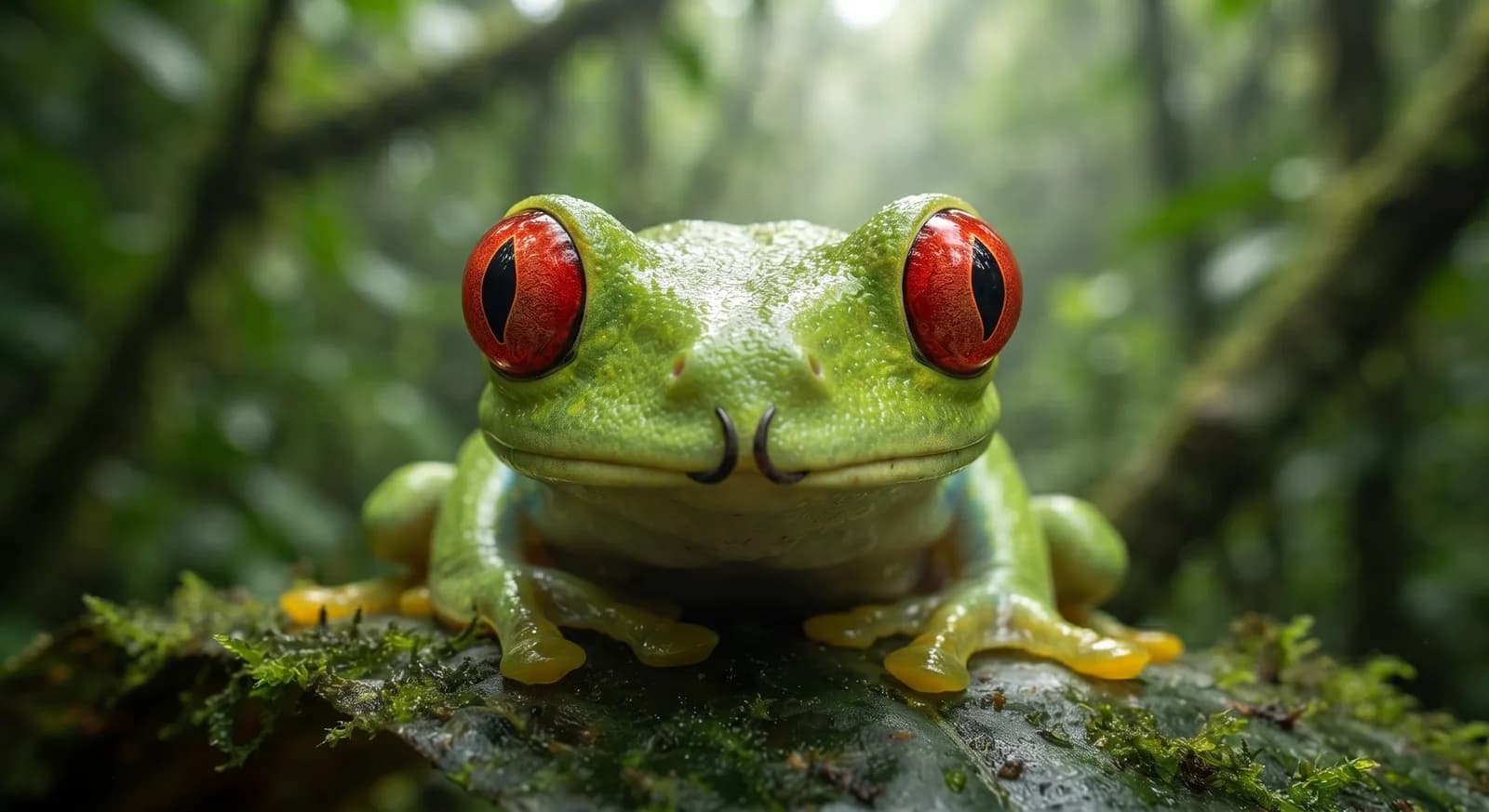 Least Concern
Red-eyed Treefrog
Agalychnis callidryas
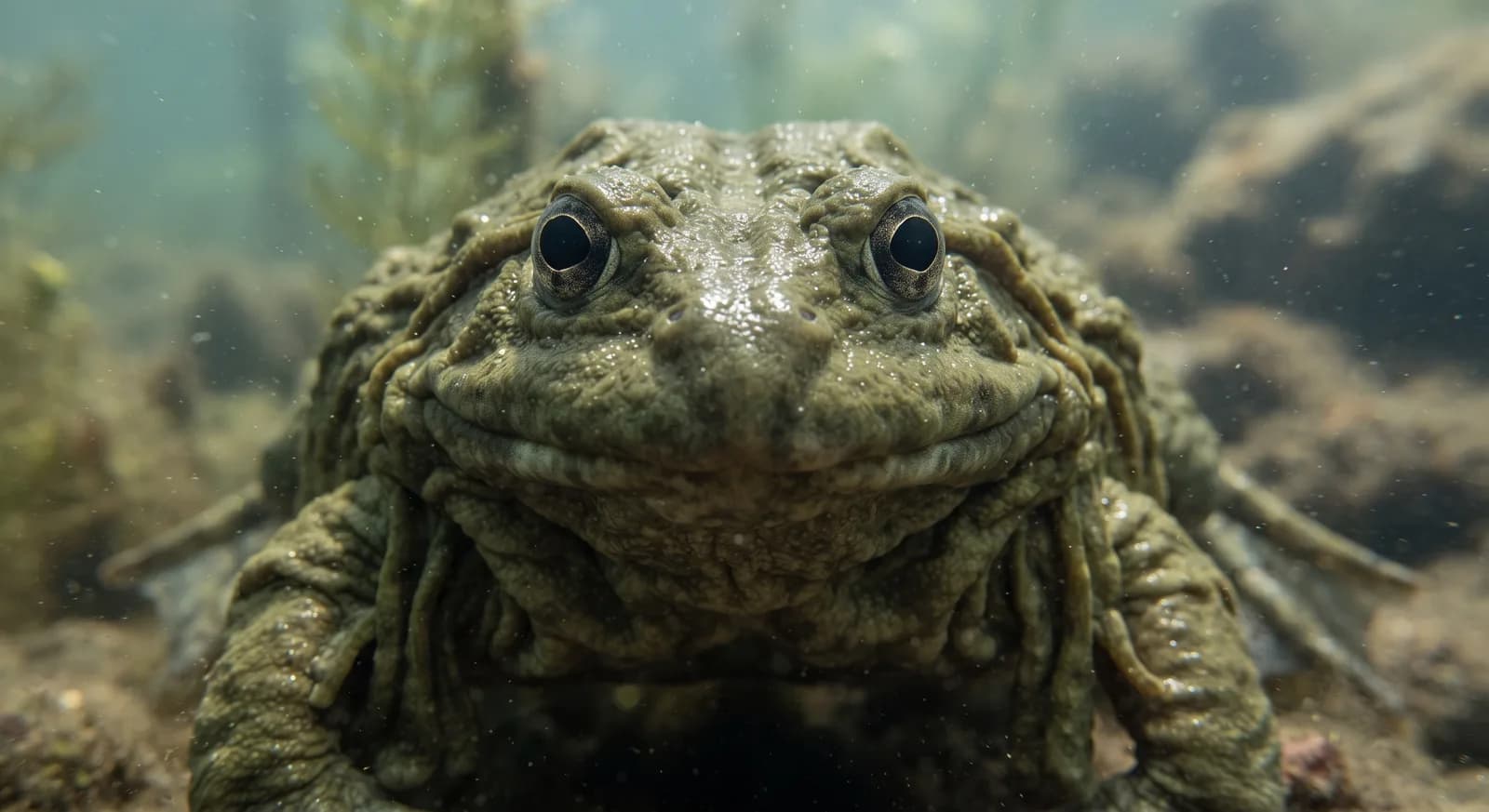 Critically Endangered
Titicaca Water Frog
Telmatobius culeus
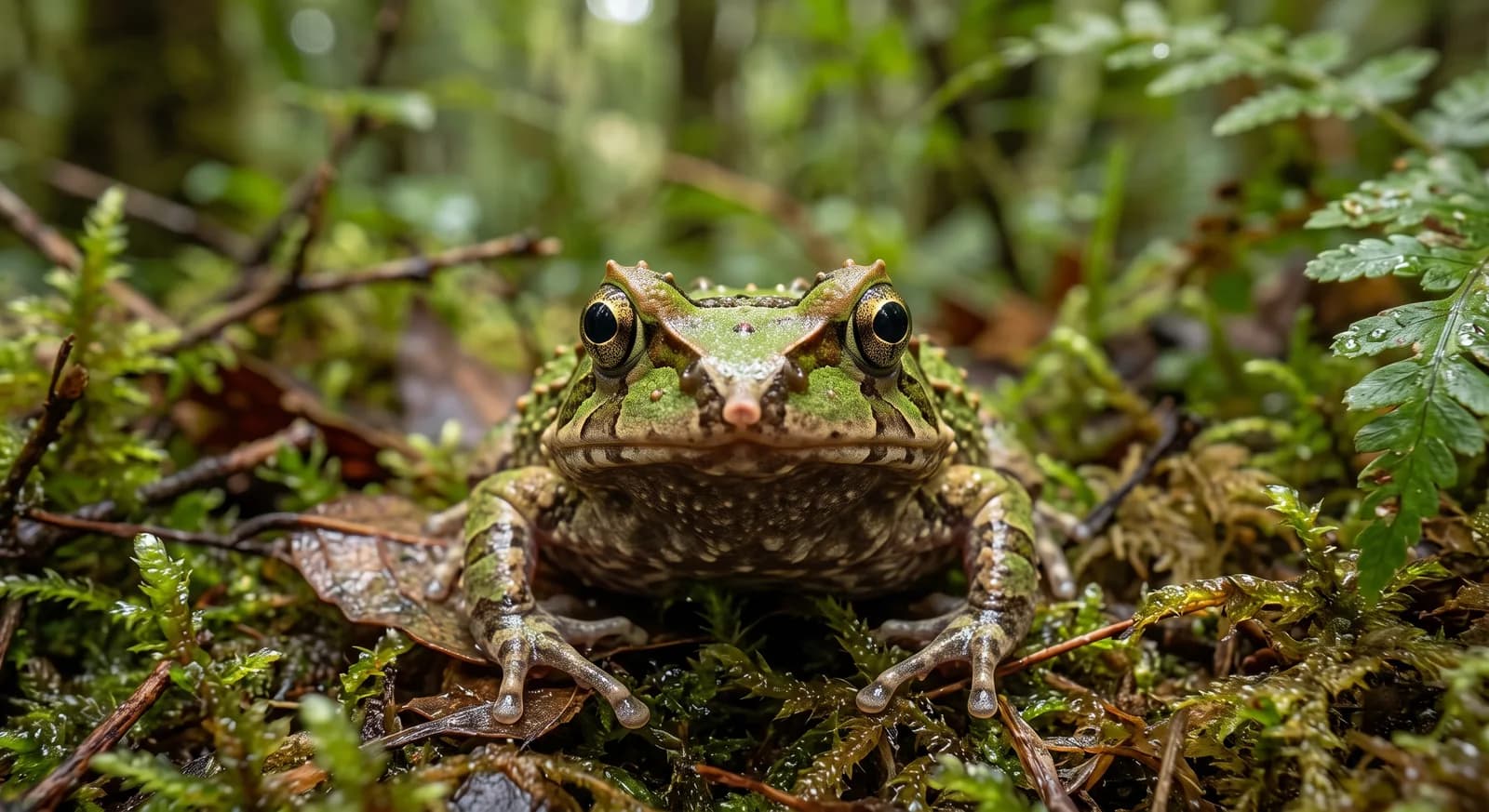 Endangered
Southern Darwin's Frog
Rhinoderma darwinii
American Bullfrog
Lithobates catesbeianus
Giant Slippery Frog
Conraua goliath
Tungara Frog
Physalaemus pustulosus
Snoring Puddle Frog
Phrynobatrachus natalensis
Mission Golden-eyed Treefrog
Trachycephalus resinifictrix
African Clawed Frog
Xenopus laevis
Water Frogs
Pelophylax kl. esculentus
Hairy Frog
Trichobatrachus robustus
Fleischmann's Glass Frog
Hyalinobatrachium fleischmanni
Rufous Frog
Leptodactylus fuscus
Zaire Dwarf Clawed Frog
Hymenochirus boettgeri
Giant Bullfrog
Pyxicephalus adspersus
Agile Frog
Rana dalmatina
Common Frog
Rana temporaria
Lesser Bull-frog
Pyxicephalus edulis
Abah River Flying Frog
Rhacophorus nigropalmatus
Dyeing Poison Frog
Dendrobates tinctorius
Bushveld Rain Frog
Breviceps adspersus
Strawberry Poison Frog
Oophaga pumilio
Painted-belly Leaf Frog
Phyllomedusa sauvagii
Argentinean Horned Frog
Ceratophrys ornata
Cuban Treefrog
Osteopilus septentrionalis
White's Tree Frog
Litoria caerulea
Gray Treefrog
Dryophytes versicolor
Korean Brown Frog
Rana coreana
Wood Frog
Lithobates sylvaticus
Green and Black Poison Frog
Dendrobates auratus
Purple Frog
Nasikabatrachus sahyadrensis
Perez's Frog
Pelophylax perezi
Northern Leopard Frog
Lithobates pipiens
Granular Poison Frog
Oophaga granulifera
Iberian Frog
Rana iberica
Green Frog
Rana clamitans
Purcell's Ghost Frog
Heleophryne purcelli
Common Marsupial Frog
Gastrotheca ovifera
Pyrenean Frog
Rana pyrenaica
Fiji Tree Frog
Platymantis vitiensis
Painted Reed Frog
Hyperolius marmoratus
Malaysian Narrowmouth Toad
Kaloula pulchra
Java Whipping Frog
Polypedates leucomystax
Dune Squeaker
Arthroleptis stenodactylus
Southern Gastric Brooding Frog
Rheobatrachus silus
Golden Poison Frog
Phyllobates terribilis
Kalakkad Dancing Frog
Micrixalus fuscus
Conservation status
9 especies in this group están en alguna categoría de riesgo real según la UICN.
See the global conservation statusWhere they live
Recorded in 145 countries. The ones with the most species in the group:
Where to see them
- Assateague Island6 species
- Congaree6 species
- Great Smoky Mountains6 species
- Hot Springs6 species
- Mammoth Cave6 species
- Acadia5 species
- Braulio Carrillo5 species
- Cape Cod5 species
- Corcovado5 species
- Cuyahoga Valley5 species
- Everglades5 species
- Hluhluwe-iMfolozi5 species
- Crystal River (manatíes)diving
- Devil's Dendiving
- Fathom Five National Marine Park (Tobermory)diving
- Ginnie Springsdiving
- Isle Royale National Parkdiving
- Lago Titicacadiving
Did you know…
It lays its eggs on leaves overhanging pools, and the tadpoles hatch and drop straight into the water when they feel the vibrations of an approaching predator.
From Red-eyed Treefrog
Its embryos decide when to hatch: if a snake attacks the clutch, the tadpoles sense the vibration and hatch all at once up to three days early, dropping into the water to escape. They can tell a predator's vibration from that of rain or wind.
From Red-eyed Treefrog
Its colouring is what is known as startle coloration: by day it is entirely green and invisible, and when disturbed it snaps open its red eyes and flashes its blue and orange flanks, a burst that throws the predator long enough for it to leap away.
From Red-eyed Treefrog
Its heavily folded skin increases its surface area, so it can absorb more dissolved oxygen straight from the cold, oxygen-poor water of Lake Titicaca.
From Titicaca Water Frog
It breathes through its skin: its lungs are reduced almost to uselessness and the skin forms hanging folds that multiply the surface available for oxygen exchange, an adaptation needed to live at nearly four thousand metres where the water holds little oxygen. It never surfaces to breathe.
From Titicaca Water Frog
It does press-ups to breathe better: when oxygen runs short it bobs rhythmically on the bottom to refresh the water around its skin folds.
From Titicaca Water Frog
The male broods the fertilised eggs inside his own vocal sac until the young complete their metamorphosis.
The male swallows the tadpoles and raises them inside his vocal sac: they stay there six or seven weeks feeding on secretions from its walls, and emerge from their father's mouth as fully formed froglets. There is nothing like it in any other vertebrate.