One of the 4 oysters on WAnimals
Bivalves · Ostreida · Isognomonidae
Flat Tree Oyster
Isognomon alatus
It has not yet been assessed against the IUCN criteria. See full glossary
A flattened, irregular bivalve that attaches by its byssus to the submerged roots of red mangroves and to piles and rocks, often in dense clusters. It filters phytoplankton and copes well with the swings in salinity of the mangroves.
Size
5 cm – 10 cm
Diet
Omnivore
Combines animal and plant food depending on availability.
Social structure
Colony
Lives in large concentrations, often for breeding reasons.
Sighting difficulty
Unknown
Fun facts
- Its clusters on mangrove roots create microhabitat for crabs, worms and juvenile fish.
- The straight hinge with a row of parallel grooves makes its valves very easy to identify on the beach.
- It forms dense clusters on the aerial roots of red mangrove, one of the characteristic features of the mangrove community.
- Its shell is highly compressed, flattened and irregular, and takes the shape of whatever it attaches to.
- It is a filter feeder tolerant of the variable salinity of mangroves and of exposure to air at low tide.
- It has been used as a biomonitor of heavy metals in Caribbean coastal waters.
Life cycle & biology
- Habitat & environment
- Mangrove roots and hard structures in the shallow waters of the Caribbean
Sources consulted: Gmelin (1791); Smithsonian Marine Station; estudios de biomonitorización en el Caribe
Where to find it
See its range on the interactive mapWhere to watch it
Parques y spots de buceo donde se ha documentado esta especie — se muestran 20 de 36 documentados.
Related species
Other species in the catalogue with the most in common with Flat Tree Oyster — same habitat, park, country, tags or family.
Queen Conch
Lobatus gigas
American Horseshoe Crab
Limulus polyphemus
 Critically Endangered
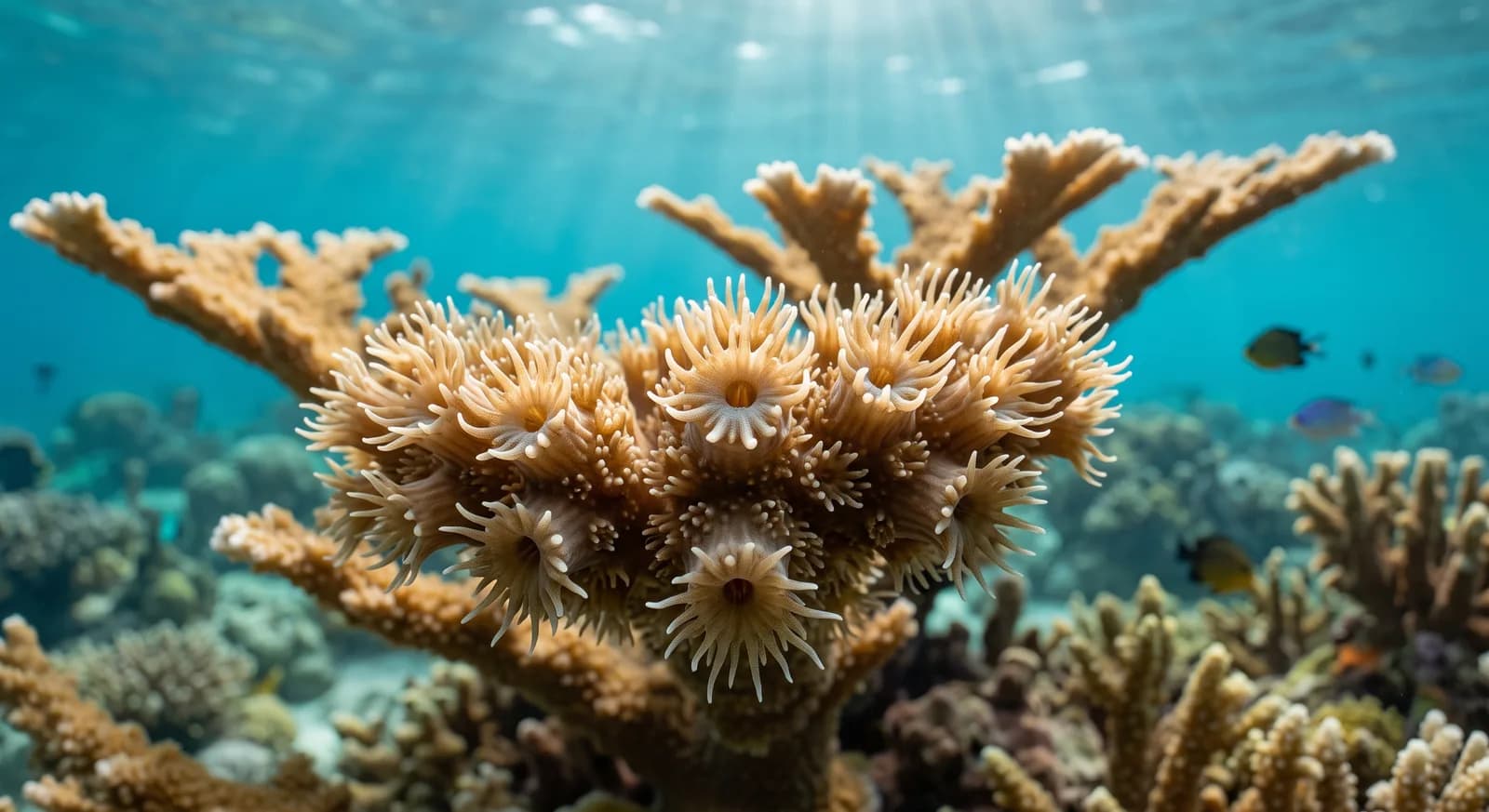
Elkhorn Coral
Acropora palmata
Atlantic Spadefish
Chaetodipterus faber
Upside-down Jellyfish
Cassiopea andromeda
Keep exploring
Based on what we already know about flat tree oyster.
Comments
Share an experience, a fun fact or a tip for seeing the flat tree oyster.
Be the first to comment.