One of the 6 jellyfish on WAnimals
True jellyfish · Rhizostomeae · Cassiopeidae
Upside-down Jellyfish
Cassiopea andromeda
It has not yet been assessed against the IUCN criteria. See full glossary
The upside-down jellyfish, which spends its life resting inverted on the bottom of lagoons and mangroves, its bell against the sediment and its oral arms pointing upwards like a plant. Its tissues host symbiotic algae that need light.
Size
15 cm – 30 cm
Diet
Omnivore
Combines animal and plant food depending on availability.
Social structure
Colony
Lives in large concentrations, often for breeding reasons.
Sighting difficulty
Unknown
Fun facts
- biologíaUnlike most jellyfish it spends most of its adult life lying upside down on the sea floor, holding the photosynthetic algae in its tissues up to the sunlight.
- It releases into the water small packets of stinging cells called cassiosomes, which drift and cause the itching swimmers feel without ever touching a jellyfish, a mechanism described in 2020.
- It is one of the few brainless animals in which a sleep-like state has been demonstrated, with periods of reduced activity and reduced response to stimuli.
- It lives upside down. It settles on the bottom with its bell beneath and its oral arms pointing up, to expose to the sun the symbiotic zooxanthellae held in its tissues.
- Those algae supply much of its food by photosynthesis, so in practice it behaves more like a plant than like a hunting jellyfish.
- You do not have to touch it to be stung: it releases cartridges of mucus loaded with stinging cells into the water, producing the so-called stinging water that swimmers feel without having brushed against anything.
- In 2017 it was shown to enter a resting state comparable to sleep, with reduced activity and reduced responsiveness to stimuli, the first evidence of sleep in an animal without a brain.
- It has spread through the eastern Mediterranean via the Suez Canal and is one of the most conspicuous Lessepsian species.
Life cycle & biology
- Habitat & environment
- Shallow bottoms of tropical mangroves, lagoons and sheltered bays
Sources consulted: Forsskål (1775); Nath et al. (2017), Current Biology; Ames et al. (2020), Communications Biology
Where to find it
See its range on the interactive mapWhere to watch it
Parques y spots de buceo donde se ha documentado esta especie — se muestran 20 de 53 documentados.
Related species
Other species in the catalogue with the most in common with Upside-down Jellyfish — same habitat, park, country, tags or family.
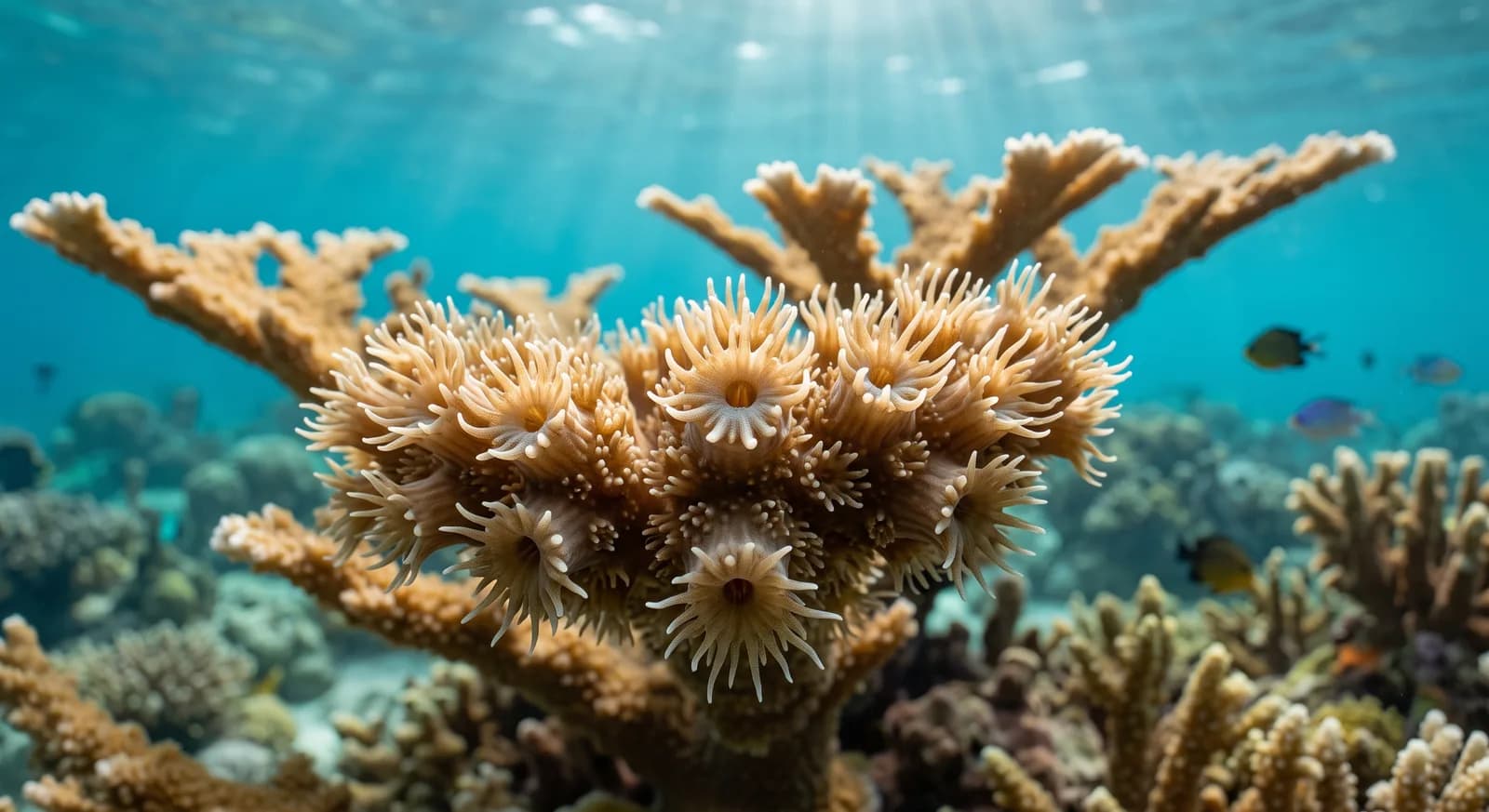 Critically Endangered
Elkhorn Coral
Acropora palmata
Disc Anemone
Discosoma nummiforme
Banded Humbug
Dascyllus aruanus
American Horseshoe Crab
Limulus polyphemus
Common Sea Fan
Gorgonia ventalina
Keep exploring
Based on what we already know about upside-down jellyfish.
Comments
Share an experience, a fun fact or a tip for seeing the upside-down jellyfish.
Be the first to comment.