 Not Evaluated
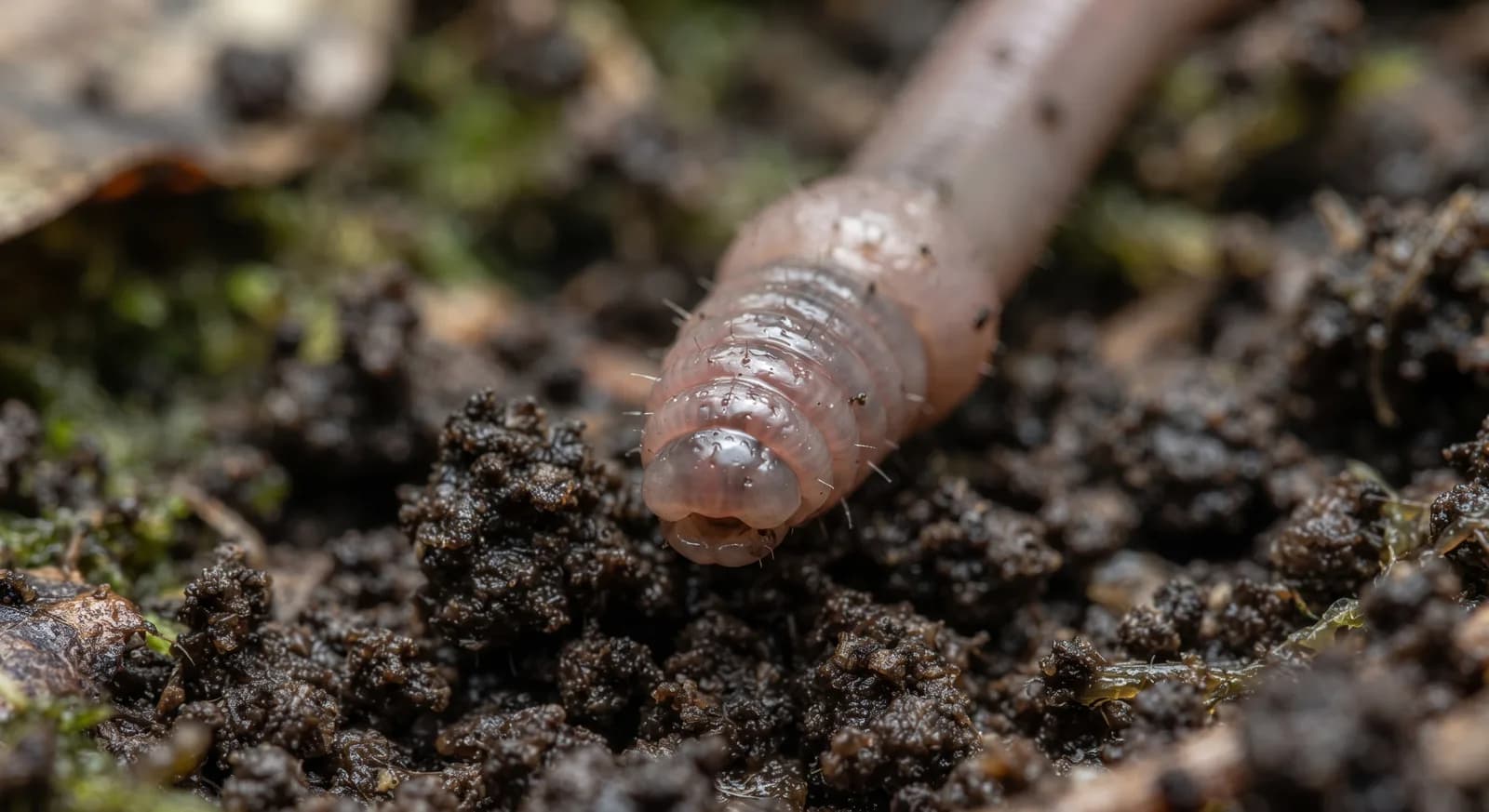
Common Earthworm
Lumbricus terrestris
47 countries210 parks
Species group · Clitellate annelids
WAnimals has 3 species of earthworm, spread across 3 families (Lumbricidae, Lumbriculidae, Megascolecidae).
Ranges calculated from the profiles that record the figure, not from all 3.
Each one has its own full profile. This group does not replace them: it brings them together.
No species documented in this group is genuinely at risk according to the IUCN, with the data available today.
Recorded in 70 countries. The ones with the most species in the group:
It has no lungs and breathes through its damp skin, so it can drown if it stays under standing water too long.
From
It is hermaphrodite, with both male and female organs in the same animal, though it generally needs to mate with another to fertilise its eggs.
From
Darwin calculated that a population of earthworms moves some 25 tonnes of soil per hectare per year; he devoted his last book, published in 1881, to them.
From
It reproduces by breaking into pieces: each fragment regrows a new head and tail and becomes a complete individual within a few weeks.
From
It is a reference organism in ecotoxicology, and standardised sediment toxicity tests are largely carried out with it.
From
It is bred on a large scale as live food for aquarium fish, where it is known as the California blackworm.
From
It reaches 3 m long and can be heard gurgling underground as it moves.
From
·
It is confined to a small area of Victoria of a few hundred square kilometres and is protected under Australian law.
From