 Not Evaluated
Moon Jellyfish
Aurelia aurita
111 countries69 parks127 dive sites
Species group · True jellyfish
WAnimals has 6 species of jellyfish, spread across 5 families (Cassiopeidae, Cyaneidae, Pelagiidae, Periphyllidae, Ulmaridae).
Each one has its own full profile. This group does not replace them: it brings them together.
No species documented in this group is genuinely at risk according to the IUCN, with the data available today.
Recorded in 116 countries. The ones with the most species in the group:
It eats zooplankton, small crustaceans and fish larvae.
From
It lives in temperate coastal waters and estuaries of almost every ocean in the world.
From
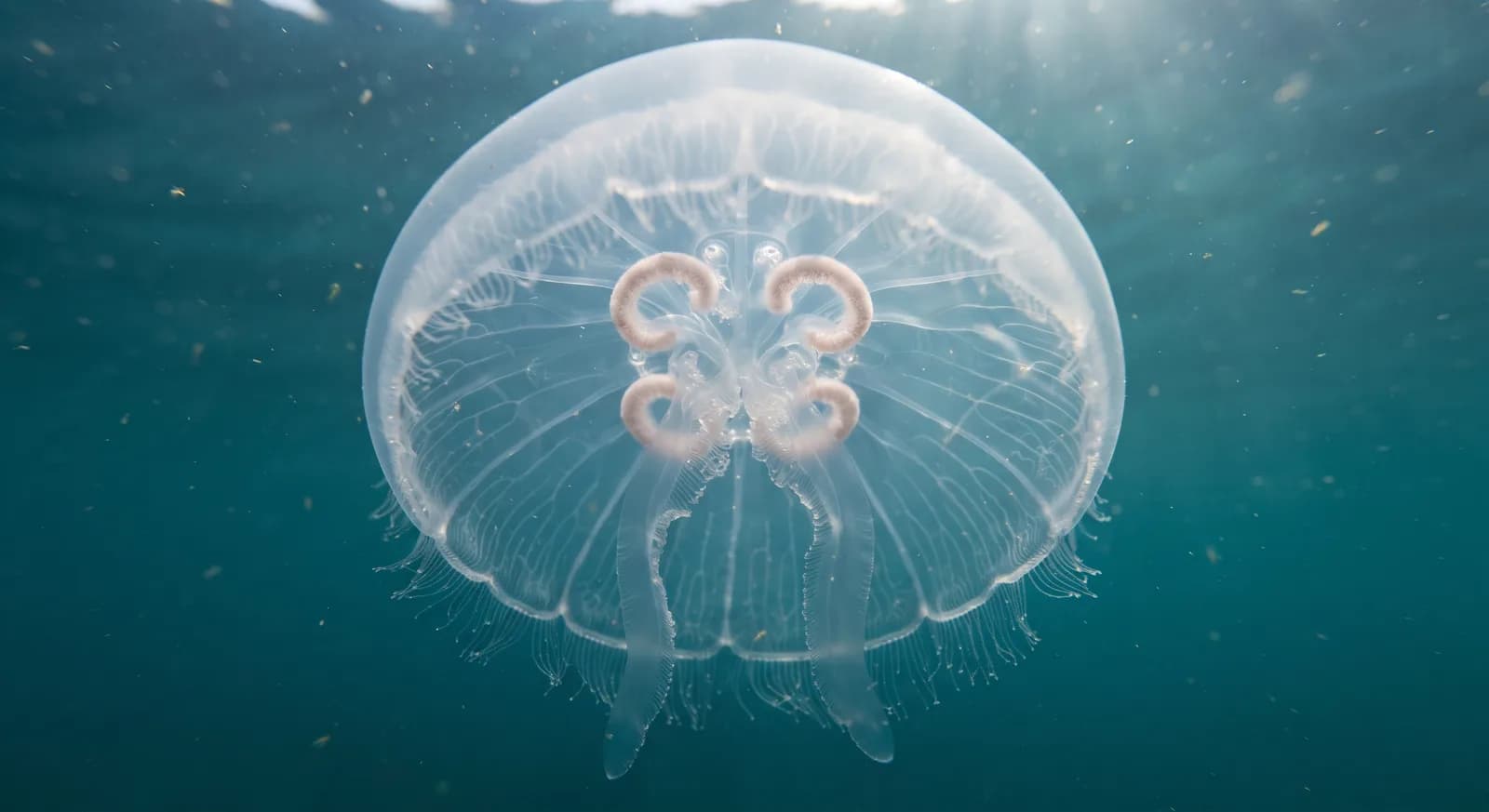
It is recognisable by its four distinctive horseshoe-shaped gonads, visible through the translucent bell.
From
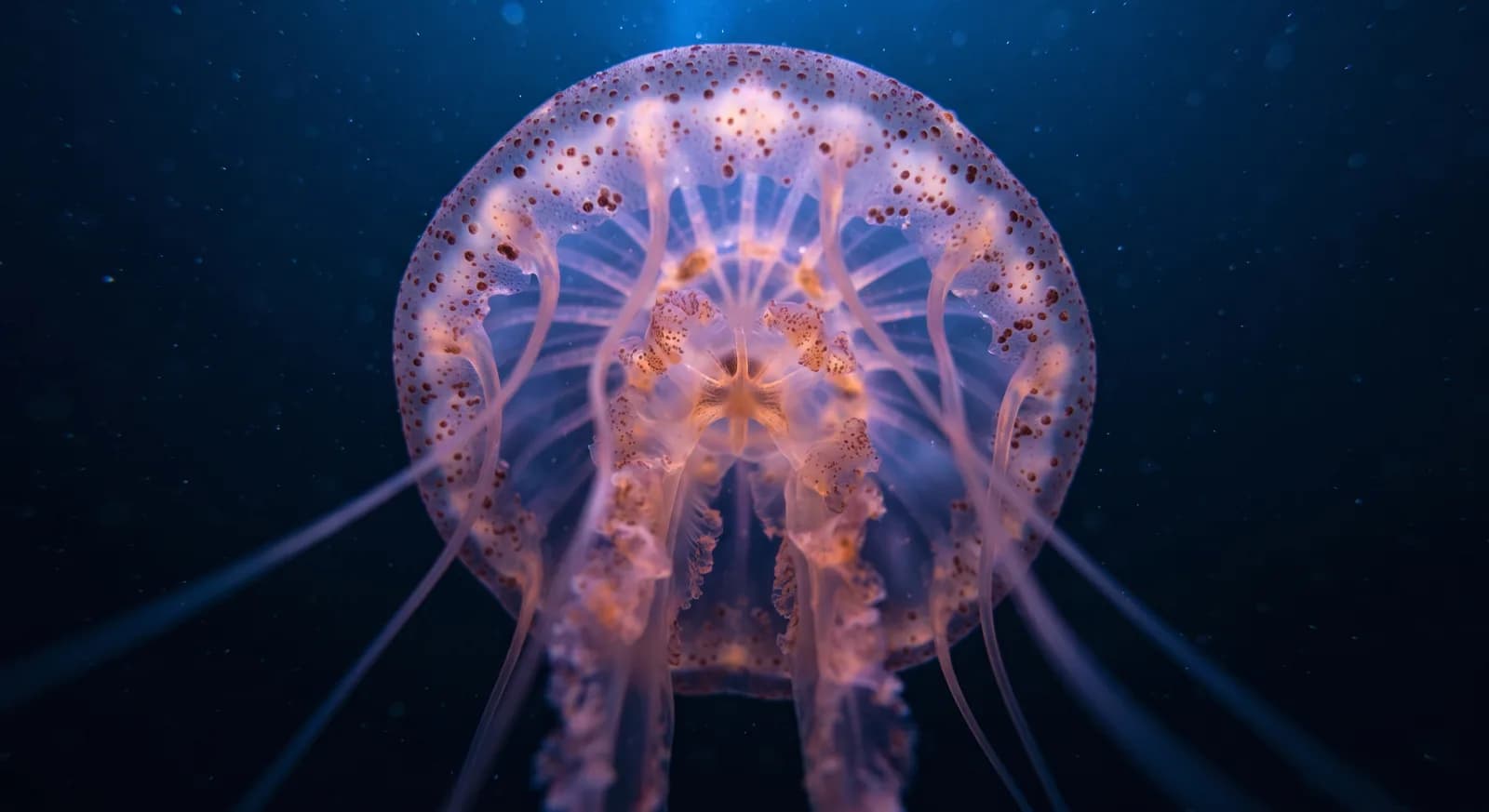
Its scientific name means "night light", after its bioluminescence.
From
It goes straight from planktonic larva to young medusa, with no fixed polyp stage.
From
It can form large ocean swarms, especially in the Mediterranean.
From
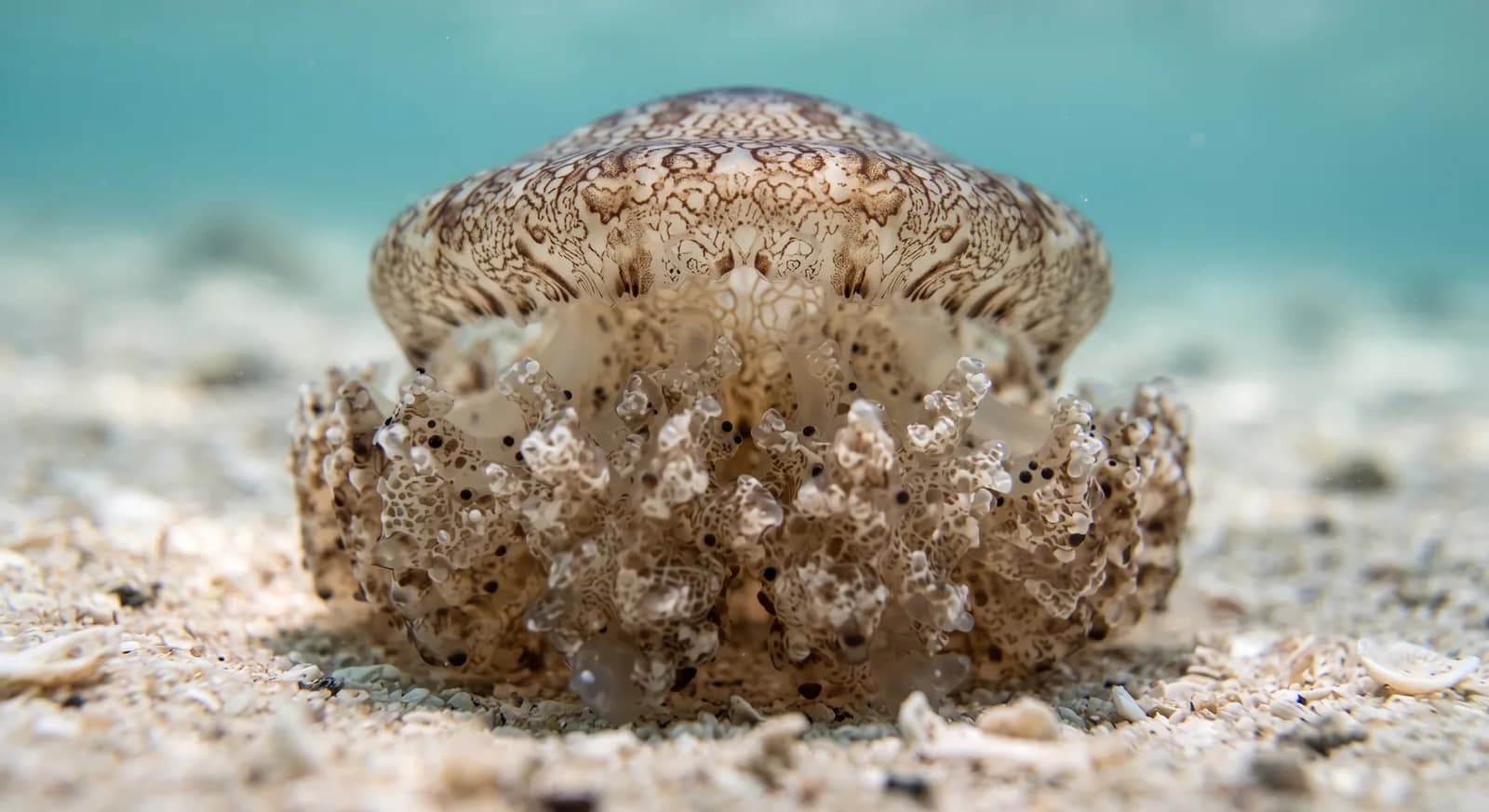
Unlike most jellyfish it spends most of its adult life lying upside down on the sea floor, holding the photosynthetic algae in its tissues up to the sunlight.
From
It releases into the water small packets of stinging cells called cassiosomes, which drift and cause the itching swimmers feel without ever touching a jellyfish, a mechanism described in 2020.
·
Ranges calculated from the profiles that record the figure, not from all 6.