One of the 6 jellyfish on WAnimals
True jellyfish · Rhizostomeae · Cassiopeidae
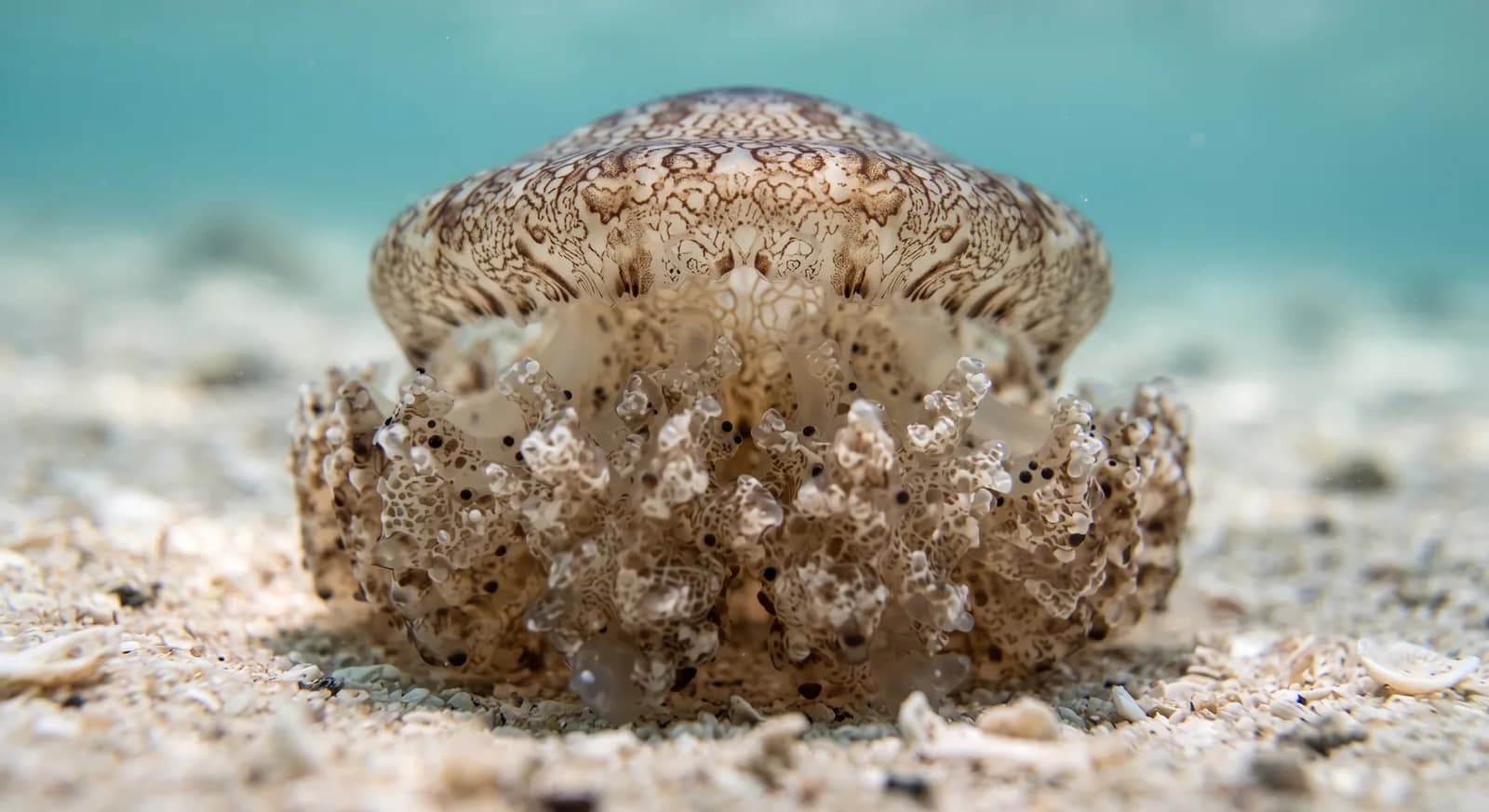
Upside-down Jellyfish
Cassiopea andromeda
Not Evaluated
It has not yet been assessed against the IUCN criteria.
The upside-down jellyfish spends its life resting inverted on the bottom of lagoons and mangroves, its bell against the sediment and its oral arms pointing upwards like a plant. Its tissues host symbiotic algae that need light.
Size
15 cm – 30 cm
Diet
Omnivore
Combines animal and plant food depending on availability.
Social structure
Colony
Lives in large concentrations, often for breeding reasons.