Skip to content
WAnimals
  • Map
  • Species
  • Parks
  • Diving
Log inCreate account
WAnimals

The guide for travellers and animal lovers: discover, plan and share your wild adventures around the world.

Discover wildlife

  • Species
  • Ecosystems
  • Glossary
  • Tags

Explore places

  • Map
  • Countries
  • Parks
  • Diving

Plan experiences

  • Guides

Learn

  • Blog

Resources

  • About us
  • How we build our profiles
  • Help centre
  • Contact
  • Install the app

Follow us

Account

  • Log in
  • Create account

© 2026 WAnimals. All rights reserved.

Terms of servicePrivacyCookiesLegal notice
MapSpeciesParksDiving
  1. Home
  2. Species
  3. Species groups
  4. Earthworms

Species group · Clitellate annelids

Earthworms

WAnimals has 3 species of earthworm, spread across 3 families (Lumbricidae, Lumbriculidae, Megascolecidae).

3 species
3 families
70 countries
210 parks
Weight
1 g
Length
4 cm – 3 m
Lifespan
5 – 8 years

Ranges calculated from the profiles that record the figure, not from all 3.

All 3 species of earthworms on WAnimals

Each one has its own full profile. This group does not replace them: it brings them together.
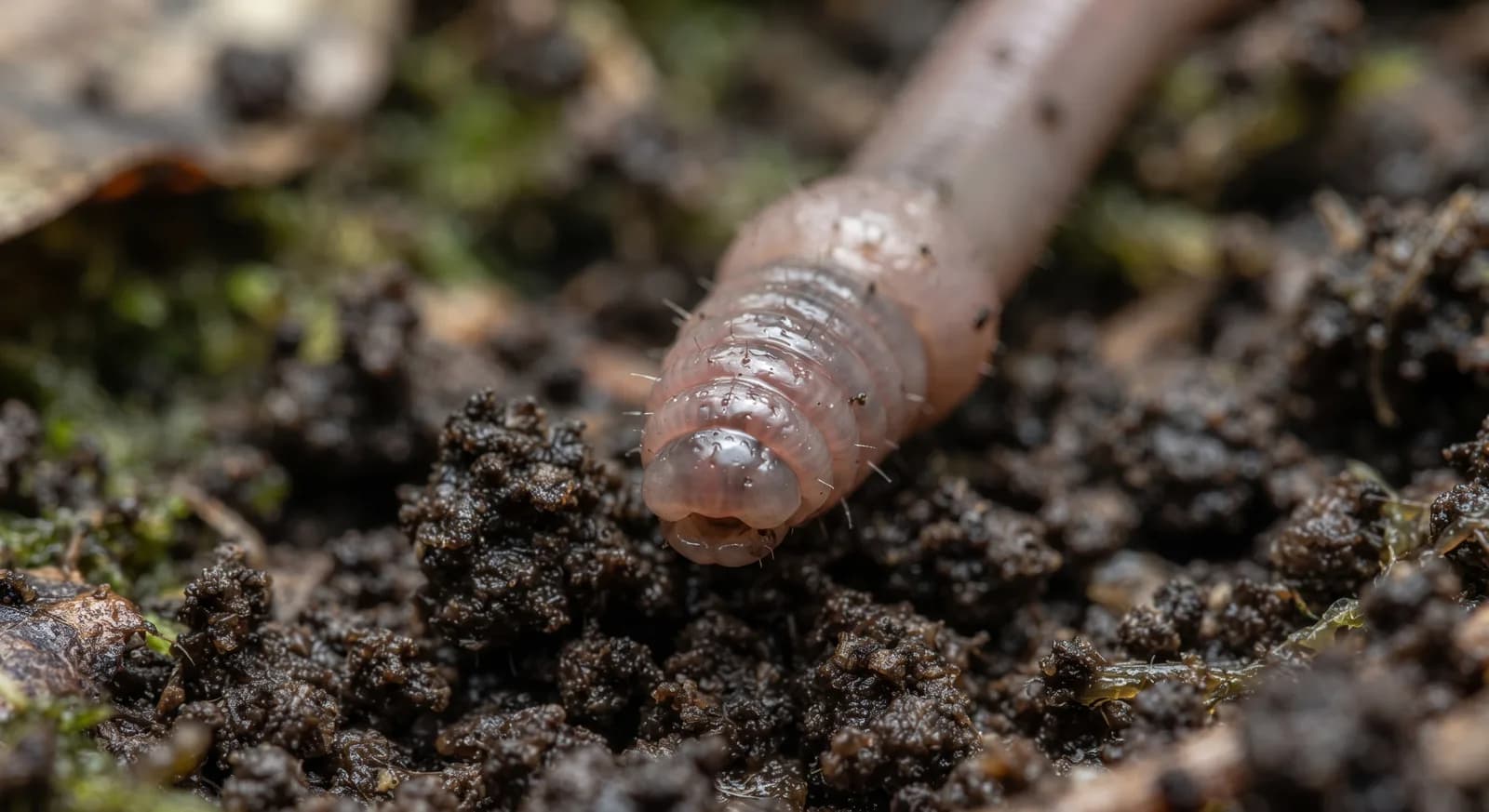
Common EarthwormNot Evaluated

Common Earthworm

Lumbricus terrestris

47 countries210 parks
Not Evaluated

Aquatic Oligochaete Worm

Lumbriculus variegatus

63 countries
Not Evaluated

Giant Gippsland Earthworm

Megascolides australis

1 country

Conservation status

3 Not Evaluated

No species documented in this group is genuinely at risk according to the IUCN, with the data available today.

Where they live

Recorded in 70 countries. The ones with the most species in the group:

  • Albania2
  • Andorra2
  • Australia2
  • Austria2
  • Belarus2
  • Belgium2
  • Bosnia and Herzegovina2
  • Bulgaria2
  • Canada2
  • Croatia2
  • Czechia2
  • Denmark2
  • Estonia2
  • Finland2
  • France2
  • Germany2
  • Greece2
  • Hungary2
  • Ireland2
  • Italy2
  • Latvia2
  • Lithuania2
  • Luxembourg2
  • Moldova2

Where to see them

  • Abisko1 species
  • Abruzzo, Lazio and Molise1 species
  • Aggtelek1 species
  • Aiako Harria1 species
  • Aiguestortes i Estany de Sant Maurici1 species
  • Aizkorri-Aratz1 species
  • Alta Murgia1 species
  • Aralar1 species
  • Archipelago (Saaristomeri)1 species
  • Armañón1 species
  • Aspromonte1 species
  • Aukštaitija National Park1 species

Did you know…?

  • It has no lungs and breathes through its damp skin, so it can drown if it stays under standing water too long.

    From Common Earthworm

  • It is hermaphrodite, with both male and female organs in the same animal, though it generally needs to mate with another to fertilise its eggs.

    From Common Earthworm

  • Darwin calculated that a population of earthworms moves some 25 tonnes of soil per hectare per year; he devoted his last book, published in 1881, to them.

    From Common Earthworm

  • It reproduces by breaking into pieces: each fragment regrows a new head and tail and becomes a complete individual within a few weeks.

    From Aquatic Oligochaete Worm

  • It is a reference organism in ecotoxicology, and standardised sediment toxicity tests are largely carried out with it.

    From Aquatic Oligochaete Worm

  • It is bred on a large scale as live food for aquarium fish, where it is known as the California blackworm.

    From Aquatic Oligochaete Worm

  • It reaches 3 m long and can be heard gurgling underground as it moves.

    From Giant Gippsland Earthworm

  • It is confined to a small area of Victoria of a few hundred square kilometres and is protected under Australian law.

    From Giant Gippsland Earthworm

Ecosystems

  • Freshwater1
  • Grassland1
  • Temperate forest1

See every species group · Explore the species one by one

This page in other languages: Español · Deutsch · Français · Português · Italiano