 Least Concern
Sea Lamprey
Petromyzon marinus
One of the 2 lampreys on WAnimals
Lampreys · Petromyzontiformes · Petromyzontidae
Lampetra fluviatilis
The species is abundant and widely distributed; it faces no significant short-term risk.
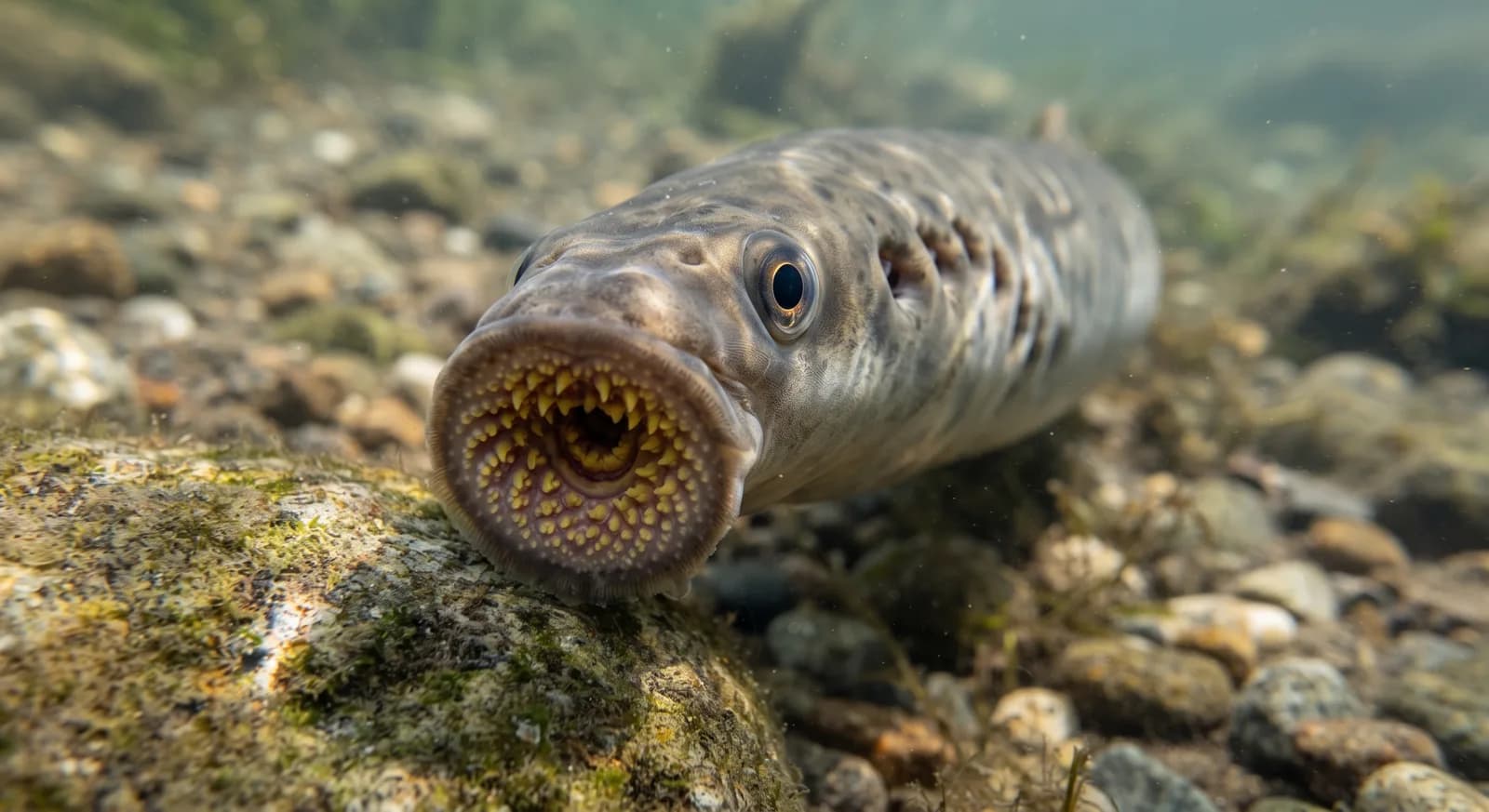
It is one of the most primitive living vertebrates, entirely without true jaws and with a wholly cartilaginous skeleton. At spawning, both parents die shortly after the eggs are laid.
Weight
50 g – 150 g
Size
32 cm – 50 cm
Life expectancy
6 years
Diet
Carnivore
Feeds mainly on other animals.
Activity
Nocturnal
Active mainly at night.
Social structure
Solitary
Lives and hunts alone, joining others only to breed.
Sighting difficulty
Easy
Sources consulted: FishBase; The Wildlife Trusts; Leicestershire and Rutland Wildlife Trust; Forth Rivers Trust; AnAge (genomics.senescence.info); Devon Wildlife Trust
Best time: From April to June, during spawning, when the adults run up the rivers and shift the gravel with their sucker to build the nest.
Parks and dive sites where this species has been documented — showing 20 of 44.
Other species in the catalogue with the most in common with River Lamprey — same habitat, park, country, tags or family.
Based on what we already know about river lamprey.
Share an experience, a fun fact or a tip for seeing the river lamprey.
Be the first to comment.
The pins mark the parks and dive sites where its presence is documented.