Birds · Charadriiformes · Alcidae
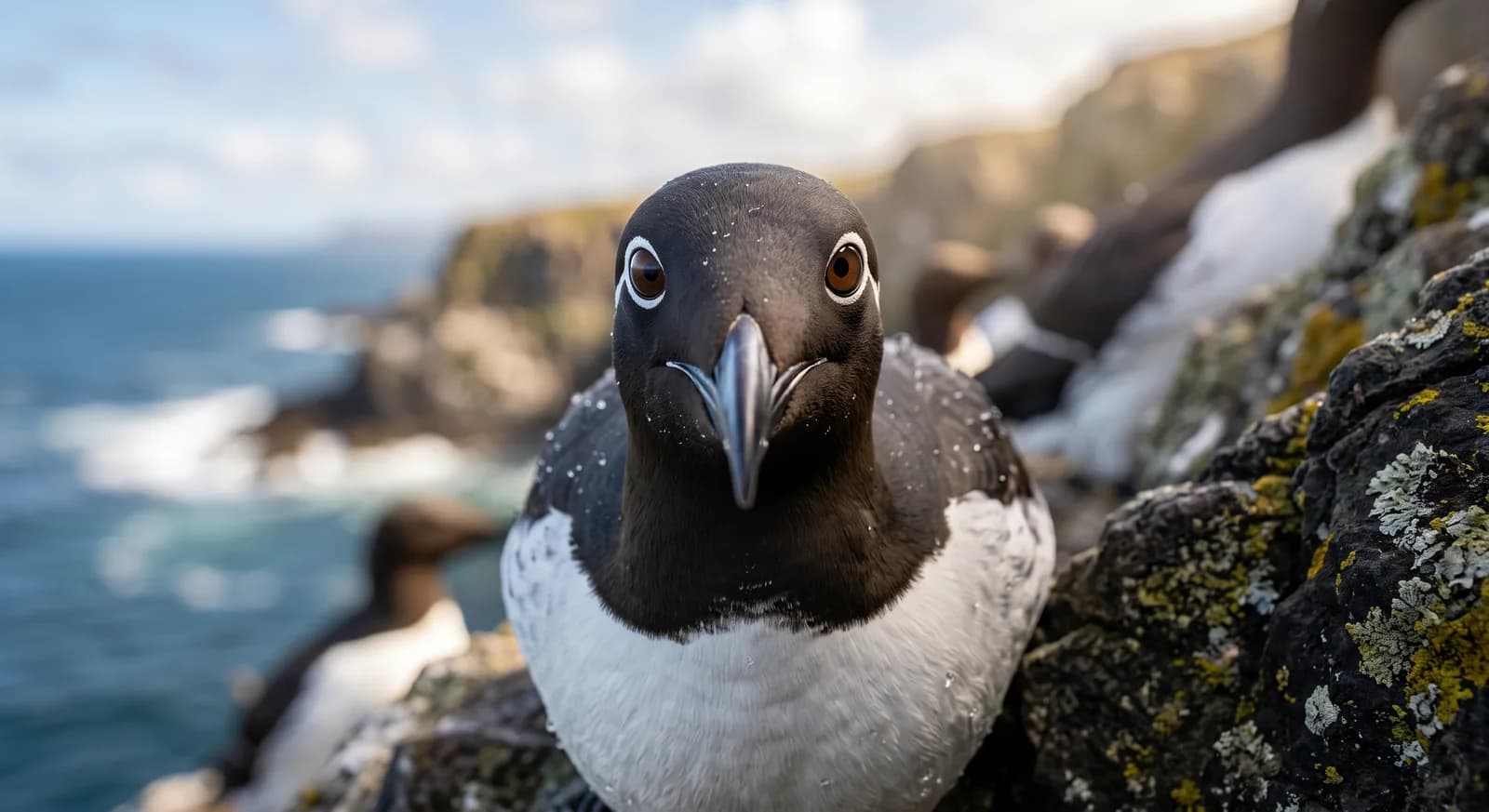
Razorbill
Alca torda
The species is abundant and widely distributed; it faces no significant short-term risk. See full glossary
The razorbill is a species of charadriiform bird of the family Alcidae. It is the only species in its genus. It is not usually as numerous as the common guillemot, but it is a regular presence in the seabird colonies of north-west Europe, often less conspicuous because of its preference for holes rather than open ledges.
Weight
726 g on average
Size
37 cm – 39 cm
Lifespan
42 years
Diet
Carnivore
Feeds mainly on other animals.
Activity
Diurnal
Active mainly during the day.
Social structure
Colony
Lives in large concentrations, often for breeding reasons.
Sighting difficulty
Easy
Estimated population
Between 838,000 and 1,600,000 mature individuals; the IUCN describes the population as fluctuating
Fun facts
- locomociónIt can dive beyond 100 metres, beating its wings underwater much as it does in the air.
- It is the closest living relative of the great auk (Pinguinus impennis), which went extinct in the mid-nineteenth century.
Life cycle & biology
- Skeleton type
- Vertebrate - internal bony skeleton (bird)
- Habitat & environment
- Cliffs and rocky islands of the North Atlantic for breeding; the rest of the year, the open sea
- Birth weight
- 63.8 g at hatching
- Size at birth
- A semi-precocial chick that leaves the colony at 18-20 days, accompanied by the male, before it can fly
- Sexual maturity
- 4 years
- Gestation / incubation
- 36 days
- Litter / clutch size
- 1
Sources consulted: https://es.wikipedia.org/wiki/Alca_torda
Where to find it
See its range on the interactive mapBest time: From April to July, when it occupies the breeding colonies on the cliffs
Where to watch it
Parques y spots de buceo donde se ha documentado esta especie — se muestran 10 de 29 documentados.
Related species
Other species in the catalogue with the most in common with Razorbill — same habitat, park, country, tags or family.
 Least Concern
Common Murre
Uria aalge
 Vulnerable
Atlantic Puffin
Fratercula arctica
Ancient Murrelet
Synthliboramphus antiquus
Horned Puffin
Fratercula corniculata
 Least Concern
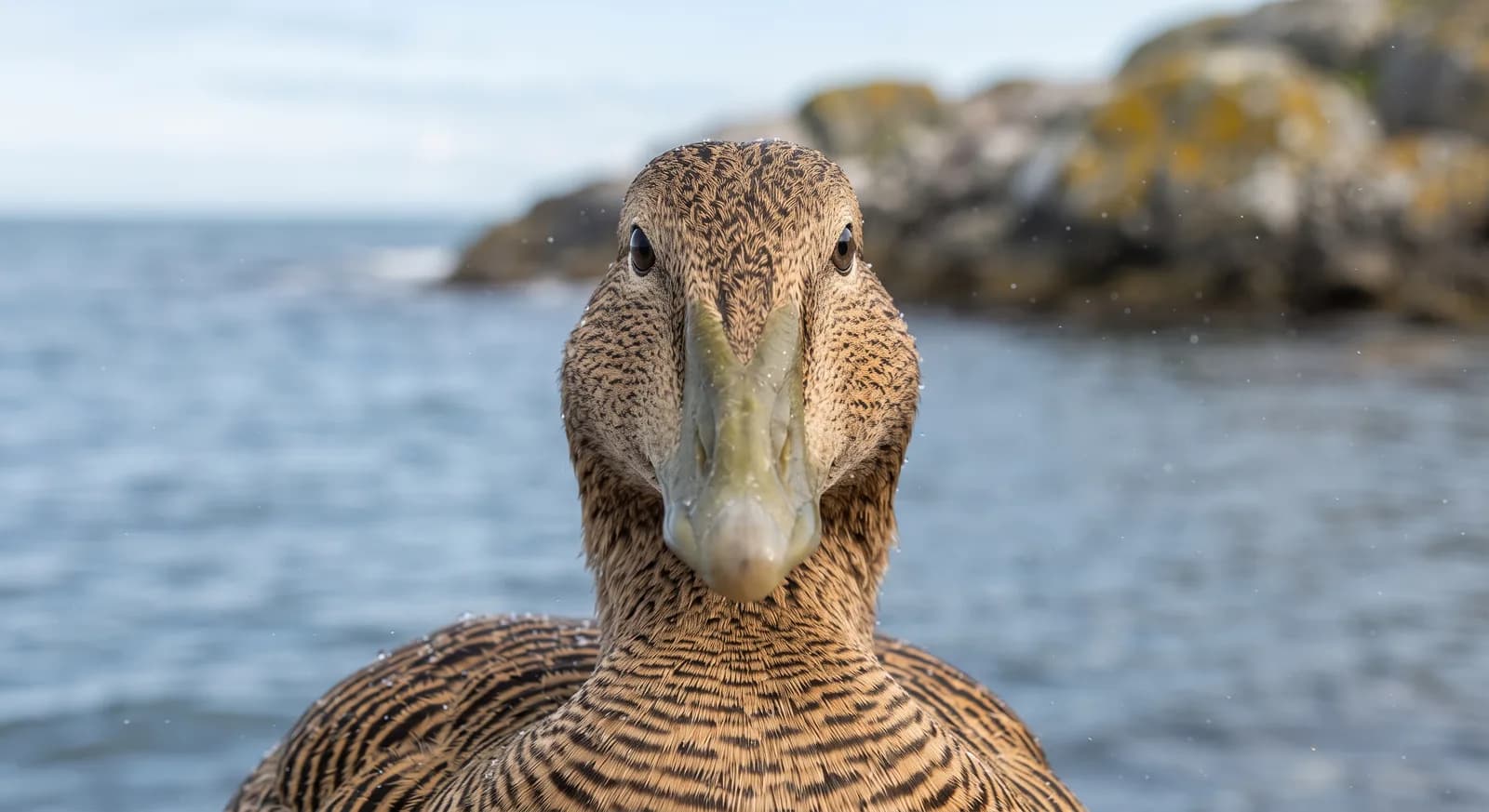
Common Eider
Somateria mollissima
Herring Gull
Larus argentatus
Keep exploring
Based on what we already know about razorbill.
Comments
Share an experience, a fun fact or a tip for seeing the razorbill.
Be the first to comment.