One of the 11 snails on WAnimals
Gastropods · Trochida · Turbinidae
Green Snail
Turbo marmoratus
It has not yet been assessed against the IUCN criteria. See full glossary
One of the largest and heaviest sea snails of the Indo-Pacific, with a massive shell lined with a thick and highly valued nacre. It is a herbivore and rasps algae from the rocks at night. Overexploitation for the mother-of-pearl and button industries has drastically reduced its populations across much of its original range, and it has been introduced for commercial purposes into French Polynesia.
Size
10 cm – 20 cm
Diet
Herbivore
Feeds mainly on plants.
Activity
Nocturnal
Active mainly at night.
Social structure
Solitary
Lives and hunts alone, joining others only to breed.
Sighting difficulty
Unknown
Fun facts
- Its calcareous operculum — thick, white and domed — is sold as an ornament and known as a cat's eye.
- An adult can weigh two kilos, almost all of it shell.
- It is one of the largest marine snails in the world, with a shell of up to 20 cm and a weight of more than two kilos.
- Its nacre is exceptionally thick and of exceptional quality, and that has been its problem: it has been exploited intensively for more than a century for buttons, marquetry and inlays, to the point of exhausting populations across wide areas of the Indo-Pacific.
- Its operculum is solid and calcareous, a heavy, hemispherical piece known as the cat's eye or eye of Saint Lucia, used in jewellery and as an amulet.
- It has been deliberately introduced into French Polynesia and other islands to create fisheries, with mixed results.
- It grows slowly and matures late, which means that depleted populations take decades to recover.
- It is protected or regulated in several Indo-Pacific countries.
Life cycle & biology
- Skeleton type
- Invertebrate - external calcareous shell (mollusc)
- Habitat & environment
- Coral reefs and shallow rocky bottoms of the Indo-Pacific
Sources consulted: Yamaguchi, trabajos sobre Turbo marmoratus; FAO; Poutiers, FAO Species Identification Guide
Where to find it
See its range on the interactive mapWhere to watch it
Parques y spots de buceo donde se ha documentado esta especie — se muestran 20 de 232 documentados.
Related species
Other species in the catalogue with the most in common with Green Snail — same habitat, park, country, tags or family.
Geography Cone
Conus geographus
Chambered Nautilus
Nautilus pompilius
Tiger Cowrie
Cypraea tigris
Spanish Dancer
Hexabranchus sanguineus
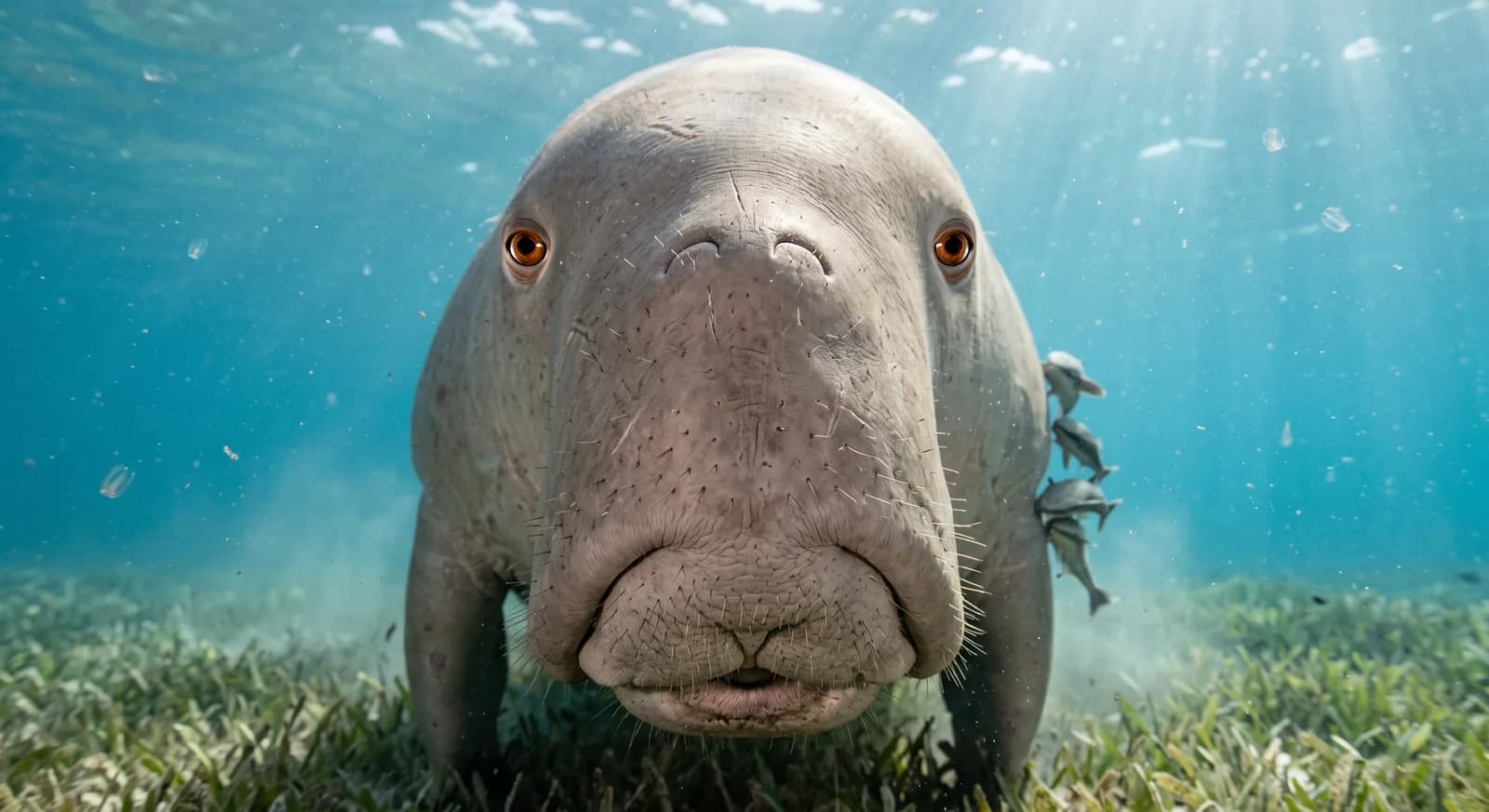 Vulnerable
Dugong
Dugong dugon
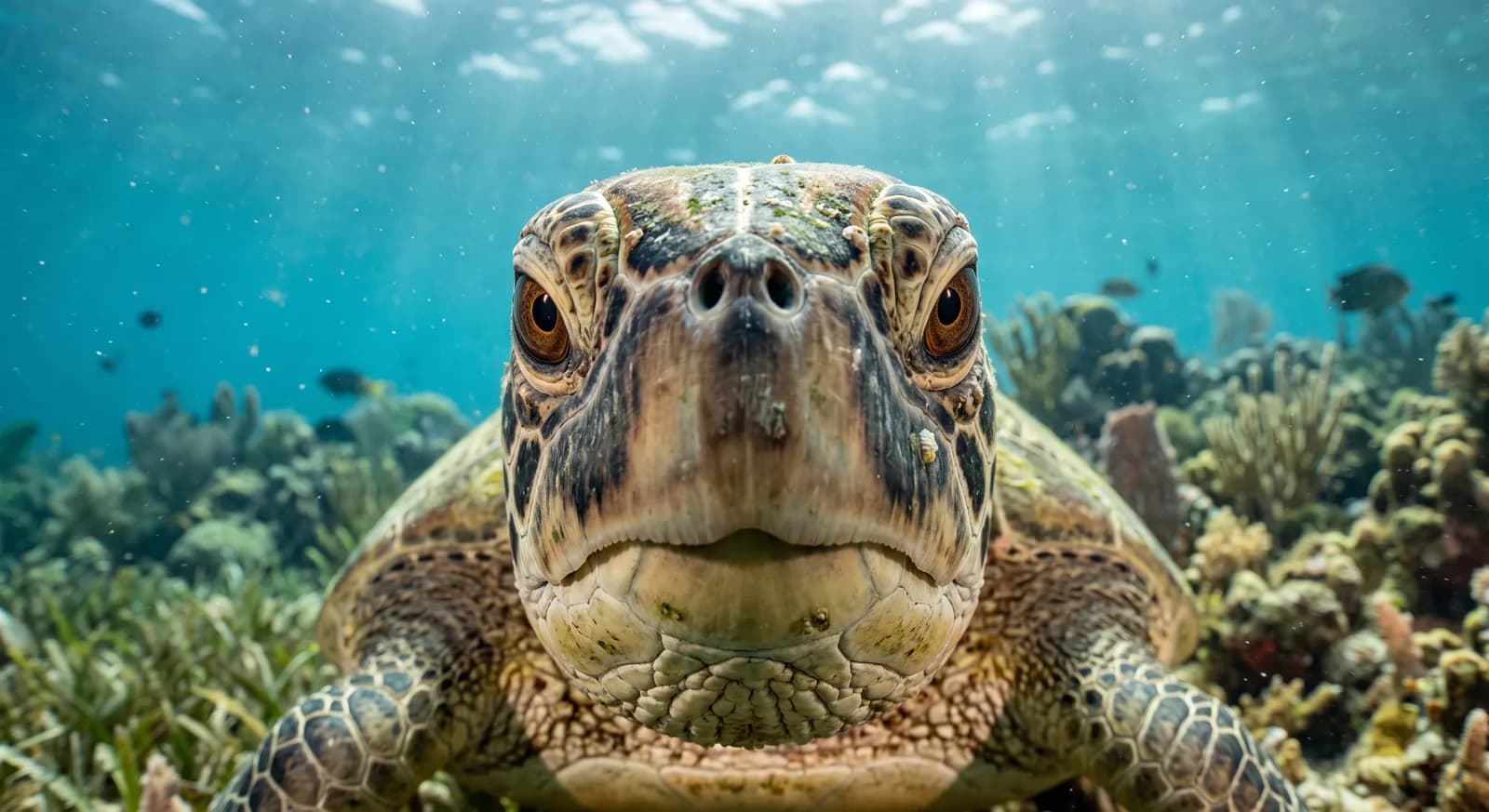 Endangered
Green Turtle
Chelonia mydas
Keep exploring
Based on what we already know about green snail.
Comments
Share an experience, a fun fact or a tip for seeing the green snail.
Be the first to comment.