One of the 15 flies on WAnimals
Insects · Diptera · Glossinidae
Tsetse Fly
Glossina morsitans
It has not yet been assessed against the IUCN criteria. See full glossary
Glossina morsitans is a tsetse fly of the genus Glossina. It is one of the main vectors of Trypanosoma brucei rhodesiense in the savannas of Africa.
Lifespan
3 years
Diet
Carnivore
Feeds mainly on other animals.
Activity
Diurnal
Active mainly during the day.
Social structure
Solitary
Lives and hunts alone, joining others only to breed.
Sighting difficulty
Unknown
Fun facts
- GeneralIt carries sleeping sickness; the female gives birth to fully developed larvae, one at a time.
- It is viviparous: it lays no eggs but gestates a single larva inside the uterus and feeds it on a milky secretion produced by a specialised gland, with proteins analogous to those of mammalian milk.
- That strategy gives it a very low fecundity — between eight and ten offspring in a lifetime, against the hundreds of a mosquito — and that is precisely what makes it vulnerable to population control.
- It is the only vector of the African trypanosomes, which cause sleeping sickness in people and nagana in livestock.
- The larva is born already mature and burrows immediately to pupate; the female chooses the site with great care, because her whole output for that cycle depends on the decision.
Life cycle & biology
- Skeleton type
- Invertebrate - chitin exoskeleton (insect)
- Habitat & environment
- Wooded savannah and gallery forest
- Gestation / incubation
- Each larva develops in the uterus for about 9 or 10 days
- Litter / clutch size
- A single larva per cycle, between 8 and 10 over the female's lifetime
Sources consulted: https://es.wikipedia.org/wiki/Glossina_morsitans
Where to find it
See its range on the interactive mapWhere to watch it
Parques y spots de buceo donde se ha documentado esta especie — se muestran 10 de 69 documentados.
Related species
Other species in the catalogue with the most in common with Tsetse Fly — same habitat, park, country, tags or family.
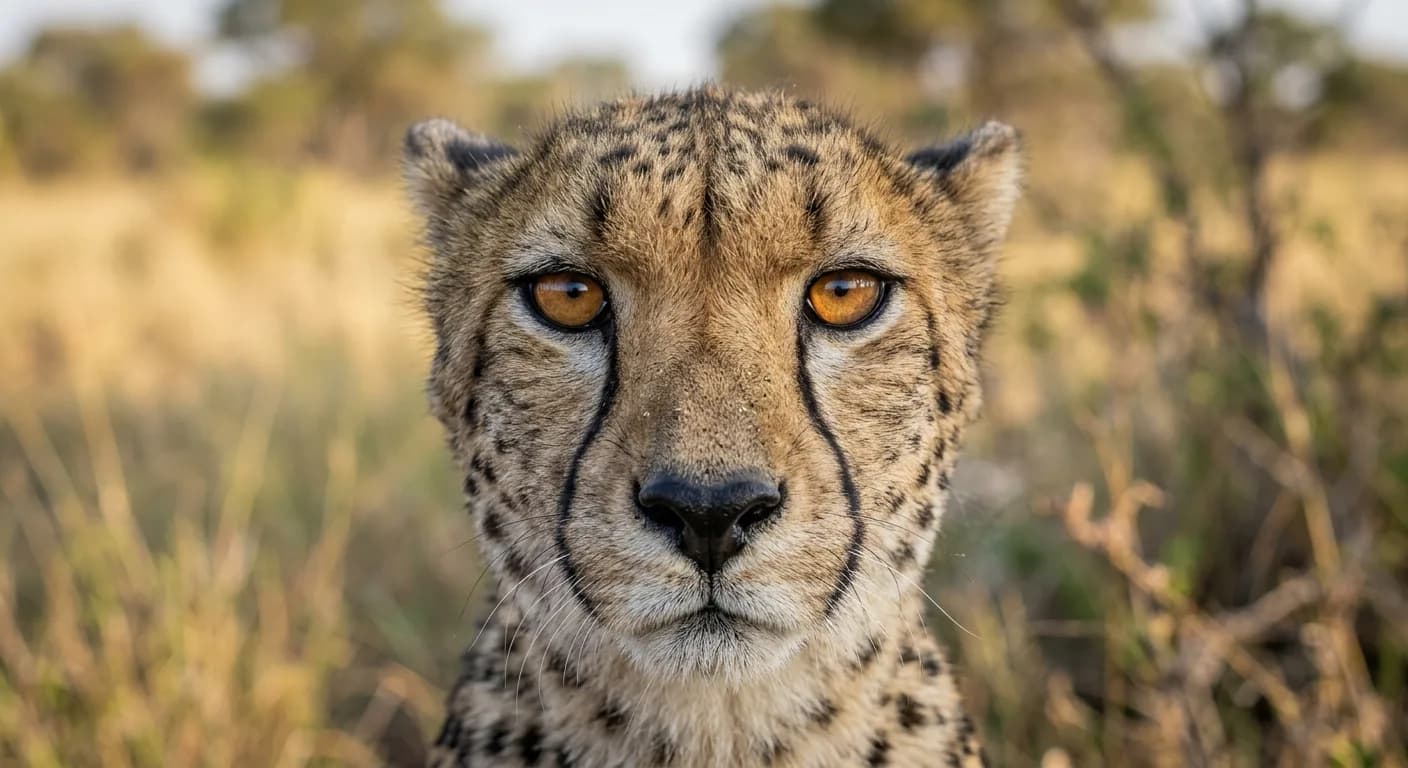 Vulnerable
Cheetah
Acinonyx jubatus
Kori Bustard
Ardeotis kori
Southern Ground-Hornbill
Bucorvus leadbeateri
Helmeted Turtle
Pelomedusa subrufa
Puff Adder
Bitis arietans
Black-necked Spitting Cobra
Naja nigricollis
Keep exploring
Based on what we already know about tsetse fly.
Comments
Share an experience, a fun fact or a tip for seeing the tsetse fly.
Be the first to comment.