Bony fish · Perciformes · Haemulidae
Black Margate
Anisotremus surinamensis
There is not enough information to assess its risk of extinction. See full glossary
Anisotremus surinamensis, also known as pirambú, is a fish of the genus Anisotremus, family Haemulidae. It was scientifically described by Bloch in 1791.
Weight
up to 5.8 kg
Size
40 cm – 76 cm
Diet
Carnivore
Feeds mainly on other animals.
Activity
Nocturnal
Active mainly at night.
Sighting difficulty
Unknown
Fun facts
- It owes its name to the sounds it makes by grinding its pharyngeal teeth together, a noise it amplifies with its swim bladder and which is clearly audible underwater.
- The juveniles act as cleaners, removing parasites from larger fish.
- It hunts crustaceans, molluscs, echinoderms and small fish by night, and by day shelters in caves and under ledges.
- The front half of its body is markedly darker than the rear, a feature that tells it apart from other grunts at a glance.
- The juveniles settle on inshore hard bottoms off south-east Florida, which serve as nursery grounds.
Life cycle & biology
- Habitat & environment
- Rocky and coral reefs of the tropical western Atlantic
Sources consulted: https://es.wikipedia.org/wiki/Anisotremus_surinamensis
Where to find it
See its range on the interactive mapWhere to watch it
Parques y spots de buceo donde se ha documentado esta especie — se muestran 20 de 122 documentados.
Related species
Other species in the catalogue with the most in common with Black Margate — same habitat, park, country, tags or family.
Southern Stingray
Hypanus americanus
 Least Concern
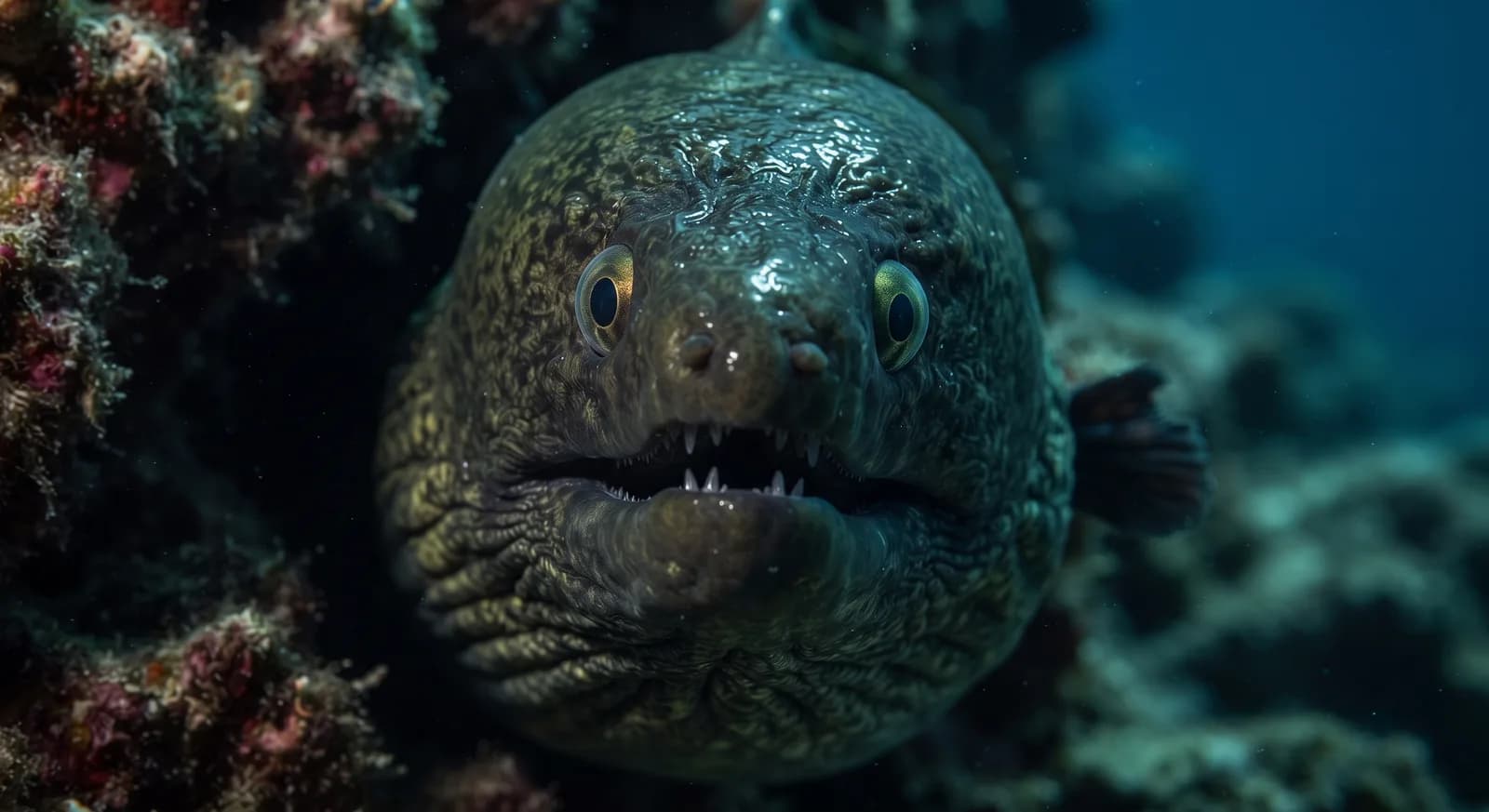
Green Moray
Gymnothorax funebris
Red Lionfish
Pterois volitans
Spot-fin Porcupinefish
Diodon hystrix
Grey Snapper
Lutjanus griseus
 Vulnerable
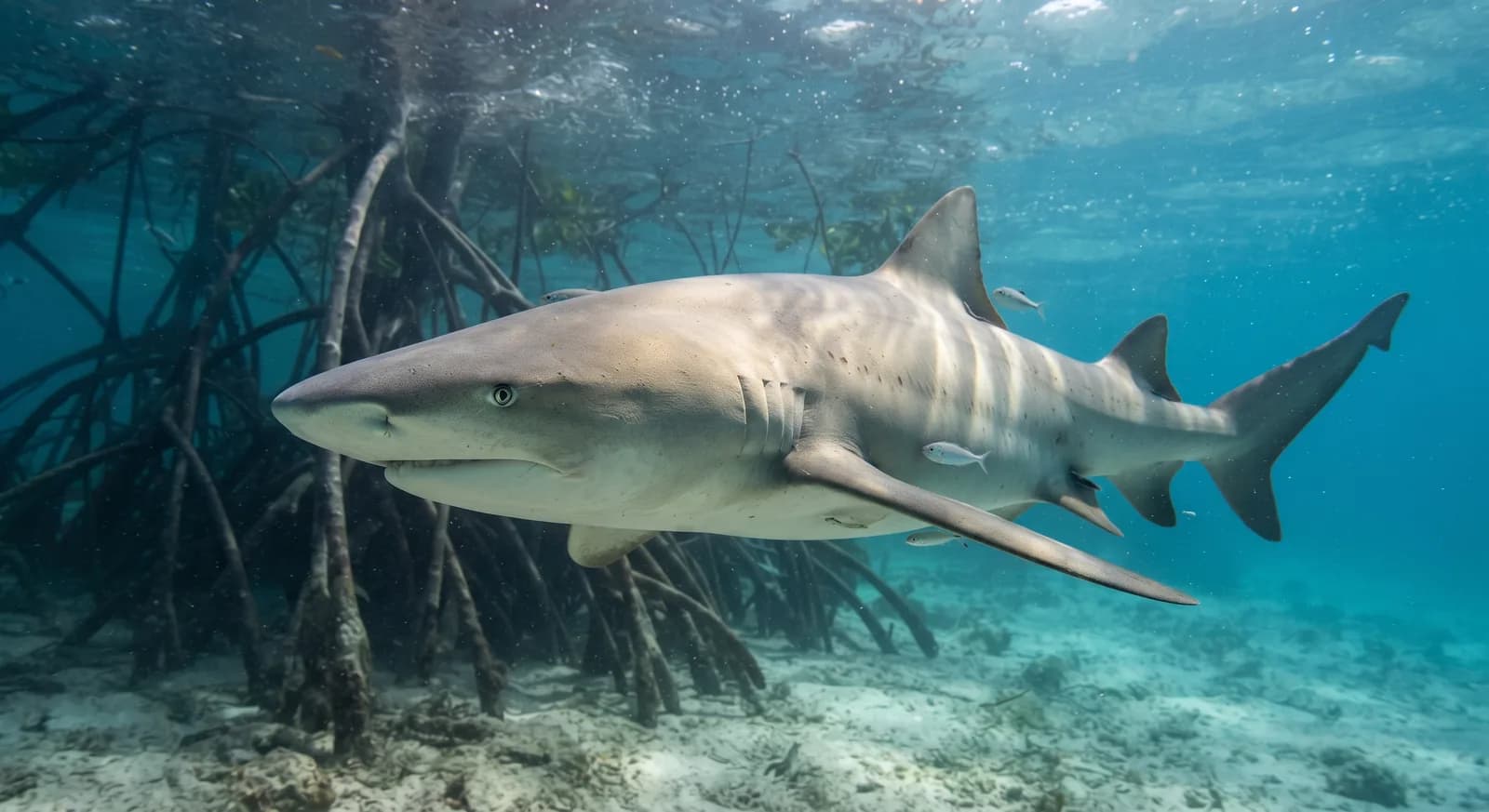
Lemon Shark
Negaprion brevirostris
Keep exploring
Based on what we already know about black margate.
Comments
Share an experience, a fun fact or a tip for seeing the black margate.
Be the first to comment.