One of the 17 foxes on WAnimals
Mammals · Carnivora · Canidae
Bat-eared Fox
Otocyon megalotis
The species is abundant and widely distributed; it faces no significant short-term risk. See full glossary
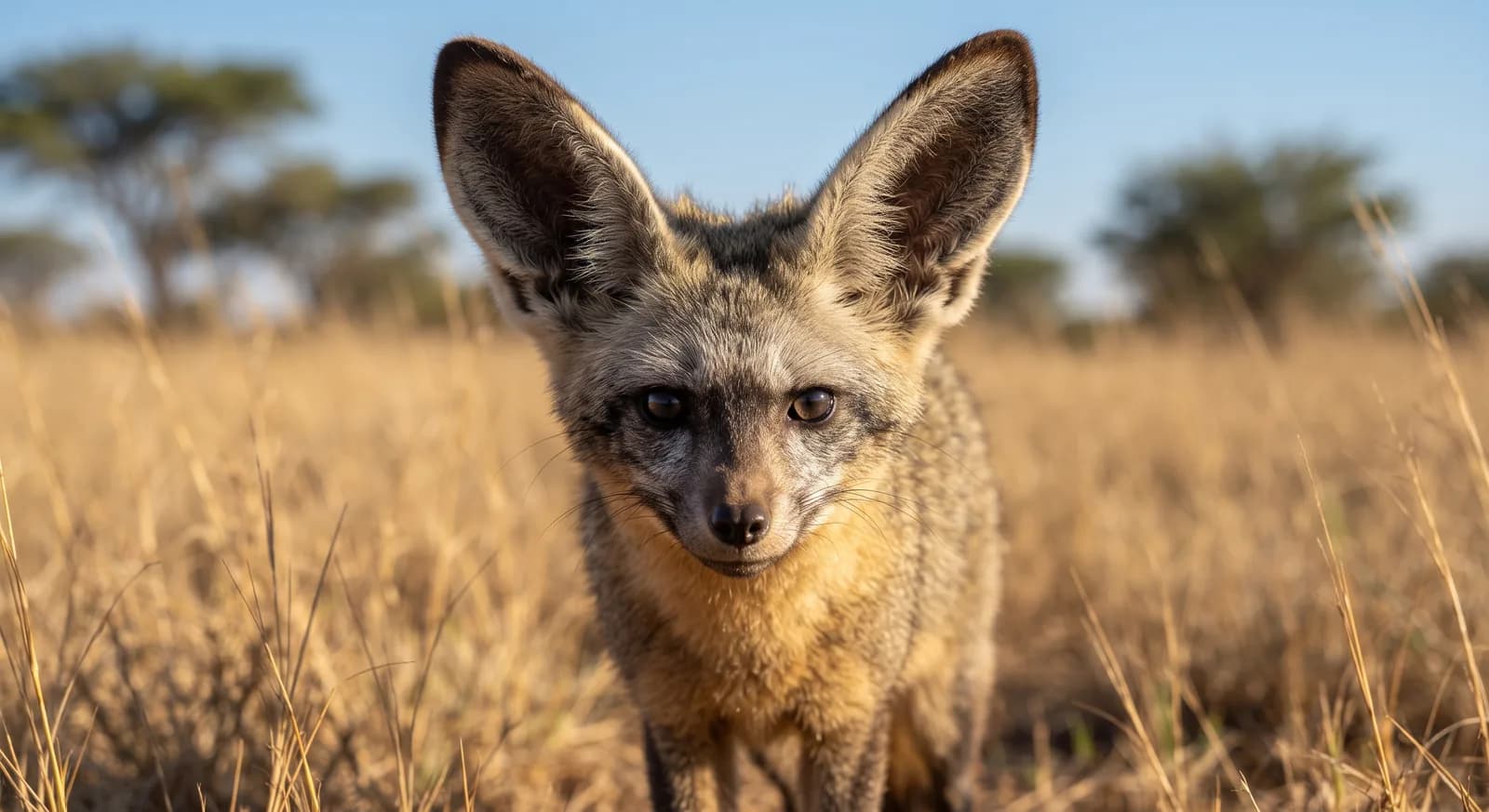
A small canid, greyish sand in colour with black legs, tail and backs of the ears and a white facial mask. Its ears, enormous in proportion to its head, serve both to shed heat and to locate by ear the insects moving underground.
Weight
3 kg – 5.3 kg
Size
30 cm – 66 cm
Lifespan
7 years
Diet
Insectivore
Feeds mainly on insects and other invertebrates.
Activity
Nocturnal
Active mainly at night.
Social structure
In pairs
Usually lives in pairs, sometimes for life.
Sighting difficulty
Easy
Fun facts
- sentidosIt has the largest ears for its size of any canid, tuned to pick up insects moving underground — its main food.
- It has between 46 and 50 teeth, more than almost any other land mammal: three upper and four lower molars on each side, against the two and three of other canids.
- A single individual can eat as many as 1.15 million harvester termites a year.
- The male spends as much time as the mother or more caring for, grooming and playing with the pups, which is exceptional among canids.
Life cycle & biology
- Skeleton type
- Vertebrate - internal bony skeleton (mammal)
- Habitat & environment
- Short-grass savannah and arid scrub of eastern and southern Africa, wherever termites and beetles are plentiful. It digs burrows with several entrances and chambers, and sometimes reuses abandoned termite mounds
- Gestation / incubation
- 60 - 70 days
- Litter / clutch size
- 2-6 pups, with one litter a year
- Lifespan in captivity
- An individual caught in the wild reached about 17 years in captivity (Weigl 2005, via AnAge)
Sources consulted: IUCN Red List (e.T15642A46123809); Animal Diversity Web; Clark 2005, Mammalian Species 766; AnAge (Weigl 2005); San Diego Zoo Wildlife Alliance; Estes 1991, The Behavior Guide to African Mammals
Where to find it
See its range on the interactive mapBest time: All year round; its activity pattern shifts with the season, more diurnal in winter and more nocturnal in summer
Where to watch it
Parks and dive sites where this species has been documented.
Related species
Other species in the catalogue with the most in common with Bat-eared Fox — same habitat, park, country, tags or family.
 Least Concern
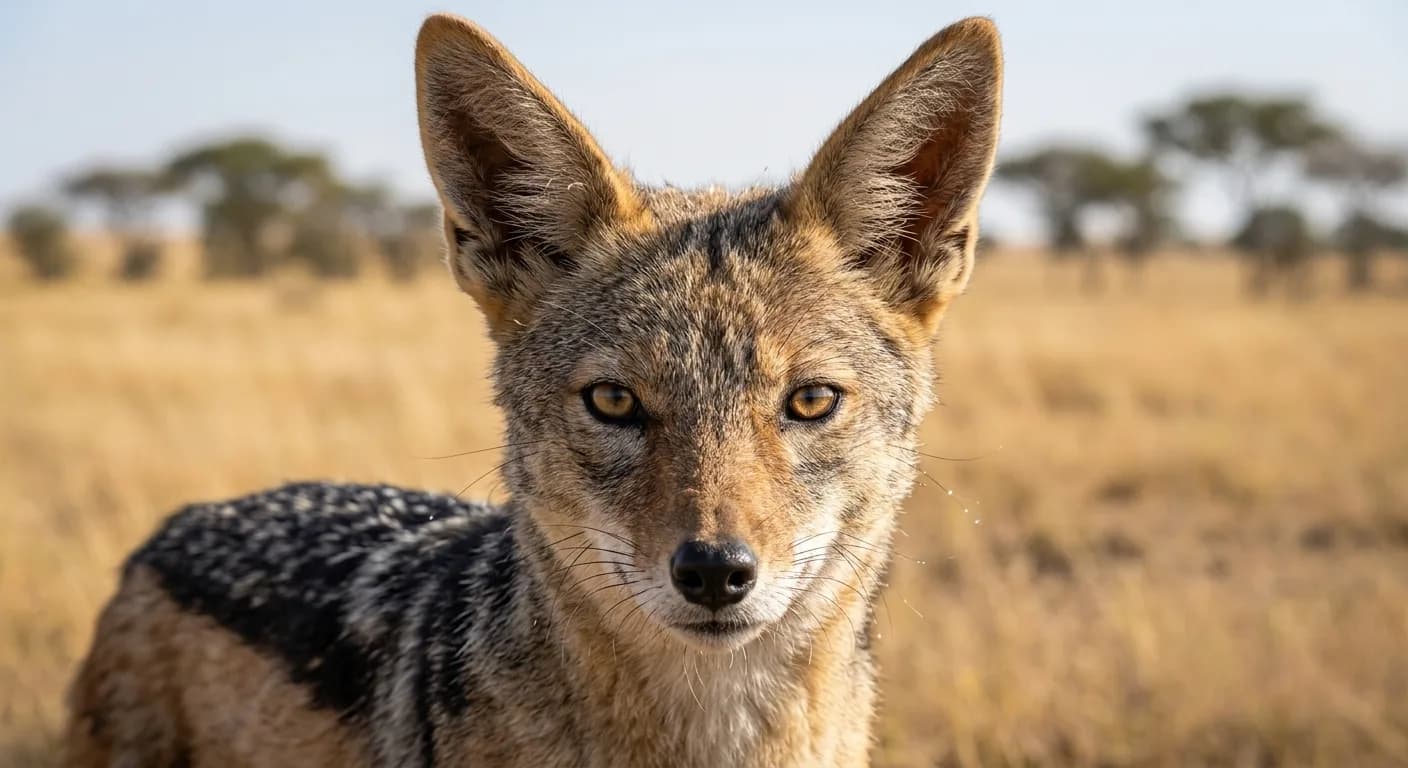
African Jackals
Lupulella mesomelas
Aardwolf
Proteles cristata
Side-striped Jackal
Canis adustus
Fennec Fox
Vulpes zerda
African Golden Wolf
Canis anthus
Pale Fox
Vulpes pallida
Keep exploring
Based on what we already know about bat-eared fox.
Comments
Share an experience, a fun fact or a tip for seeing the bat-eared fox.
Be the first to comment.