 Least Concern
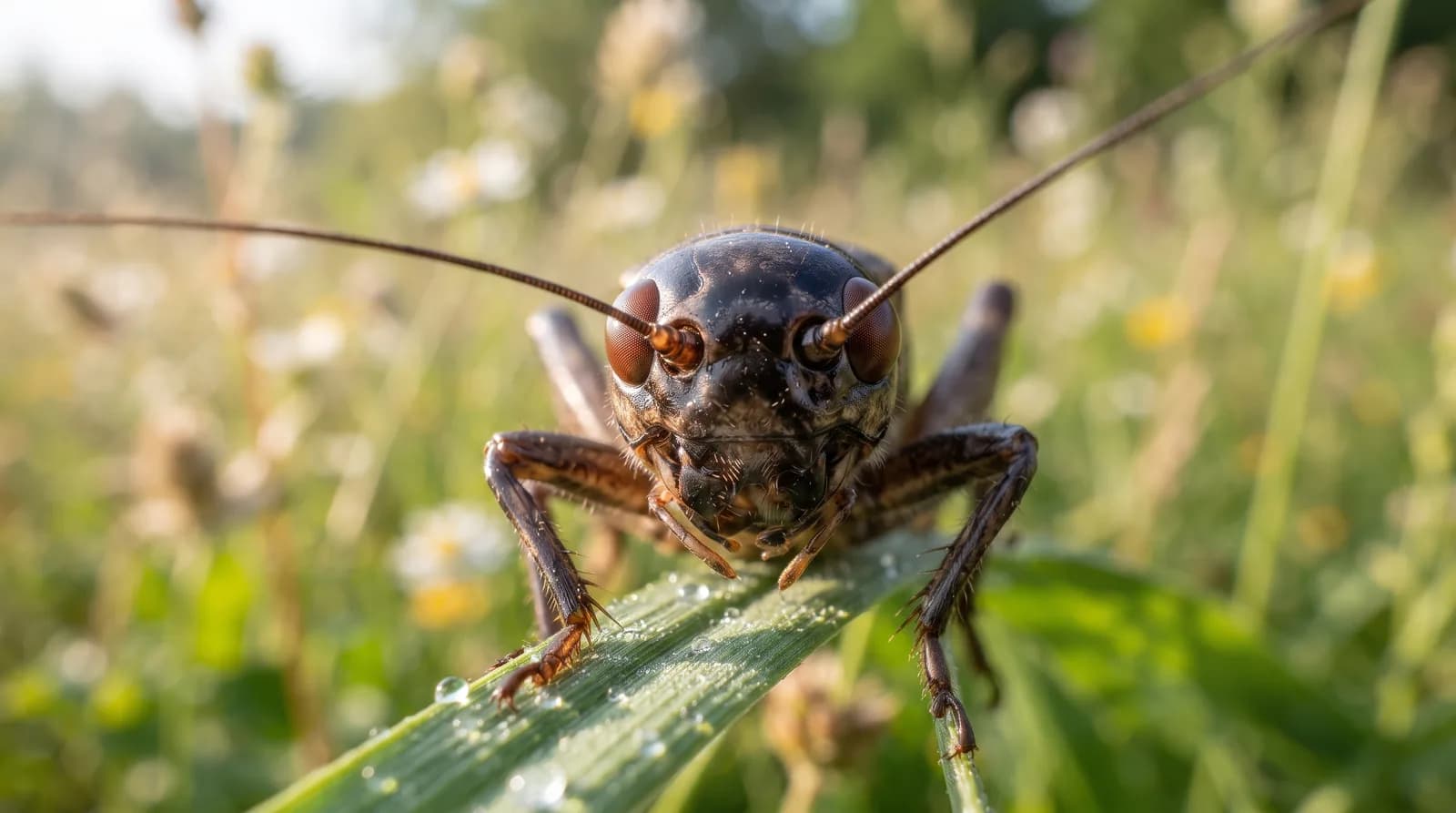
Field Cricket
Gryllus campestris
45 countries121 parks
Species group · Insects
WAnimals has 3 species of cricket, spread across 2 families (Gryllidae, Rhaphidophoridae).
Ranges calculated from the profiles that record the figure, not from all 3.
Each one has its own full profile. This group does not replace them: it brings them together.
No species documented in this group is genuinely at risk according to the IUCN, with the data available today.
Recorded in 49 countries. The ones with the most species in the group:
It eats plants, fruit, seeds and insects, including eggs, larvae and the remains of other animals.
From
It digs individual burrows in dry grassland, heath and bare ground across Europe.
From
In the United Kingdom it was once reckoned the country's most threatened cricket, down to barely 100 individuals in a single Sussex village in the 1990s.
From
It has neither wings nor sound-producing organs: unlike house crickets it does not sing, because in the total darkness underground sound would be no use for recognising its own kind.
From
Nor does it have tympana: it navigates by its extremely long antennae, which sweep the ground in the dark like canes.
From
It jumps explosively and erratically when disturbed, with no control over direction, which lets it escape a predator in a confined space.
From
Only the male sings, rubbing a scraper on one wing against a file on the other; the rate of the song speeds up with temperature so regularly that it can be used to estimate it.
From
·
Its ears are not on its head but on its front legs, in the form of two tympanic membranes just below the knee.
From