 Least Concern
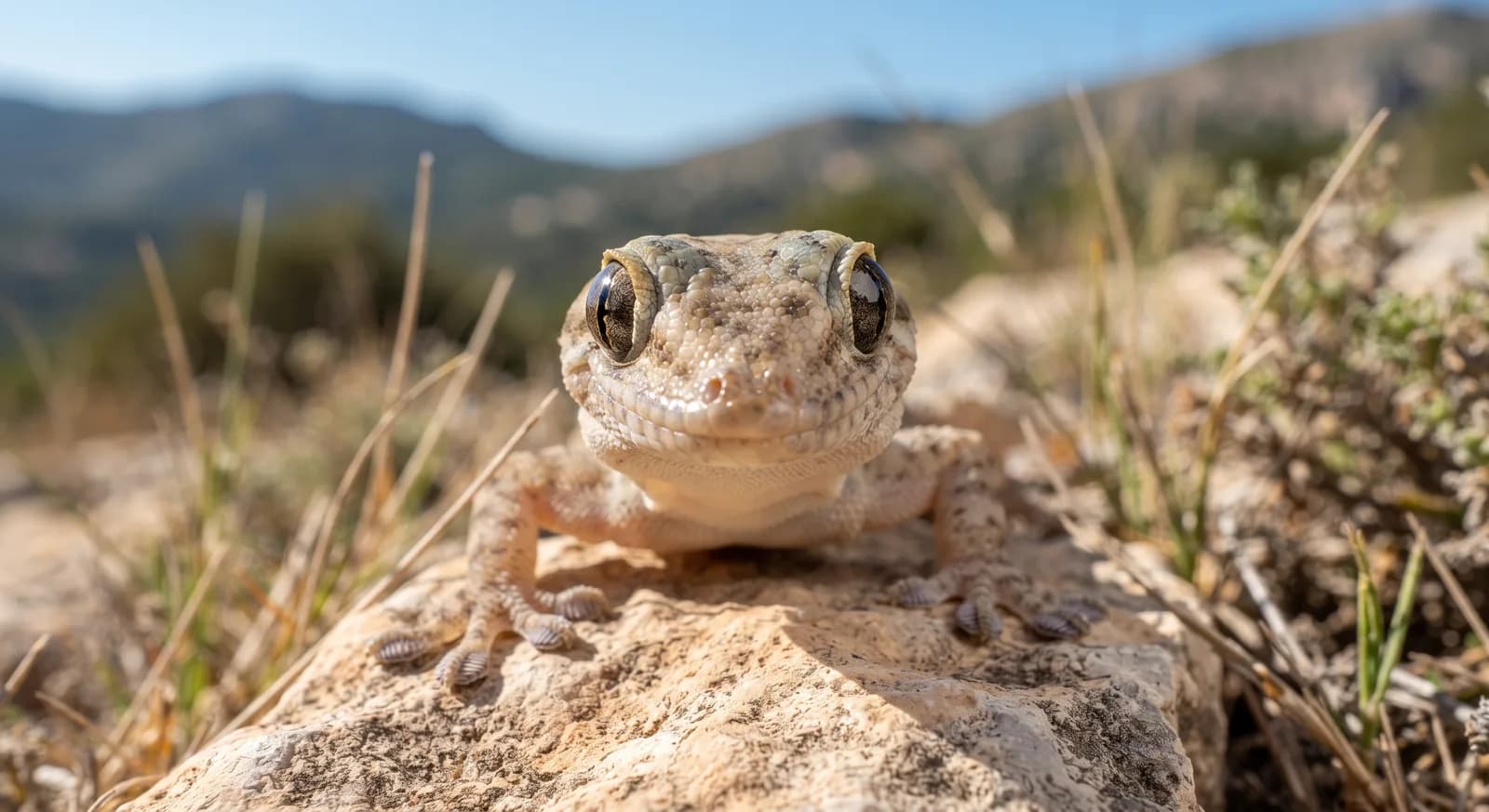
Turkish Gecko
Hemidactylus turcicus
37 countries44 parks
Species group · Reptiles
WAnimals has 3 species of house gecko, spread across 2 families (Gekkonidae, Phyllodactylidae).
Ranges calculated from the profiles that record the figure, not from all 3.
Each one has its own full profile. This group does not replace them: it brings them together.
No species documented in this group is genuinely at risk according to the IUCN, with the data available today.
Recorded in 128 countries. The ones with the most species in the group:
In many Mediterranean cultures it is taboo to harm it, because it keeps household insects down.
From
It was introduced accidentally to Florida in 1915, probably as an escaped pet.
From
Strictly nocturnal, it hunts around artificial lights.
From
It is one of the most effective invasive species in the world among reptiles: it travels in containers and cargo, and wherever it arrives it displaces the native geckos through direct competition and aggression, a pattern documented on dozens of islands and in dozens of cities.
From
Its call is unmistakable: a series of dry clicks given at night from the walls, which has earned it onomatopoeic names in several Asian languages.
From
It can establish a population from a single accidentally transported egg, because the females store sperm for months and can lay several times after a single mating.
From
Its granular skin, studded with prominent tubercles, gives it an armoured look that recalls a small crocodile — hence its Catalan nickname, dragó.
From
·
It eats night-flying insects drawn to artificial light, along with spiders and other small invertebrates.
From