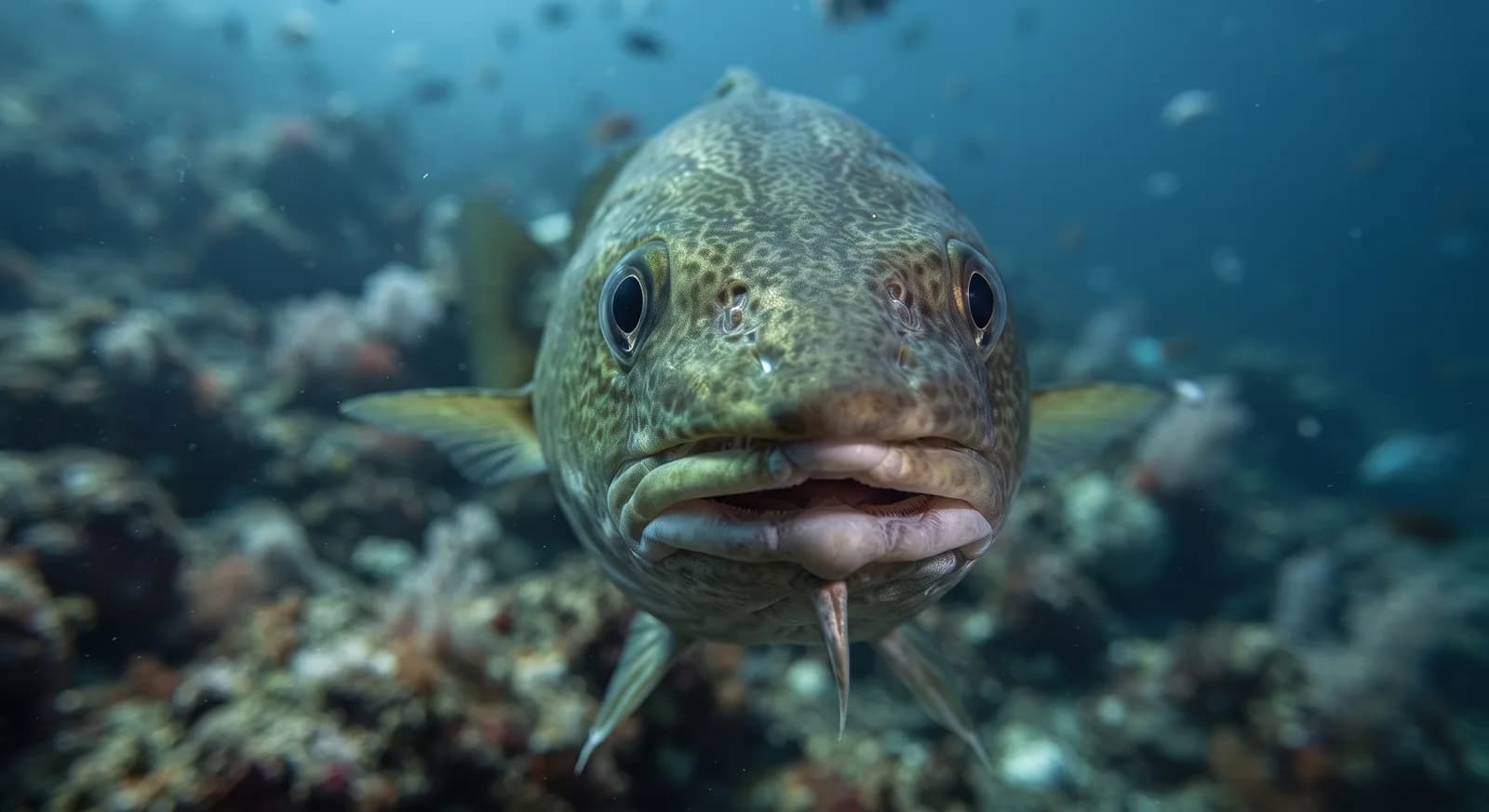
Bony fish · Gadiformes · Gadidae
Cod
Gadus morhua
It faces a high risk of extinction in the wild over the medium term. See full glossary
The collapse of the Newfoundland cod fishery in 1992, caused by systematic overfishing, cost tens of thousands of jobs and remains one of the most cited examples of a fishery destroyed by unsustainable management.
Weight
up to 96 kg
Size
up to 2 m
Lifespan
20 years
Diet
Carnivore
Feeds mainly on other animals.
Activity
Irregular activity
Active at irregular times, by day or night depending on circumstances.
Social structure
School
Gathers in coordinated schools, typical of fish.
Sighting difficulty
Moderate
Fun facts
- It eats copepods as a juvenile, and fish such as herring and capelin along with crustaceans as an adult.
- It lives on the continental-shelf sea floor of the North Atlantic, from the shore down to 600 m.
- A large female can release as many as 9 million eggs.
Life cycle & biology
- Skeleton type
- Vertebrate - bony skeleton (fish)
- Habitat & environment
- Continental-shelf sea floor of the North Atlantic, from the shore down to 600 m
- Birth weight
- Pelagic egg; a tiny larva after hatching
- Size at birth
- Tiny on hatching, living in the plankton for its first few months
- Sexual maturity
- 1.7-8 years depending on the population (most commonly 2-5 years)
- Gestation / incubation
- 12-14 days of egg development
- Litter / clutch size
- 2.5 to 9 million eggs in a large female
Sources consulted: MarLIN; Animal Diversity Web; A-Z Animals; MarineBio; Animalia.bio; AnAge (genomics.senescence.info); Ocean Insider; FishBase; PMC (batch survival study); Wikipedia (Canadian Atlantic Cod)
Where to find it
See its range on the interactive mapWhere to watch it
Parques y spots de buceo donde se ha documentado esta especie — se muestran 20 de 74 documentados.
Related species
Other species in the catalogue with the most in common with Cod — same habitat, park, country, tags or family.
Haddock
Melanogrammus aeglefinus
Pouting
Trisopterus luscus
Blue Whiting
Micromesistius poutassou
Whiting
Merlangius merlangus
Pollack
Pollachius pollachius
 Vulnerable
Sperm Whale
Physeter macrocephalus
How to help
The cod is classified as vulnerable. Organizations such as UICN, WWF y Wildlife Conservation Society work specifically on its conservation and that of its habitat; looking into their programs is a good starting point if you want to get involved.
It's documented in 12 real protected areas — part of why protecting these places matters for its conservation.
Keep exploring
Based on what we already know about cod.
Comments
Share an experience, a fun fact or a tip for seeing the cod.
Be the first to comment.