Skip to content
WAnimals
  • Map
  • Species
  • Parks
  • Diving
Log inCreate account
WAnimals

The guide for travellers and animal lovers: discover, plan and share your wild adventures around the world.

Discover wildlife

  • Species
  • Ecosystems
  • Glossary
  • Tags

Explore places

  • Map
  • Countries
  • Parks
  • Diving

Plan experiences

  • Guides

Learn

  • Blog

Resources

  • About us
  • How we build our profiles
  • Help centre
  • Contact
  • Install the app

Follow us

Account

  • Log in
  • Create account

© 2026 WAnimals. All rights reserved.

Terms of servicePrivacyCookiesLegal notice
MapSpeciesParksDiving
  1. Home
  2. Species
  3. Desert Horned Viper

One of the 12 vipers on WAnimals
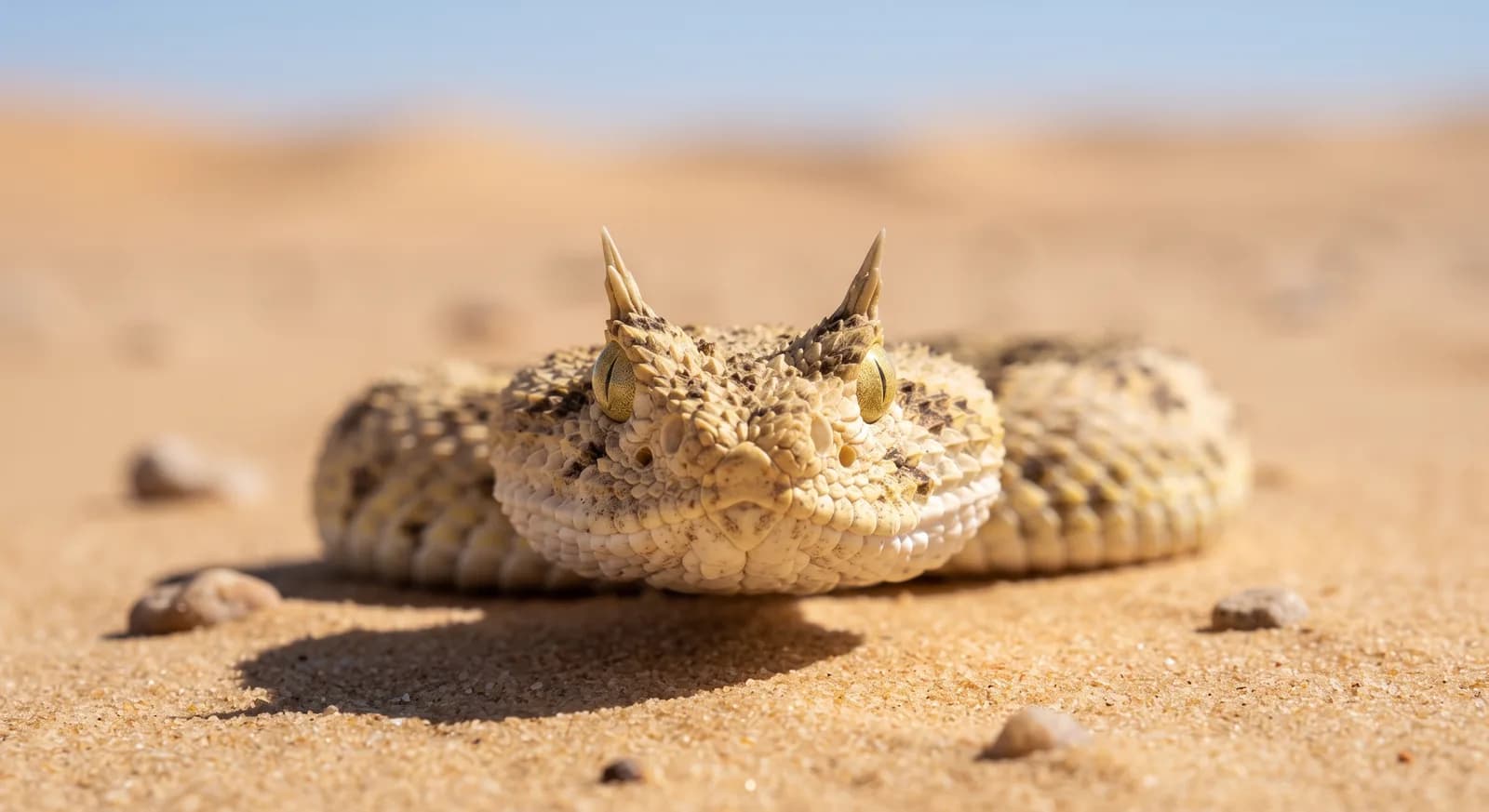
Desert Horned Viper (Cerastes cerastes)

Reptiles · Squamata · Viperidae

Desert Horned Viper

Cerastes cerastes

Least Concern

The species is abundant and widely distributed; it faces no significant short-term risk.

Spotted something wrong?

The desert horned viper is the most characteristic snake of the Sahara, with a scaly horn above each eye. It buries itself in the sand with a vibrating movement of its body until only its eyes and horns are showing, and waits there, invisible, for a rodent or a lizard to pass. It appears in the iconography of Ancient Egypt.

Size

30 cm – 85 cm

Life expectancy

15 years

Diet

Carnivore

Feeds mainly on other animals.
Activity

Nocturnal

Active mainly at night.

Social structure

Solitary

Lives and hunts alone, joining others only to breed.

Desert
32countries4parks22same family

AI-generated images: illustrations, not photographs.

Fun facts

  • It buries itself in the sand within seconds by vibrating its whole body, until only its eyes and horns show: it can spend days like that, invisible, waiting for prey to pass overhead.
  • It appears in Egyptian hieroglyphs as the consonantal sign for the letter F, one of the few animals of Ancient Egypt with a hieroglyph of its own in phonetic use.
  • The horns, each formed by a modified scale above the eye, appear to shield the eyes from sand, though there are hornless populations living in exactly the same environment.

Life cycle and biology

Skeleton type
Vertebrate - internal bony skeleton (reptile)
Habitat and environment
Dunes, sandy plains and wadis of the Sahara, the Sahel and the Arabian Peninsula
Sexual maturity
2 years
Gestation / incubation
60 days of incubation
Litter / clutch size
15 eggs

Sources consulted: Wikipedia (es): Cerastes cerastes

Where to find it

Loading map…

The pins mark the parks where its presence is documented.

Where to see it

Parks and dive sites where this species has been documented.

Related species

Other species in the catalogue with the most in common with Desert Horned Viper — same habitat, park, country, tags or family.

Same taxonomic family
Shares a park
Shares a park
Shares a park
Shares a park
Same taxonomic family

Keep exploring

Based on what we already know about desert horned viper.

Share an experience, a fun fact or a tip for seeing the desert horned viper.
See full glossary
This page in other languages: Español · Deutsch · Français · Português · Italiano
See its range on the interactive map→
Wadi RumJordan
Tassili n'Ajjer National ParkAlgeria
Ennedi MassifChad
Aïr and Ténéré Natural ReservesNiger
PhoorsaLeast Concern

Phoorsa

Echis carinatus

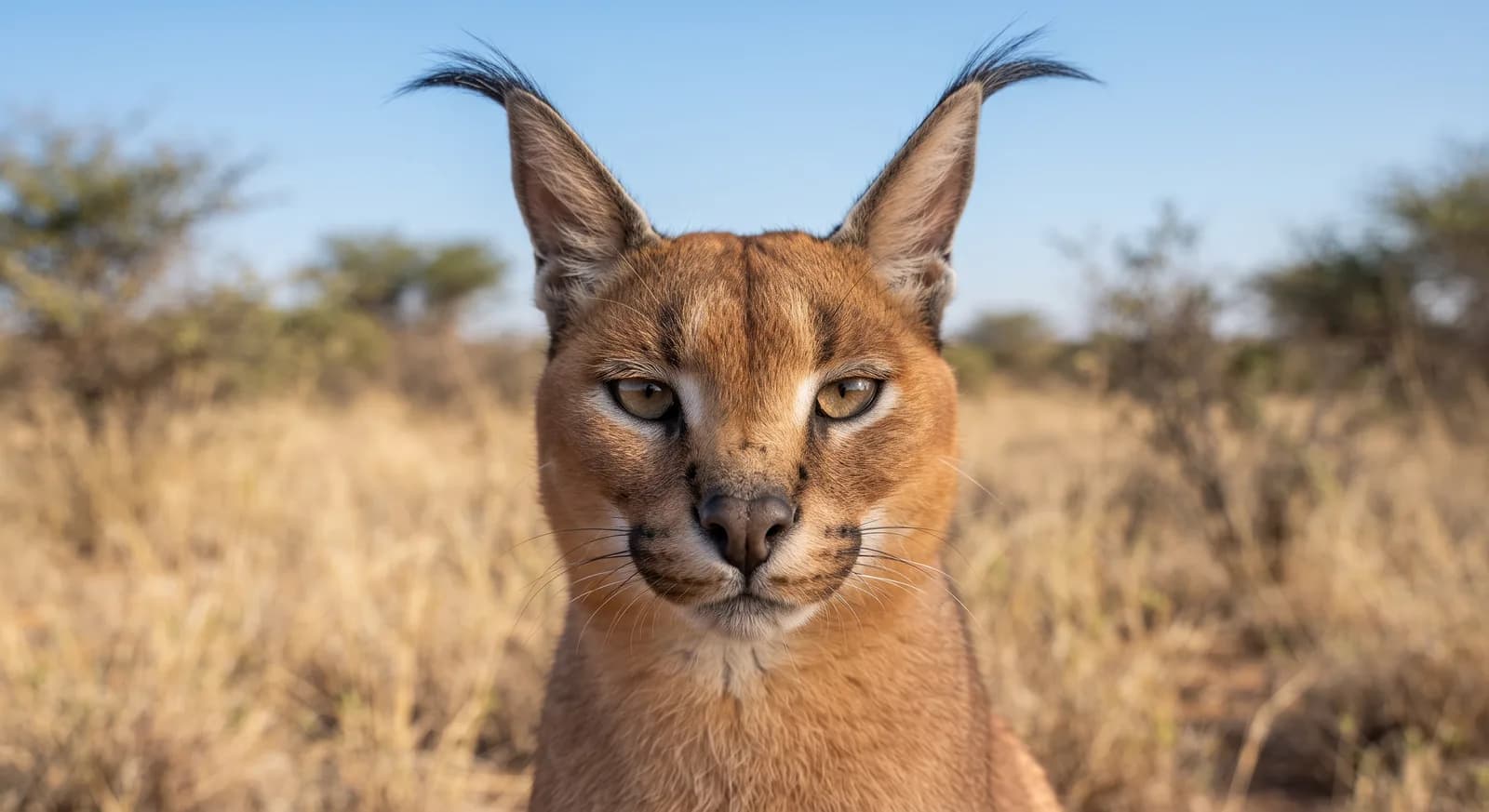
CaracalLeast Concern

Caracal

Caracal caracal

Least Concern

Sand Cat

Felis margarita

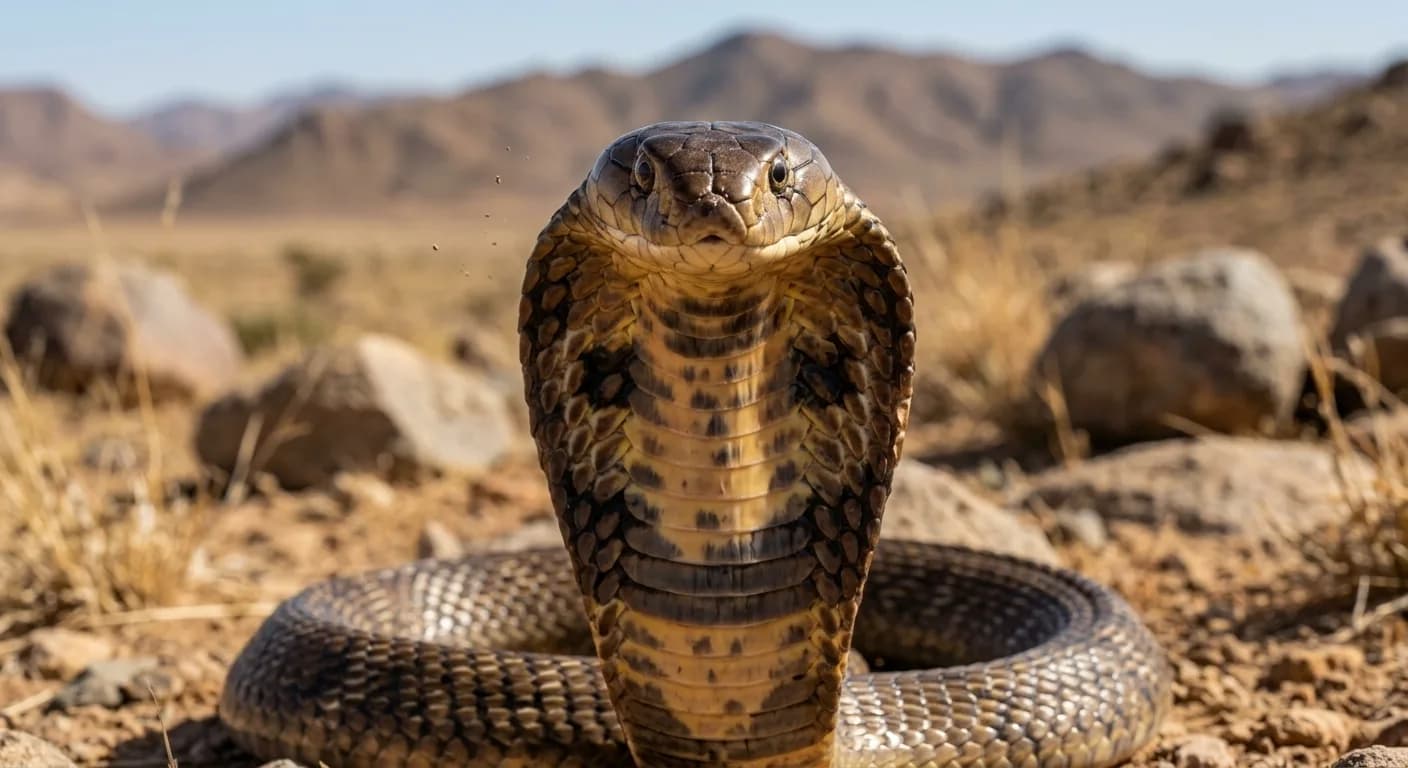
Egyptian CobraLeast Concern

Egyptian Cobra

Naja haje

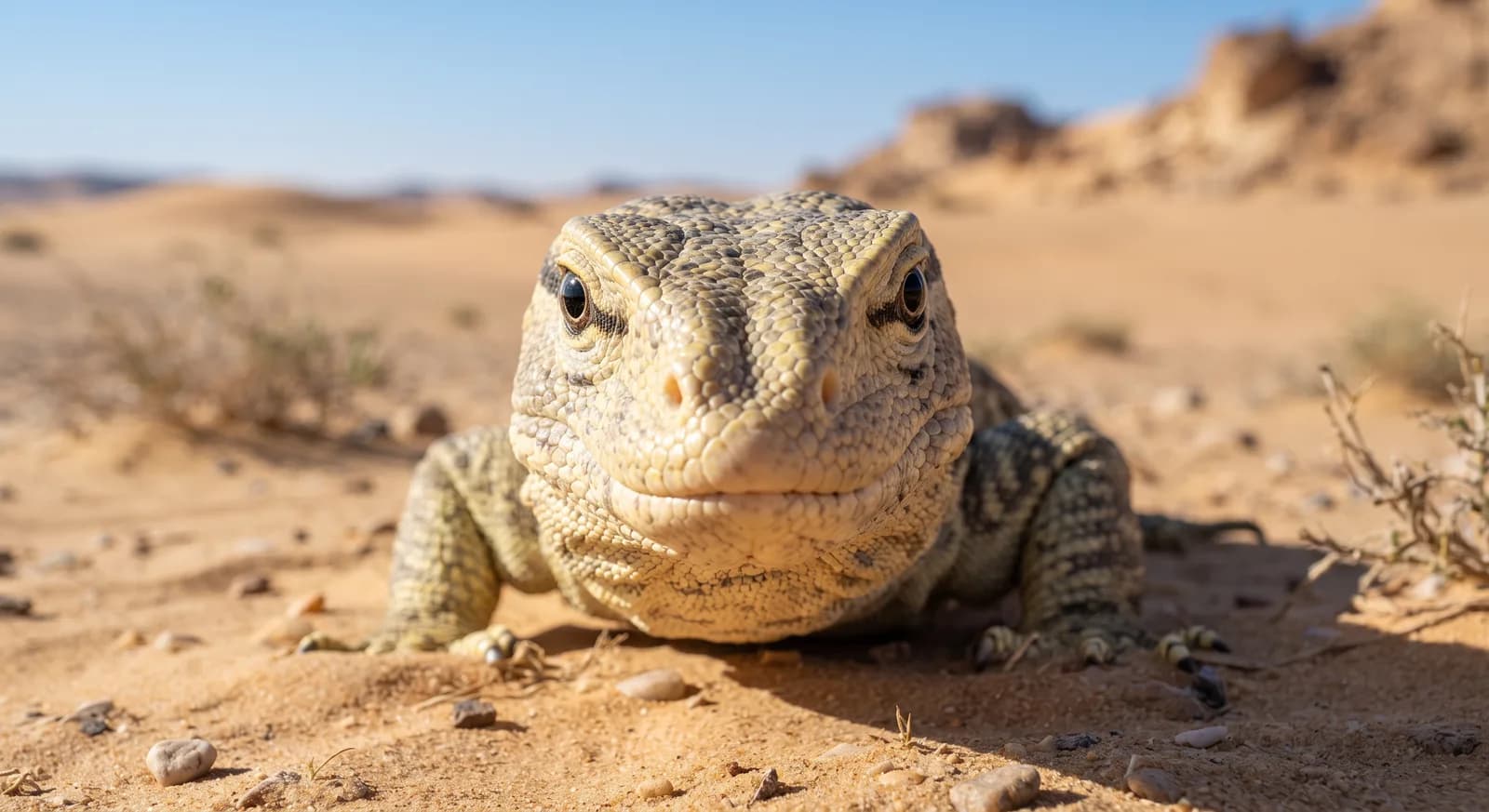
Desert MonitorLeast Concern

Desert Monitor

Varanus griseus

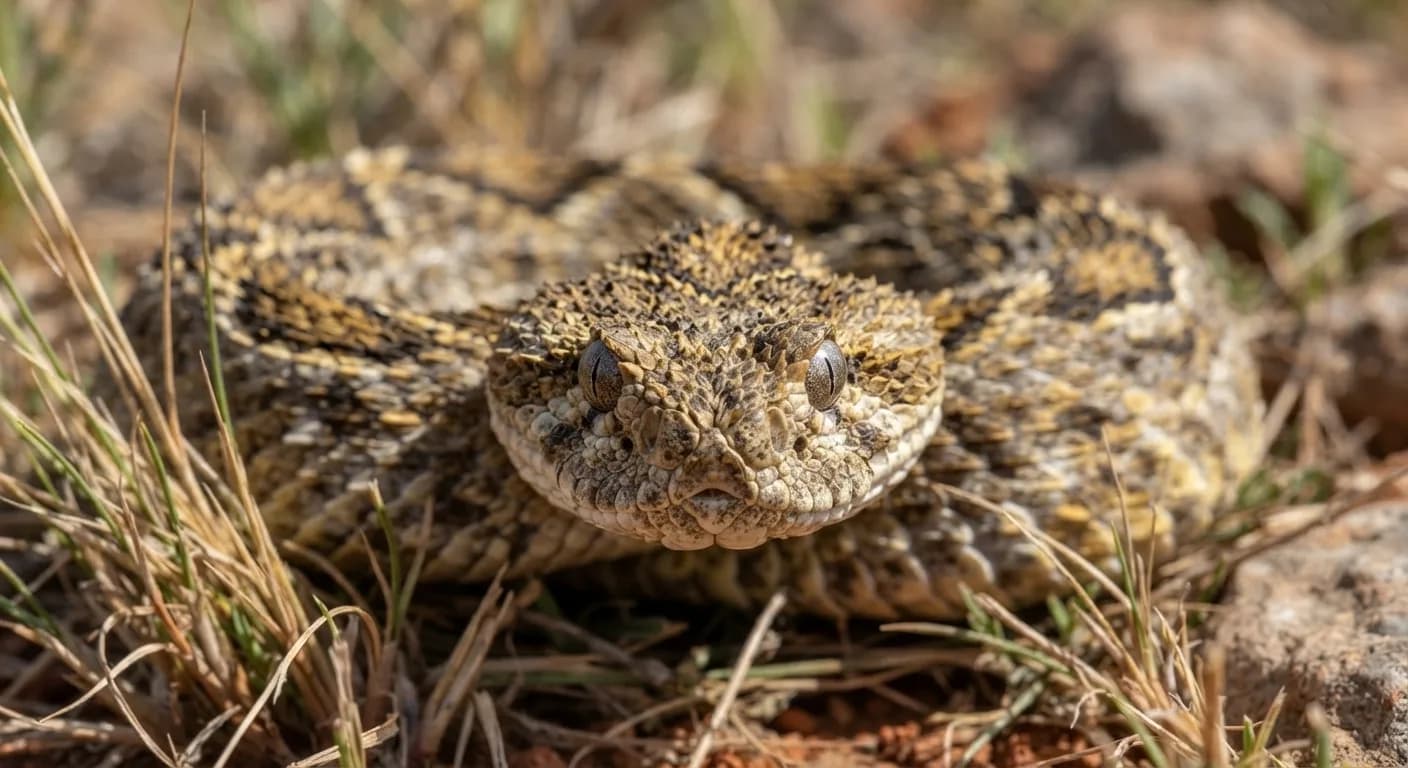
Puff AdderLeast Concern

Puff Adder

Bitis arietans

CountriesAlgeria
ParksWadi RumJordan
TagsCarnivore
Carnivore
Nocturnal
Solitary
Reptile
Desert

Asia20

Africa12

Algeria
Chad
Jordan
Niger
Afghanistan
Armenia
Afghanistan
Armenia
Azerbaijan
Bahrain
Iran
Iraq
Israel
Jordan
Kuwait
Lebanon
Oman
Pakistan
Palestine
Qatar
Saudi Arabia
Syria
Türkiye
Turkmenistan
United Arab Emirates
Yemen
Algeria
Burkina Faso
Chad
Egypt
Libya
Mali
Mauritania
Morocco
Niger
Senegal
Sudan
Tunisia