 Not Evaluated
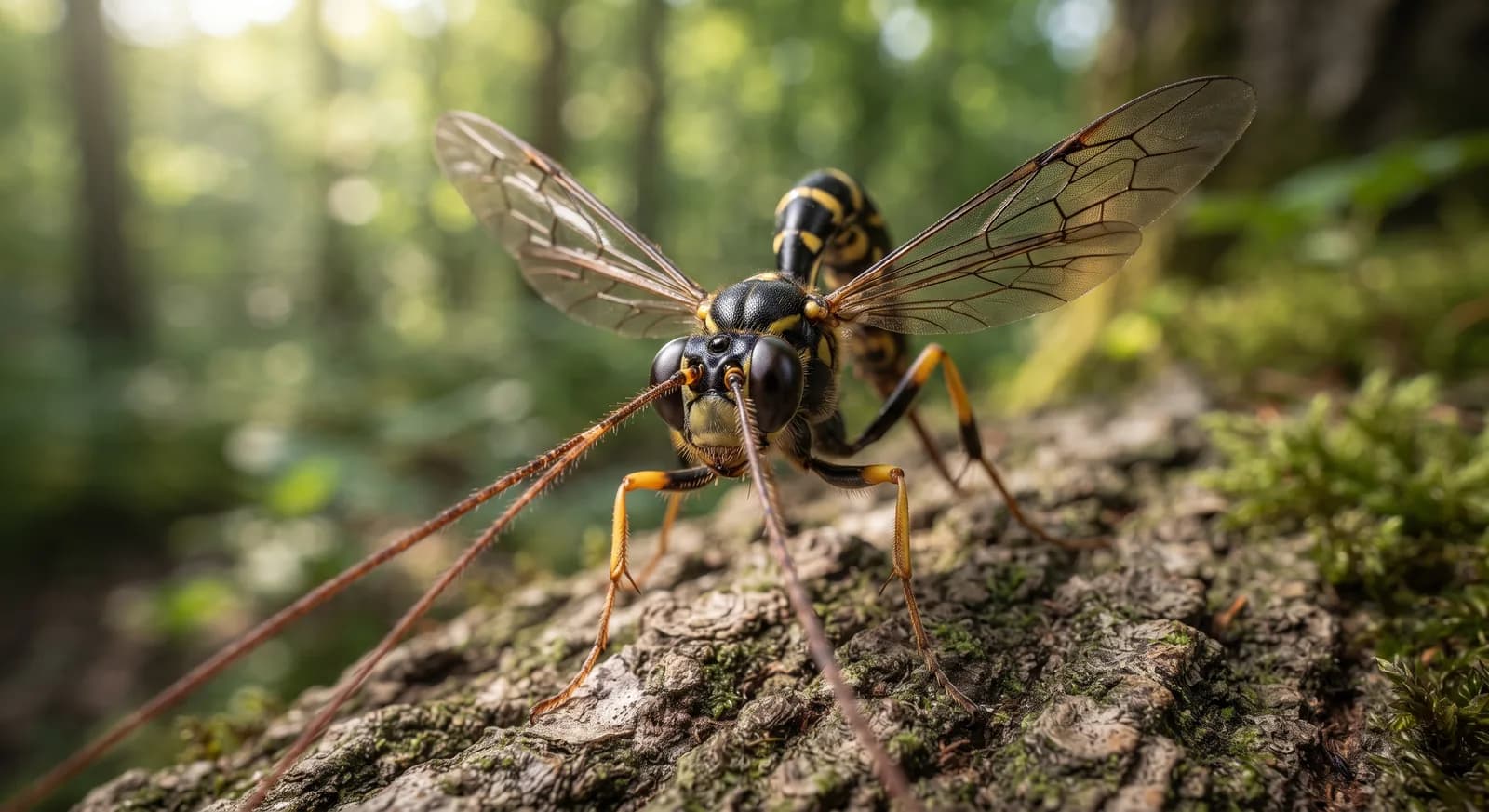
Sabre Wasp
Rhyssa persuasoria
54 countries5 parks
Species group · Insects
WAnimals has 9 species of wasp, spread across 8 families (Agaonidae, Ampulicidae, Braconidae, Cynipidae, Ichneumonidae, Pompilidae, Sphecidae, Vespidae).
Each one has its own full profile. This group does not replace them: it brings them together.
No species documented in this group is genuinely at risk according to the IUCN, with the data available today.
Recorded in 95 countries. The ones with the most species in the group:
It locates its victim through several centimetres of solid wood, detecting with its antennae the vibrations the victim makes as it gnaws and the smell of the fungi that go with it.
From
Its ovipositor, finer than a hair, drills through the wood for almost half an hour until it reaches the larva and lays an egg on it.
From
It has been deliberately introduced into New Zealand and Australia to control woodwasp pests in pine plantations.
From
It lives in annual colonies that die out almost entirely over winter; only the newly mated queens survive to found fresh colonies in spring.
From
It builds its nest by chewing wood and mixing it with saliva: it is genuine paper, and the technique is often cited as the natural forerunner of human papermaking.
From
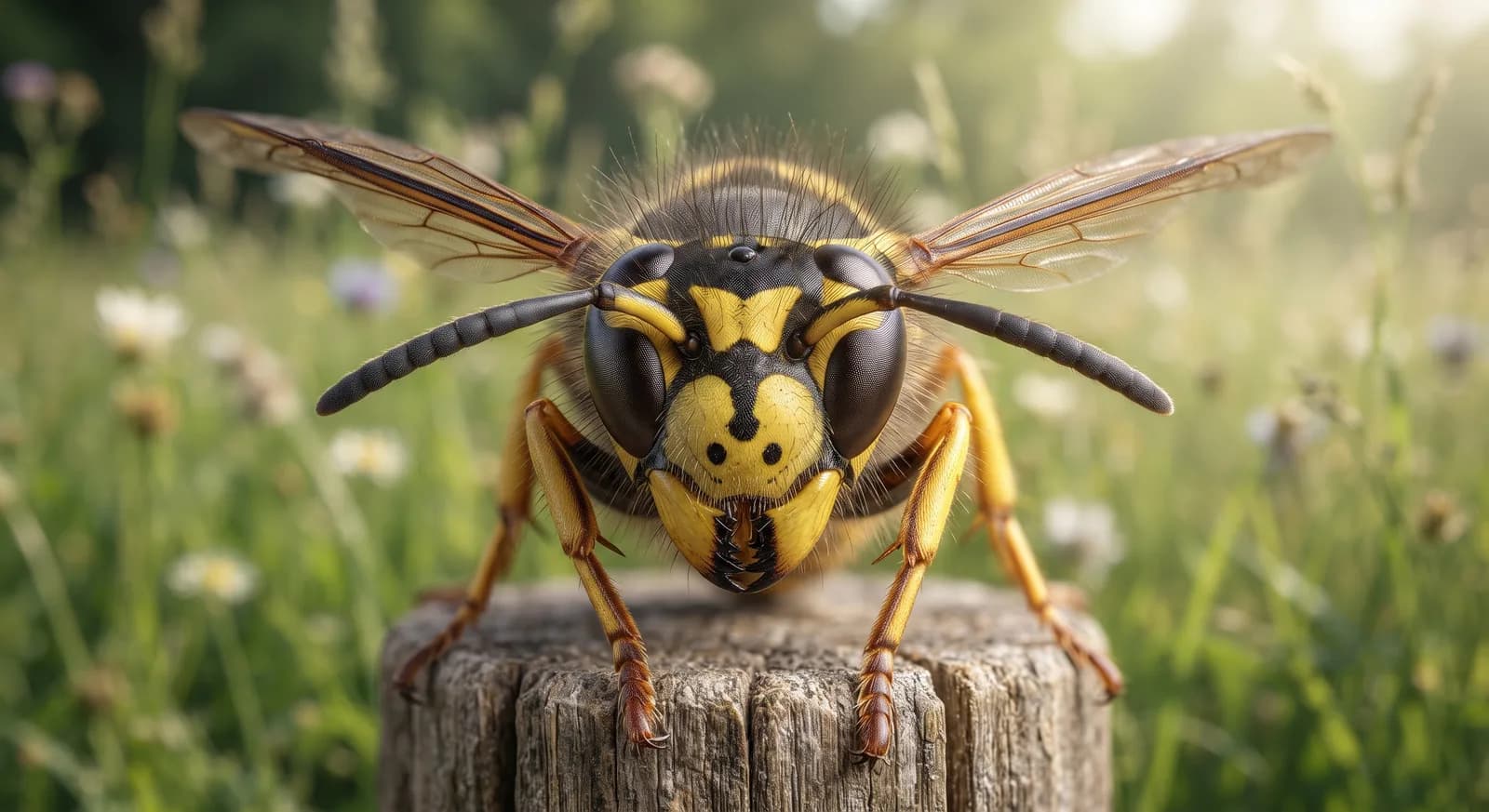
For most of the summer it hunts insects to feed the larvae, and it is the larvae that give the workers a sugary droplet in return; when the brood runs out in August, the workers lose that reward, and that is when they invade café terraces in search of anything sweet.
From
When the larvae emerge through the caterpillar's skin, it is still alive and, instead of fleeing, spins silk over the cocoons of its parasites and defends them from predators until it dies: the wasp manipulates its behaviour even after leaving it.
·
Ranges calculated from the profiles that record the figure, not from all 9.
From
The cabbage plant attacked by the caterpillar gives off volatile compounds that attract this very wasp, a chemical call for help that the crop sends out to its ally.
From