Skip to content
WAnimals
  • Map
  • Species
  • Parks
  • Diving
Log inCreate account
WAnimals

The guide for travellers and animal lovers: discover, plan and share your wild adventures around the world.

Discover wildlife

  • Species
  • Ecosystems
  • Glossary
  • Tags

Explore places

  • Map
  • Countries
  • Parks
  • Diving

Plan experiences

  • Guides

Learn

  • Blog

Resources

  • Help centre
  • Contact
  • Install the app

Follow us

Account

  • Log in
  • Create account

© 2026 WAnimals. All rights reserved.

About usHow we build our profilesTerms of servicePrivacyLegal notice
MapSpeciesParksDiving
  1. Home
  2. Species
  3. Parasitoid Wasp

One of the 9 wasps on WAnimals
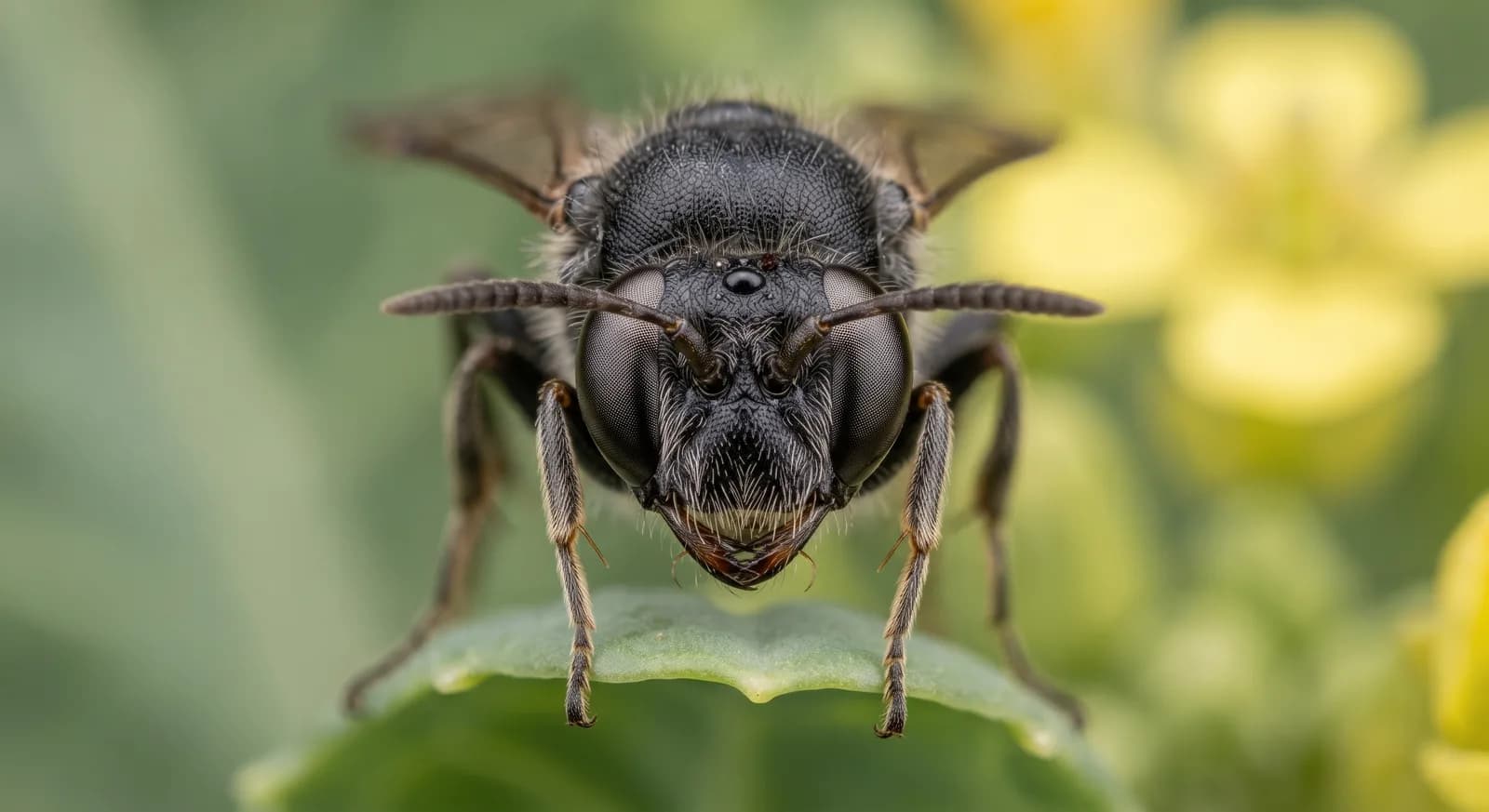
Parasitoid Wasp (Cotesia glomerata)

Insects · Hymenoptera · Braconidae

Parasitoid Wasp

Cotesia glomerata

Not Evaluated

It has not yet been assessed against the IUCN criteria.

Spotted something wrong?

Cotesia glomerata is a small parasitic wasp of the family Braconidae that parasitises several species of Pieris butterflies. It was first described by Carl Linnaeus in his 1758 publication, the tenth edition of Systema Naturae.

Size

0.3 cm – 0.7 cm

Diet

Carnivore

Feeds mainly on other animals.

Activity

Diurnal

Active mainly during the day.
Social structure

Solitary

Lives and hunts alone, joining others only to breed.

Sighting difficulty

Unknown

Grassland
43countries

AI-generated images: illustrations, not photographs.

Fun facts

  • When the larvae emerge through the caterpillar's skin, it is still alive and, instead of fleeing, spins silk over the cocoons of its parasites and defends them from predators until it dies: the wasp manipulates its behaviour even after leaving it.
  • The cabbage plant attacked by the caterpillar gives off volatile compounds that attract this very wasp, a chemical call for help that the crop sends out to its ally.
  • The clusters of yellow cocoons beside a dying caterpillar, very common in vegetable plots, are often mistaken for the butterfly's own eggs.
  • The female lays dozens of eggs inside a single large white butterfly caterpillar; the larvae develop within it, break out through the skin and spin a cluster of white cocoons around it.
  • The sex ratio is heavily skewed towards females, because the males compete to mate with their sisters before dispersing.
  • The males emerge before the females, a phenomenon called protandry.
  • It has been introduced on several continents as biological control for cabbage pests.

Life cycle and biology

Skeleton type
Invertebrate - chitin exoskeleton (insect)
Habitat and environment
Vegetable plots, brassica crops and field banks with crucifers
Size at birth
After 15-20 days inside the caterpillar the larvae emerge and spin yellowish silk cocoons in a cluster; the adults emerge 7-10 days later, giving a total cycle of 22 to 30 days
Sexual maturity
The female mates almost immediately after leaving the cocoon and begins to lay; the males emerge before the females and disperse
Gestation / incubation
The larvae develop inside the caterpillar for between 15 and 20 days
Litter / clutch size
From 16 to 52 eggs laid in a single caterpillar

Sources consulted: https://es.wikipedia.org/wiki/Cotesia_glomerata; Ficha de especie de Cotesia glomerata; Cornell; Ficha de identificacion de Cotesia glomerata; ficha de identificacion de la especie

Where to find it

Best time: It is detected mainly by the clusters of white or yellowish cocoons beside dead Pieris caterpillars, in vegetable gardens and brassica crops

Loading map…

Related species

Other species in the catalogue with the most in common with Parasitoid Wasp — same habitat, park, country, tags or family.

Related to
Related to
Related to
Related to
Related to
Related to

Keep exploring

Based on what we already know about parasitoid wasp.

Comments

Share an experience, a fun fact or a tip for seeing the parasitoid wasp.

Be the first to comment.

See full glossary
This page in other languages: Español · Deutsch · Français · Português · Italiano
See its range on the interactive map→
Common BuzzardLeast Concern

Common Buzzard

Buteo buteo

Eurasian HoopoeLeast Concern

Eurasian Hoopoe

Upupa epops

Common KestrelLeast Concern

Common Kestrel

Falco tinnunculus

Least Concern

Eastern Coral Snake

Micrurus fulvius

Least Concern

Racer

Coluber constrictor

Least Concern

Common Kingsnake

Lampropeltis getula

CountriesAlbania
TagsCarnivore
Carnivore
Diurnal
Solitary
Insect
Grassland

Europe39

Asia2

North America1

Oceania1

Albania
Andorra
Austria
Belarus
Belgium
Bosnia and Herzegovina
Albania
Andorra
Austria
Belarus
Belgium
Bosnia and Herzegovina
Bulgaria
Croatia
Czechia
Denmark
Estonia
Finland
France
Germany
Greece
Hungary
Ireland
Italy
Latvia
Liechtenstein
Lithuania
Luxembourg
Moldova
Monaco
Montenegro
Netherlands
North Macedonia
Norway
Poland
Portugal
Romania
Serbia
Slovakia
Slovenia
Spain
Sweden
Switzerland
Ukraine
United Kingdom
Japan
Russia
United States
New Zealand