One of the 2 ostriches on WAnimals
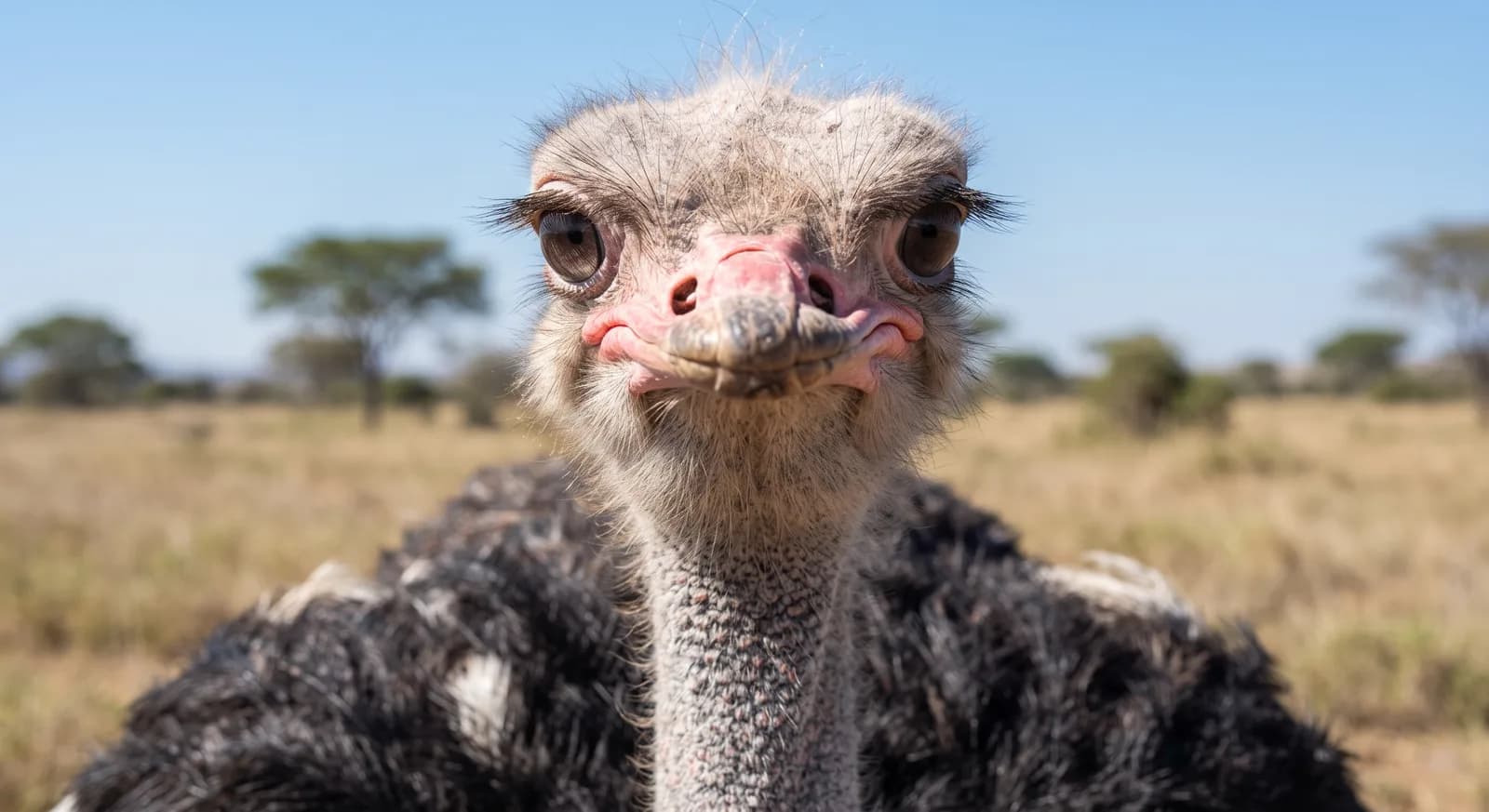
Birds · Struthioniformes · Struthionidae
Common Ostrich
Struthio camelus
The species is abundant and widely distributed; it faces no significant short-term risk. See full glossary
It is the largest and heaviest living bird in the world, and the fastest on land of any bird, running at over 60 km/h. It cannot fly, but a single kick can be lethal to a predator.
Weight
up to 156.5 kg
Size
up to 2.8 m
Lifespan
40 years
Diet
Omnivore
Combines animal and plant food depending on availability.
Activity
Diurnal
Active mainly during the day.
Social structure
Herd
Lives in large groups as a strategy against predators.
Sighting difficulty
Easy
Fun facts
- The ostrich egg is the largest in the world: about 1.5 kg and 16 cm long.
- It can run at over 60 km/h, the fastest land speed of any bird.
- Several hens lay their eggs in a single communal nest.
- anatomíaIt has the largest eyes of any land bird — each one bigger than its own brain.
Life cycle & biology
- Skeleton type
- Vertebrate - non-pneumatised bony skeleton (flightless bird)
- Habitat & environment
- Savanna, open grassland and semi-desert country of Africa
- Birth weight
- Hatches after 35-46 days of incubation, in mottled down
- Size at birth
- The ostrich egg is the largest in the world: ~1.5 kg and 16 cm long
- Sexual maturity
- 3-4 years
- Gestation / incubation
- 35-46 days of incubation (sources give between 40 and 48 days depending on the population)
- Litter / clutch size
- A communal clutch of 15-60 eggs from several females; the main hen may lay up to 11
- Lifespan in captivity
- Up to 40-50 years in captivity
Sources consulted: SeaWorld/Busch Gardens; AnAge (genomics.senescence.info); Oiseaux.net; A-Z Animals; Animal Diversity Web; ScienceDirect
Where to find it
See its range on the interactive mapWhere to watch it
Parques y spots de buceo donde se ha documentado esta especie — se muestran 10 de 18 documentados.
Related species
Other species in the catalogue with the most in common with Common Ostrich — same habitat, park, country, tags or family.
Olive Baboon
Papio anubis
Helmeted Guineafowl
Numida meleagris
Village Weaver
Ploceus cucullatus
Patas Monkey
Erythrocebus patas
Common Bulbul
Pycnonotus barbatus
Red-billed Hornbill
Tockus erythrorhynchus
Keep exploring
Based on what we already know about common ostrich.
Comments
Share an experience, a fun fact or a tip for seeing the common ostrich.
Be the first to comment.