One of the 6 old world vultures on WAnimals
Birds · Accipitriformes · Accipitridae
Lappet-faced Vulture
Torgos tracheliotos
It faces a very high risk of extinction in the wild in the near future. See full glossary
The lappet-faced vulture is the largest and most powerful vulture in Africa, with a bare pink head framed by the fleshy folds that give it its name. Its bill is so strong that it opens hides and tendons no other African vulture can break, which makes it the species that starts work on many carcasses. Poisoning, whether deliberate or accidental, has driven it into severe decline.
Weight
5.4 kg – 9.4 kg
Size
95 cm – 1.2 m
Lifespan
40 years
Diet
Carnivore
Feeds mainly on other animals.
Activity
Diurnal
Active mainly during the day.
Social structure
In pairs
Usually lives in pairs, sometimes for life.
Sighting difficulty
Hard
Fun facts
- GeneralIts bill is powerful enough to open hide no other vulture can tear.
- comportamientoIt is one of the largest and most dominant vultures at a carcass, able to drive off more numerous species through size and strength alone.
- It is the one that opens the carcass: its bill cuts hides and tendons no other African vulture can pierce, so that whether the rest of the scavenging community can feed depends on its presence.
- Poisoning is its greatest threat: poachers poison carcasses precisely in order to kill vultures, whose circling reveals to rangers the position of a downed elephant or rhinoceros.
Life cycle & biology
- Skeleton type
- Vertebrate - internal bony skeleton (bird)
- Habitat & environment
- Arid savannah, semi-desert and open scrub of Africa and the Arabian Peninsula
- Sexual maturity
- 6 years
- Gestation / incubation
- 55 days of incubation
- Litter / clutch size
- 1 egg
Sources consulted: https://es.wikipedia.org/wiki/Torgos_tracheliotos
Where to find it
See its range on the interactive mapWhere to watch it
Parques y spots de buceo donde se ha documentado esta especie — se muestran 10 de 73 documentados.
Related species
Other species in the catalogue with the most in common with Lappet-faced Vulture — same habitat, park, country, tags or family.
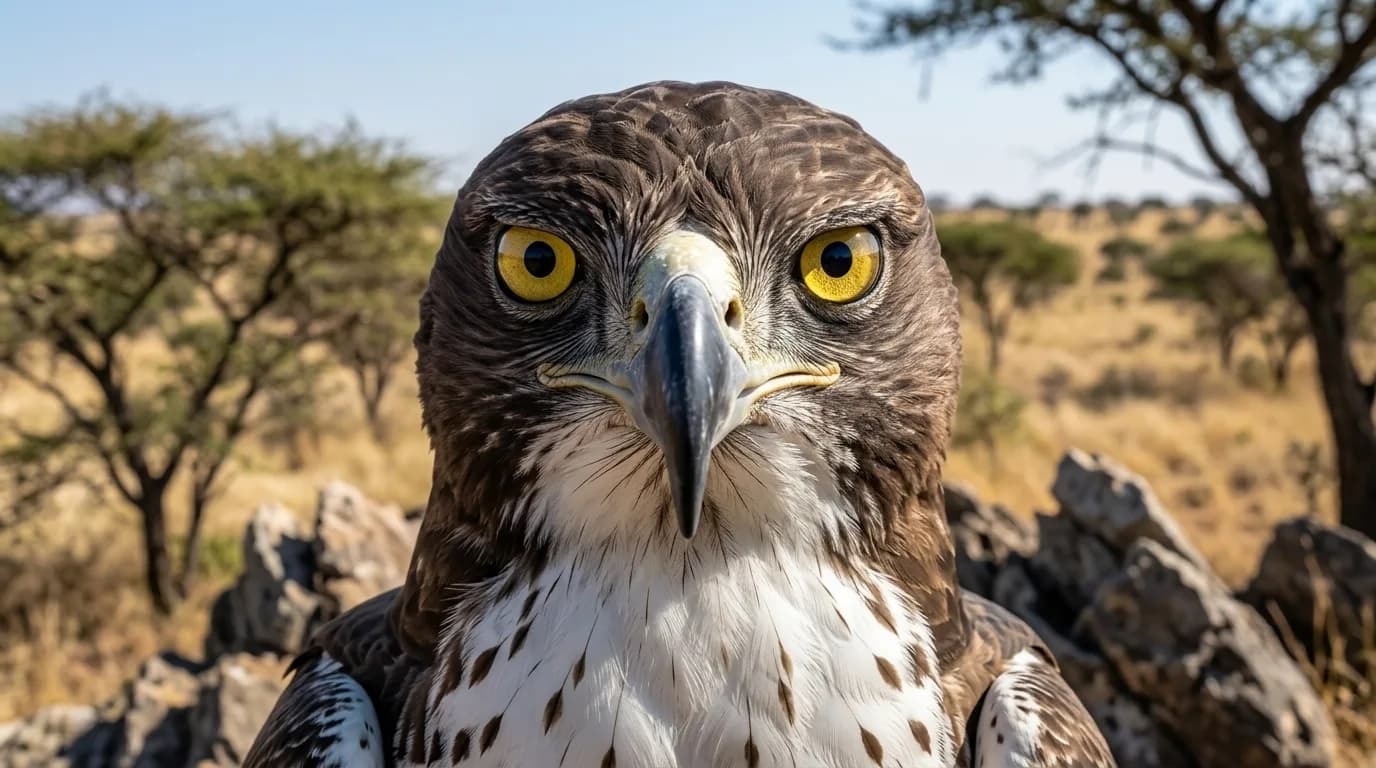 Endangered
Martial Eagle
Polemaetus bellicosus
Crowned Eagle
Stephanoaetus coronatus
Cape Vulture
Gyps coprotheres
Montagu's Harrier
Circus pygargus
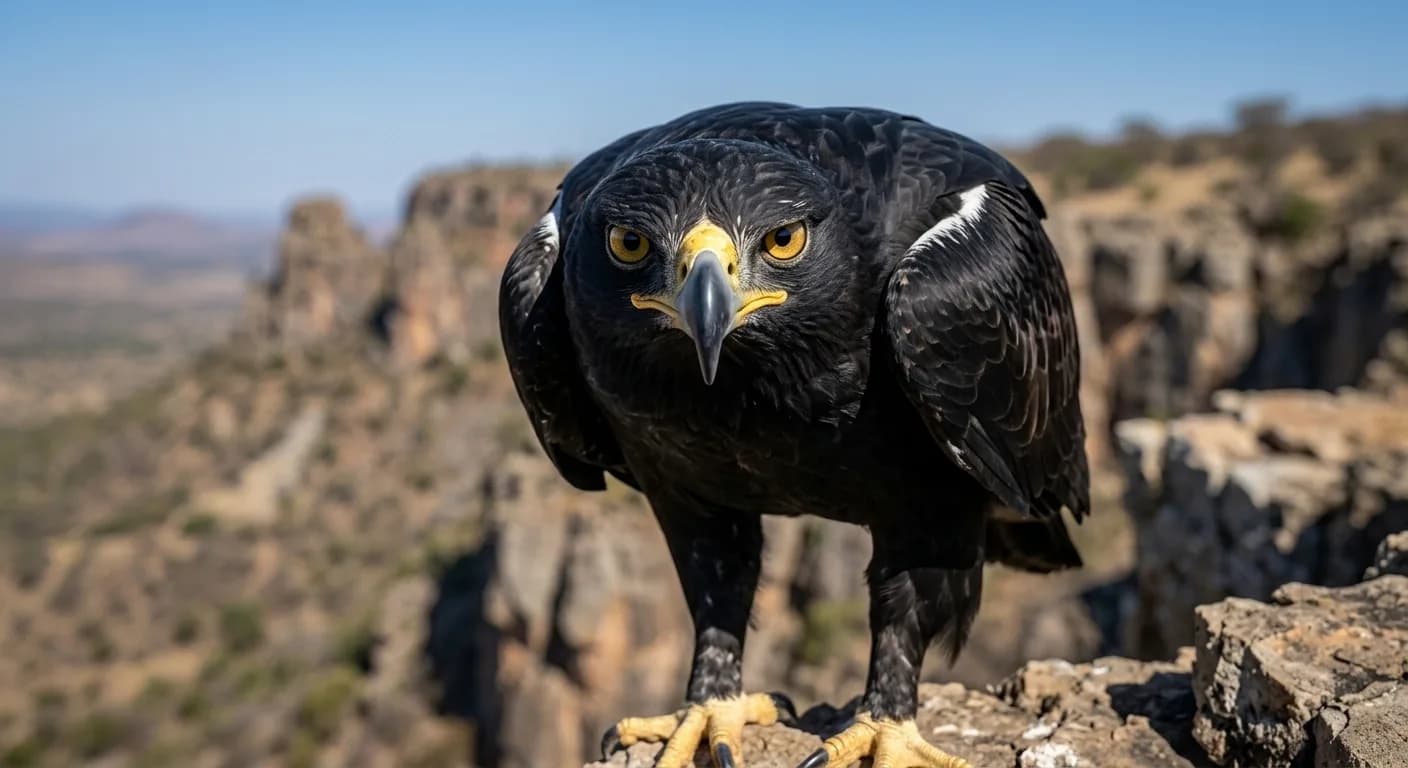 Least Concern
Verreaux's Eagle
Aquila verreauxii
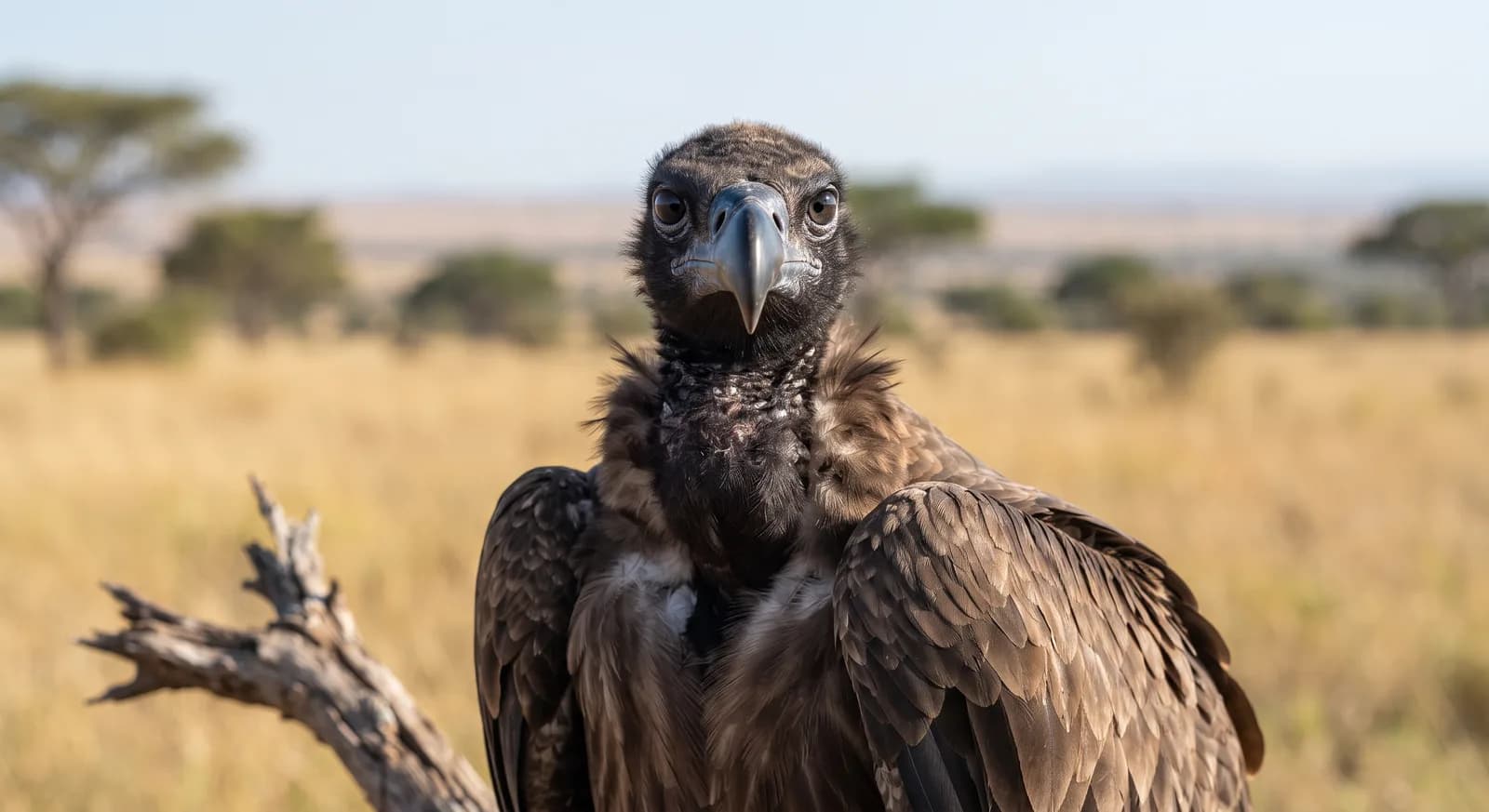 Critically Endangered
White-backed Vulture
Gyps africanus
How to help
The lappet-faced vulture is classified as endangered. Organizations such as UICN, WWF y Wildlife Conservation Society work specifically on its conservation and that of its habitat; looking into their programs is a good starting point if you want to get involved.
It's documented in 10 real protected areas — part of why protecting these places matters for its conservation.
Keep exploring
Based on what we already know about lappet-faced vulture.
Comments
Share an experience, a fun fact or a tip for seeing the lappet-faced vulture.
Be the first to comment.