One of the 13 ants on WAnimals
Insects · Hymenoptera · Mutillidae
Large Velvet Ant
Mutilla europaea
It has not yet been assessed against the IUCN criteria. See full glossary
Known as the velvet ant, it is not an ant but a wasp: the female is wingless and runs across the ground covered in dense red and black fur, while the male flies and looks completely different. It parasitises bumblebee nests.
Size
1 cm – 15 cm
Diet
Carnivore
Feeds mainly on other animals.
Activity
Diurnal
Active mainly during the day.
Social structure
Solitary
Lives and hunts alone, joining others only to breed.
Sighting difficulty
Unknown
Fun facts
- GeneralIt is not an ant but a wingless wasp; its sting is intensely painful.
- Male and female are so different that for a long time they were described as separate species; they could only be linked by watching them mate.
- The female enters the bumblebee nest, opens the cells and lays an egg on the pupae, which her larva will devour.
- Its cuticle is extraordinarily hard and resistant to the stings and bites of the bumblebees defending the nest, and it also stridulates, producing an audible squeak when disturbed.
- It is not an ant despite the name: it is a wasp with extreme sexual dimorphism, the female wingless and covered in velvety hair and the male winged.
- The female enters bumblebee nests and lays her eggs on the pupae; the larva develops as an ectoparasite, eating the pupa from the outside.
- It parasitises mostly male pupae, and under experimental conditions it has been recorded dispersing up to twenty metres in a week and invading nests of different species.
- The sting of females in this family is proverbially painful, and their cuticle is so tough that it resists being crushed.
Life cycle & biology
- Habitat & environment
- Meadows and sandy ground with bumblebee nests
Sources consulted: Insects (2019), primer registro de parasitación sobre Bombus breviceps; revisiones de biología de Mutillidae
Where to find it
See its range on the interactive mapRelated species
Other species in the catalogue with the most in common with Large Velvet Ant — same habitat, park, country, tags or family.
Common Buzzard
Buteo buteo
Eurasian Hoopoe
Upupa epops
 Least Concern
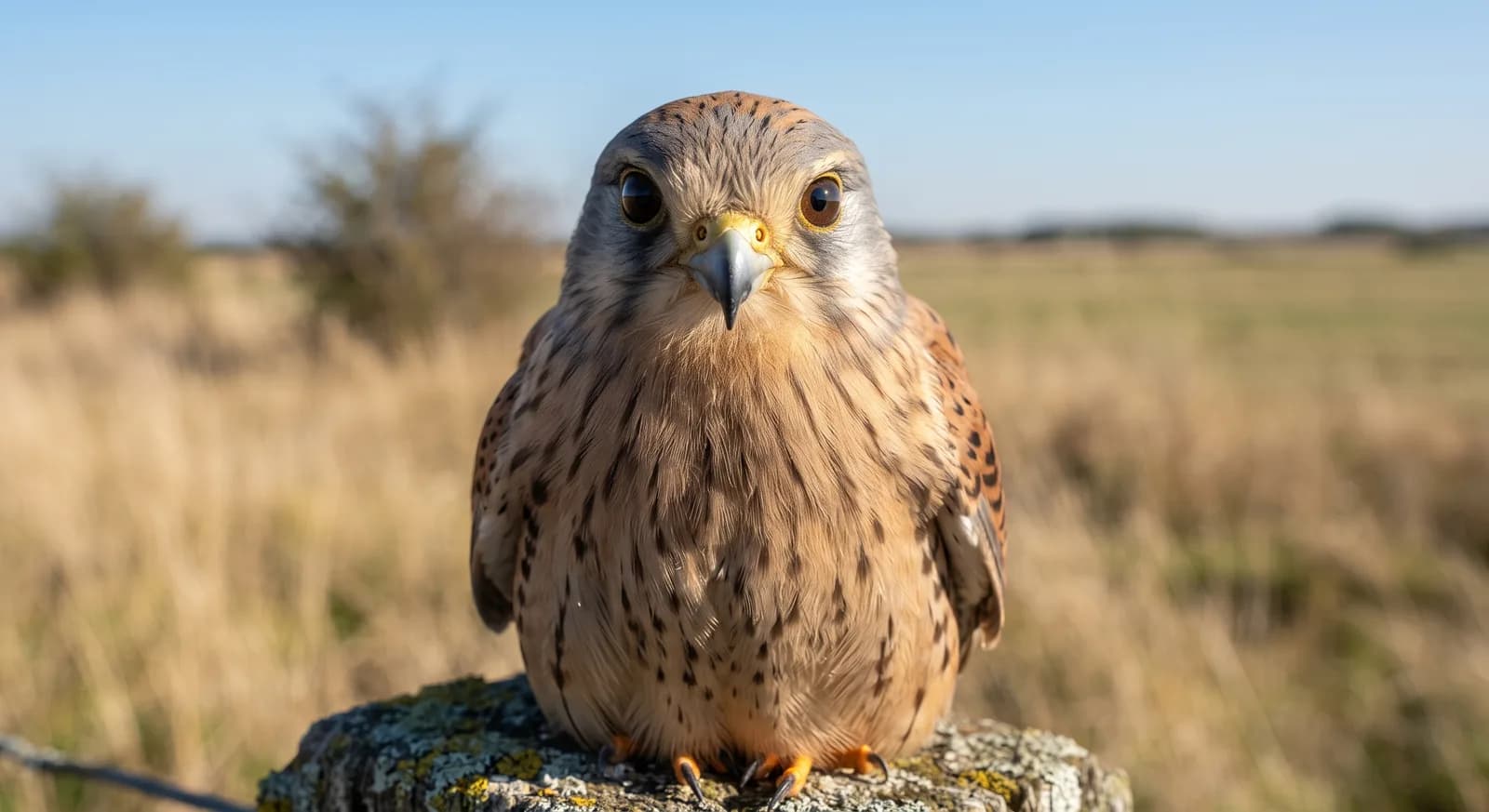
Common Kestrel
Falco tinnunculus
Sacred Scarab
Scarabaeus sacer
Golden Ground Beetle
Carabus auratus
Keep exploring
Based on what we already know about large velvet ant.
Comments
Share an experience, a fun fact or a tip for seeing the large velvet ant.
Be the first to comment.