One of the 4 mongooses on WAnimals
Mammals · Carnivora · Herpestidae
Banded Mongoose
Mungos mungo
The species is abundant and widely distributed; it faces no significant short-term risk. See full glossary
The banded mongoose lives in very tight-knit groups of between ten and forty individuals that sleep in abandoned termite mounds and go out together to look for food during the day. Its name comes from the dark transverse bands across its back. It feeds above all on beetles and other invertebrates, which it finds by digging through leaf litter and under dung. It is one of the key species in studies of cooperation and conflict in social mammals, with decades-long monitoring in Uganda.
Weight
1.5 kg – 2.3 kg
Size
30 cm – 45 cm
Lifespan
10 years
Diet
Insectivore
Feeds mainly on insects and other invertebrates.
Activity
Diurnal
Active mainly during the day.
Social structure
Colony
Lives in large concentrations, often for breeding reasons.
Sighting difficulty
Easy
Fun facts
- Every female in the group gives birth on the same day, or within a few hours of each other: because all the young are born at once, no mother can recognise her own and they all feed the common litter indiscriminately.
- Each pup pairs up with an unrelated adult that acts as a personal escort for weeks, teaching it to find food and protecting it.
Life cycle & biology
- Skeleton type
- Vertebrate - internal bony skeleton (mammal)
- Habitat & environment
- Savannah, open woodland and scrub with termite mounds and rocky outcrops of sub-Saharan Africa
- Sexual maturity
- 9.5 months
- Gestation / incubation
- 2 months
- Litter / clutch size
- 2.5 (average)
Sources consulted: https://es.wikipedia.org/wiki/Mungos_mungo
Where to find it
See its range on the interactive mapWhere to watch it
Parques y spots de buceo donde se ha documentado esta especie — se muestran 10 de 62 documentados.
Related species
Other species in the catalogue with the most in common with Banded Mongoose — same habitat, park, country, tags or family.
Yellow Mongoose
Cynictis penicillata
Common Dwarf Mongoose
Helogale parvula
 Least Concern
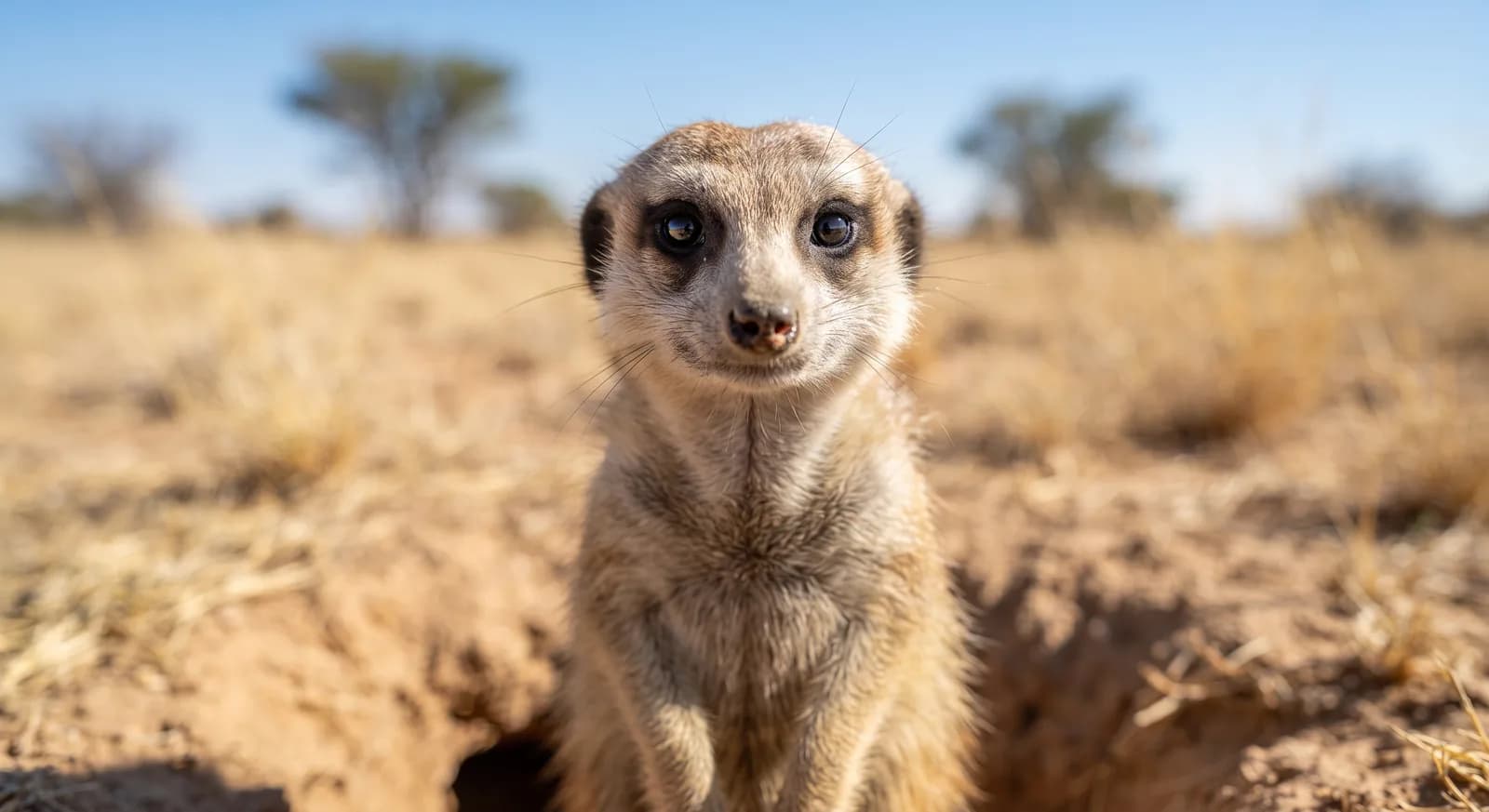
Meerkat
Suricata suricatta
Rufous Elephant Shrew
Elephantulus rufescens
Bush Hyrax
Heterohyrax brucei
Village Weaver
Ploceus cucullatus
Keep exploring
Based on what we already know about banded mongoose.
Comments
Share an experience, a fun fact or a tip for seeing the banded mongoose.
Be the first to comment.