 Not Evaluated
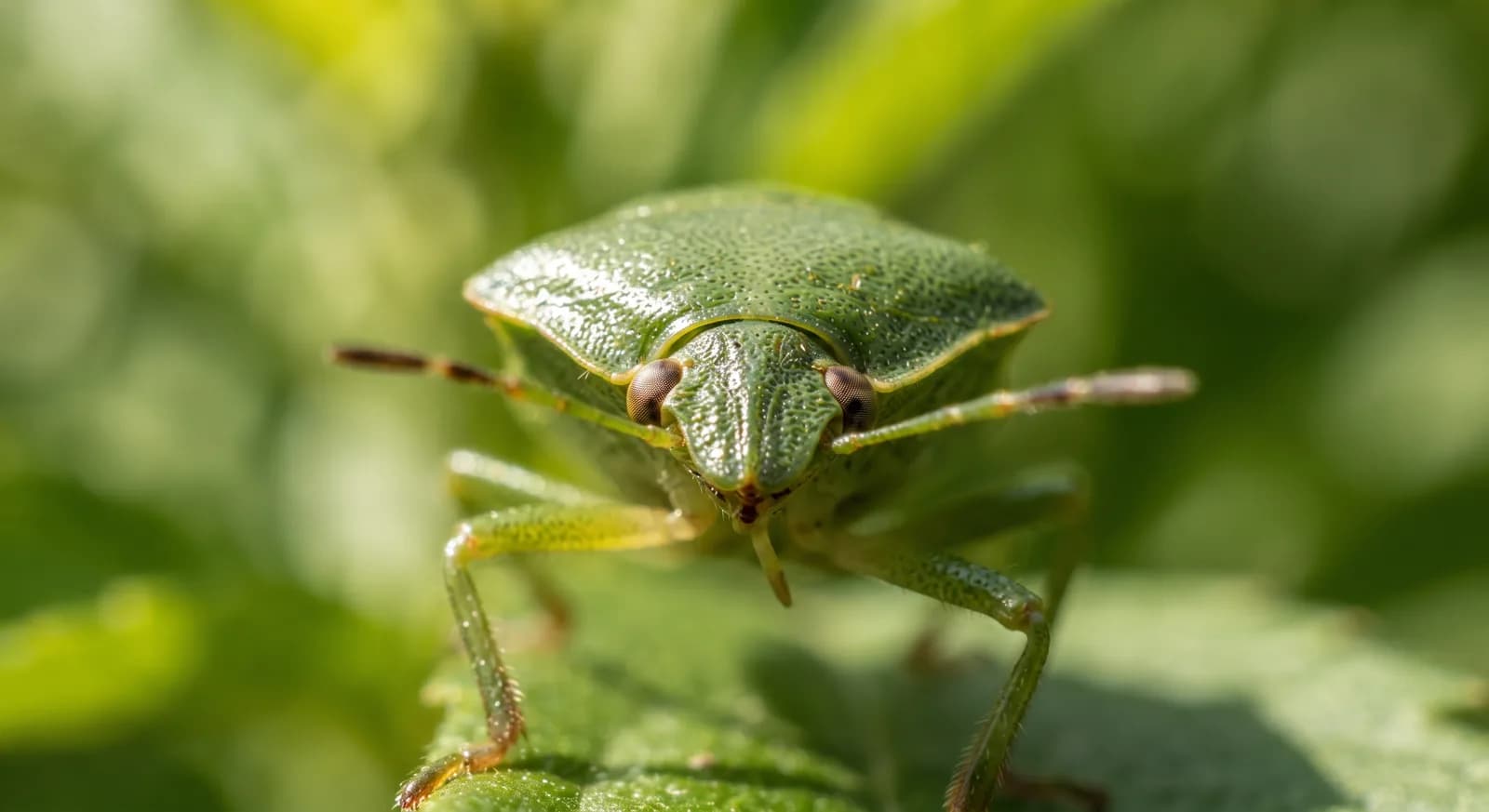
Southern Green Shieldbug
Nezara viridula
47 countries136 parks
Species group · Insects
WAnimals has 7 species of bug, spread across 6 families (Belostomatidae, Cimicidae, Coreidae, Miridae, Notonectidae, Pentatomidae).
Ranges calculated from the profiles that record the figure, not from all 7.
Each one has its own full profile. This group does not replace them: it brings them together.
No species documented in this group is genuinely at risk according to the IUCN, with the data available today.
Recorded in 63 countries. The ones with the most species in the group:
Newly hatched nymphs do not feed and stay clustered beside the empty eggs: the cluster protects them from drying out and pools their chemical defences against predators.
From
It passes through five nymphal stages and changes colour completely at each one, from orange to black with white and yellow markings and finally to green.
From
It is the only representative of the genus Nezara on the Iberian Peninsula.
From
Its feeding punctures empty out pine seeds and have sharply cut pine nut harvests in some parts of the Mediterranean.
From
In autumn it looks for somewhere to overwinter and gets into lofts, blinds and window frames by the thousand, though indoors it is entirely harmless.
From
Its flattened, leaf-shaped hind legs make it unmistakable and are the reason for its common name.
From
Swimming on its back turns its world upside down: its belly, facing up, is dark, and its back, facing the bottom, is pale — exactly the reverse of almost every other aquatic animal.
·
From
It carries a store of air clinging to the hairs of its abdomen and comes up periodically to renew it, which makes it buoyant and forces it to swim actively to stay under.
From