 Not Evaluated
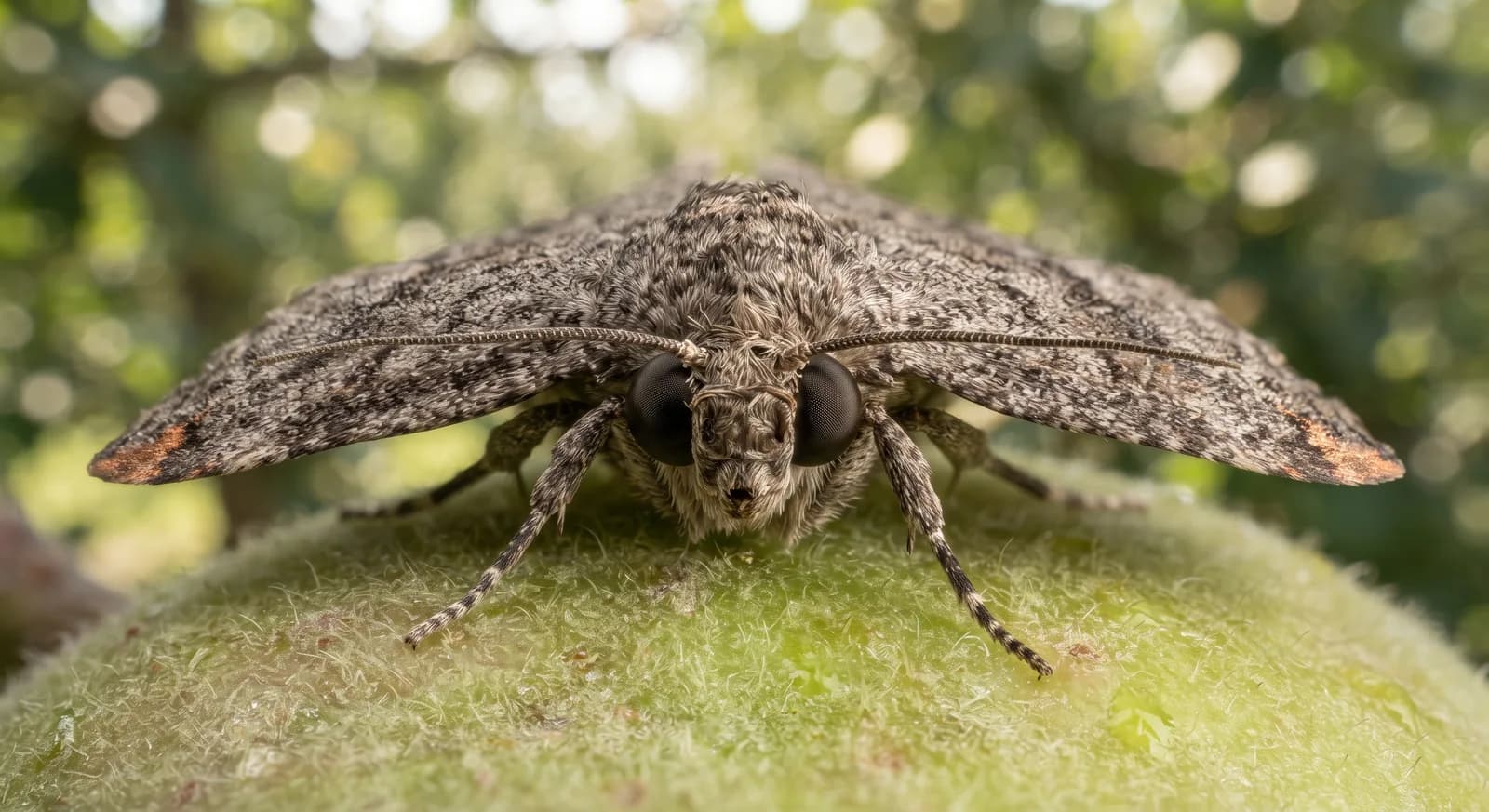
Codling Moth
Cydia pomonella
55 countries
Species group · Insects
WAnimals has 4 species of moth, spread across 4 families (Erebidae, Pyralidae, Tineidae, Tortricidae).
Ranges calculated from the profiles that record the figure, not from all 4.
Each one has its own full profile. This group does not replace them: it brings them together.
No species documented in this group is genuinely at risk according to the IUCN, with the data available today.
Recorded in 67 countries. The ones with the most species in the group:
Modern control rests on mating disruption: the air is saturated with synthetic female pheromone and the males cannot find the females, a technique that has hugely cut insecticide use in fruit growing.
From
It is also fought with a granulosis virus specific to the species, harmless to any other organism.
From
The exit hole and the damp frass on the surface of the fruit are the sign that the larva has already left: by the time the hole shows, the apple has been occupied for some while.
From
A defoliating pest that can strip whole forests bare; the European females can barely fly.
From
It reached North America by accident: in 1869 Étienne Léopold Trouvelot imported eggs to Medford, Massachusetts, to try crossing it with the silkworm and obtain a disease-resistant caterpillar. They escaped from his garden.
From
He warned the local entomologists and nothing was done; twelve years later the population exploded and the first government insect eradication campaign in history was launched, and failed.
From
Its larvae can break down polyethylene plastic, which is being investigated as a way to tackle pollution.
·
From
It has become a widely used laboratory model for studying infections and testing antibiotics, because its innate immune response resembles that of vertebrates and allows the use of mice to be reduced.
From