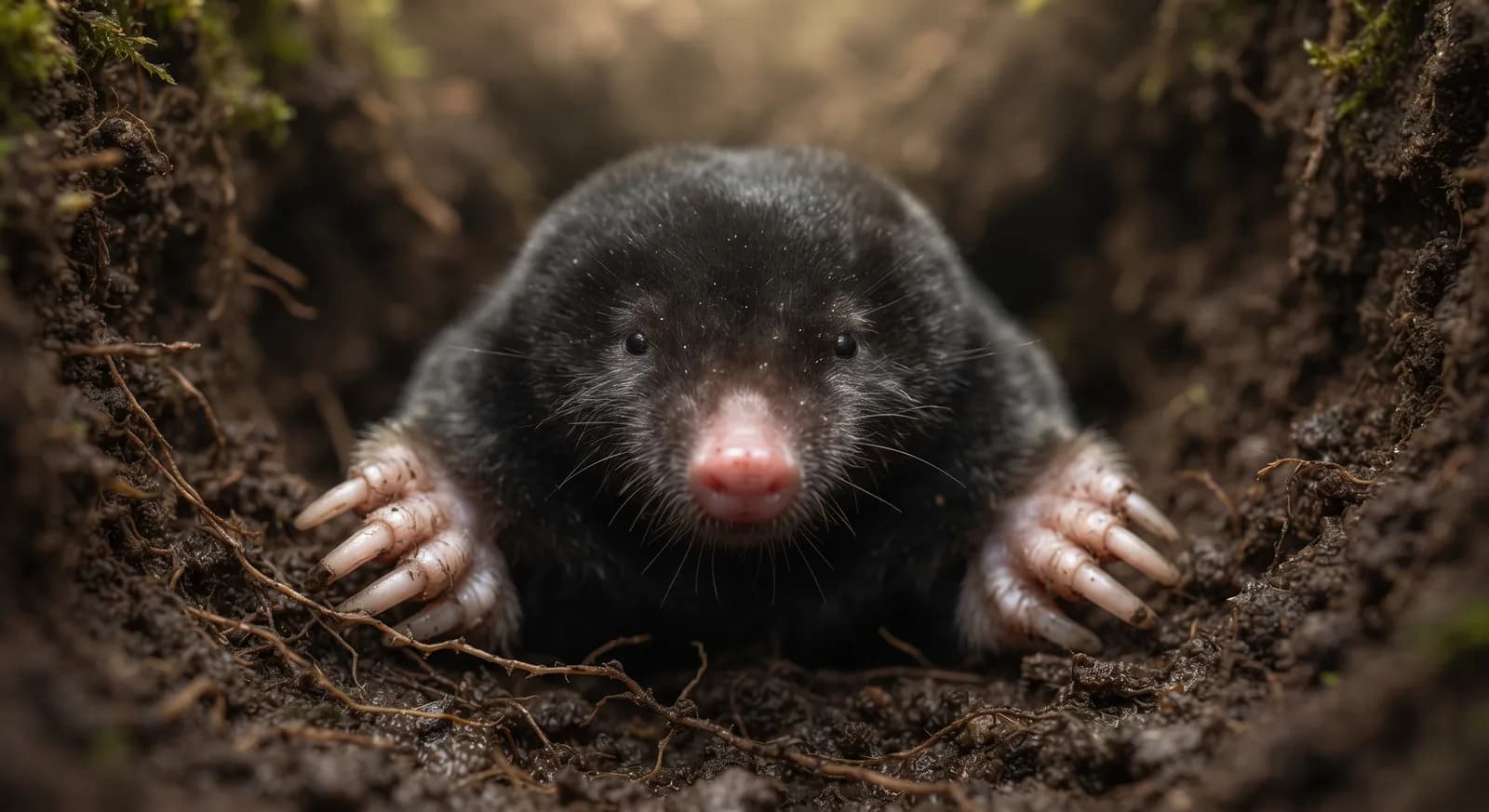
 Least Concern
European Mole
Talpa europaea
45 countries168 parks
Species group · Mammals
WAnimals has 5 species of mole, spread across 3 families (Chrysochloridae, Notoryctidae, Talpidae).
Ranges calculated from the profiles that record the figure, not from all 5.
Each one has its own full profile. This group does not replace them: it brings them together.
No species documented in this group is genuinely at risk according to the IUCN, with the data available today.
Recorded in 59 countries. The ones with the most species in the group:
Its saliva contains a toxin that immobilises earthworms, letting it store them alive in underground larders.
From
Its tunnels can run for more than 100 metres.
From
It lives almost entirely underground, in damp, soft soil.
From
Its fur has a greenish or bronze metallic sheen, unique among mammals, that comes not from pigment but from the layered structure of each hair, just as in the wing cases of some beetles.
From
It detects prey through vibrations in the soil thanks to an enormously enlarged malleus in the middle ear, which amplifies the rumble of termites on the move.
From
It has 22 fleshy rays around its snout covered in thousands of touch receptors, and can identify and swallow prey in a fraction of a second, one of the fastest feeding reactions known in any mammal.
From
Its nasal star packs more than 25,000 touch receptors into an area smaller than a human fingertip, the most sensitive touch organ known in any mammal.
From
·
It is the fastest-eating mammal: it can find, identify and swallow a prey item in less than a quarter of a second, below the reaction time of the human nervous system.
From