One of the 23 eagles on WAnimals
Birds · Accipitriformes · Accipitridae
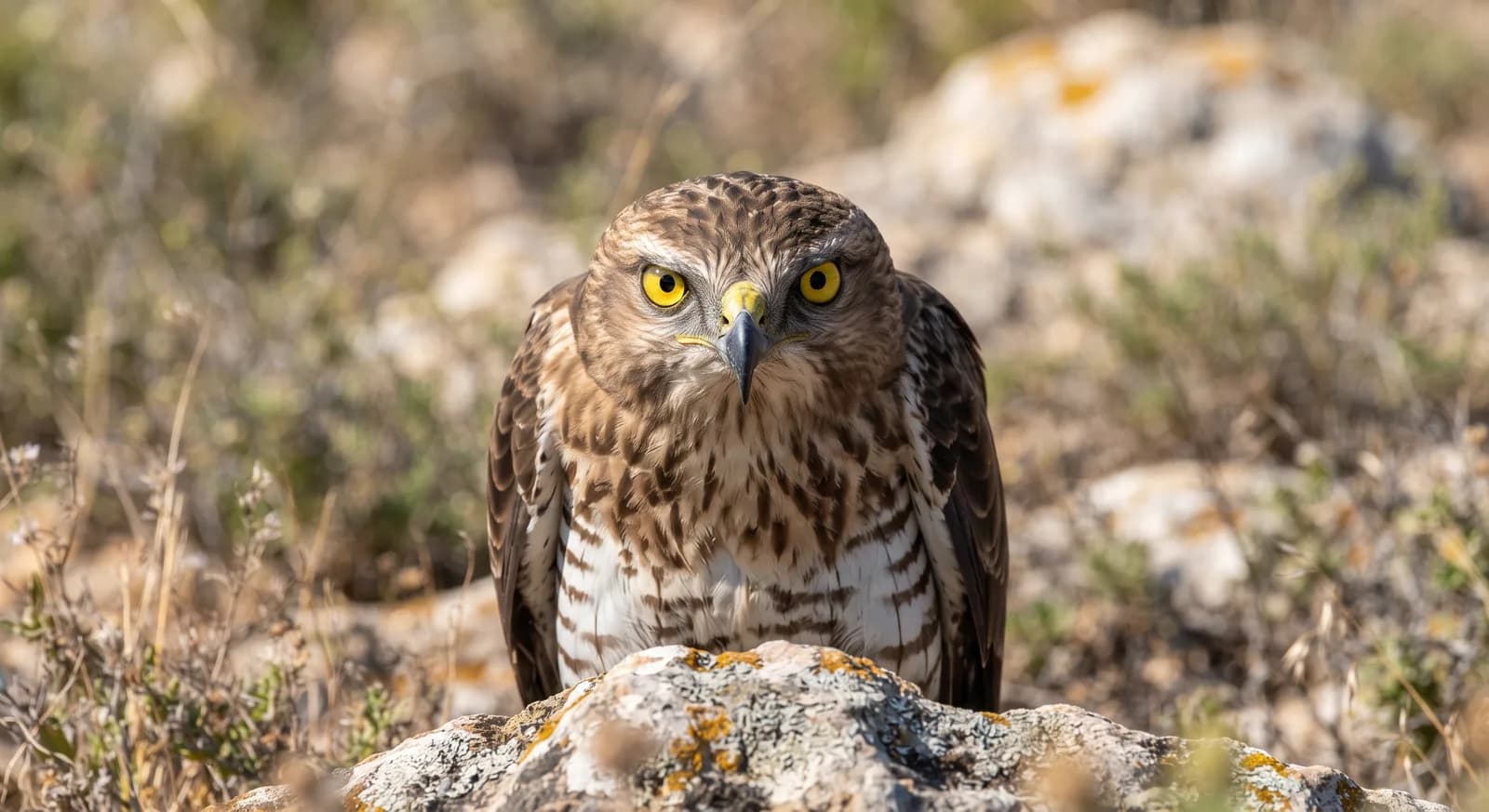
Tawny Eagle
Aquila rapax
It faces a high risk of extinction in the wild over the medium term. See full glossary
The tawny eagle is an accipitriform bird of the family Accipitridae distributed across most of Africa and the Indian subcontinent. Its population is estimated at between 100,000 and 1,000,000 individuals, but 2009 estimates by BirdLife International put the population at 100,000 and falling. It is not migratory. It was formerly considered to be the same species as the steppe eagle.
Weight
1.8 kg – 2.2 kg
Lifespan
40 years
Diet
Carnivore
Feeds mainly on other animals.
Activity
Diurnal
Active mainly during the day.
Social structure
In pairs
Usually lives in pairs, sometimes for life.
Sighting difficulty
Moderate
Estimated population
Between 100,000 and 499,999 mature individuals, with very rapid declines throughout its African range
Fun facts
- It is a kleptoparasite: it frequently robs other raptors of their kills and scavenges, as well as hunting for itself. Until recently it was considered the same species as the steppe eagle (Aquila nipalensis).
Life cycle & biology
- Skeleton type
- Vertebrate - internal bony skeleton (bird)
- Habitat & environment
- It favours arid climates: deserts, steppe, open savannah, grassland and mountainous country
- Size at birth
- An altricial chick that makes its first flight at around 84 days and may stay in the nest for up to forty days more
- Sexual maturity
- 4 years
- Gestation / incubation
- 42-45 days of incubation, mostly by the female
- Litter / clutch size
- 1-3 eggs
- Lifespan in captivity
- Documented maximum of 40.3 years in captivity
Sources consulted: https://es.wikipedia.org/wiki/Aquila_rapax
Where to find it
See its range on the interactive mapBest time: Varies with the region: March to August in north-eastern Africa, October to June in the west, and above all May to November in Kenya
Related species
Other species in the catalogue with the most in common with Tawny Eagle — same habitat, park, country, tags or family.
Cape Vulture
Gyps coprotheres
Eastern Imperial Eagle
Aquila heliaca
Lesser Spotted Eagle
Clanga pomarina
Crowned Eagle
Stephanoaetus coronatus
 Least Concern
Short-toed Eagle
Circaetus gallicus
Indian Vulture
Gyps indicus
How to help
The tawny eagle is classified as vulnerable. Organizations such as UICN, WWF y Wildlife Conservation Society work specifically on its conservation and that of its habitat; looking into their programs is a good starting point if you want to get involved.
Keep exploring
Based on what we already know about tawny eagle.
Comments
Share an experience, a fun fact or a tip for seeing the tawny eagle.
Be the first to comment.