One of the 2 mouflons on WAnimals
Mammals · Artiodactyla · Bovidae
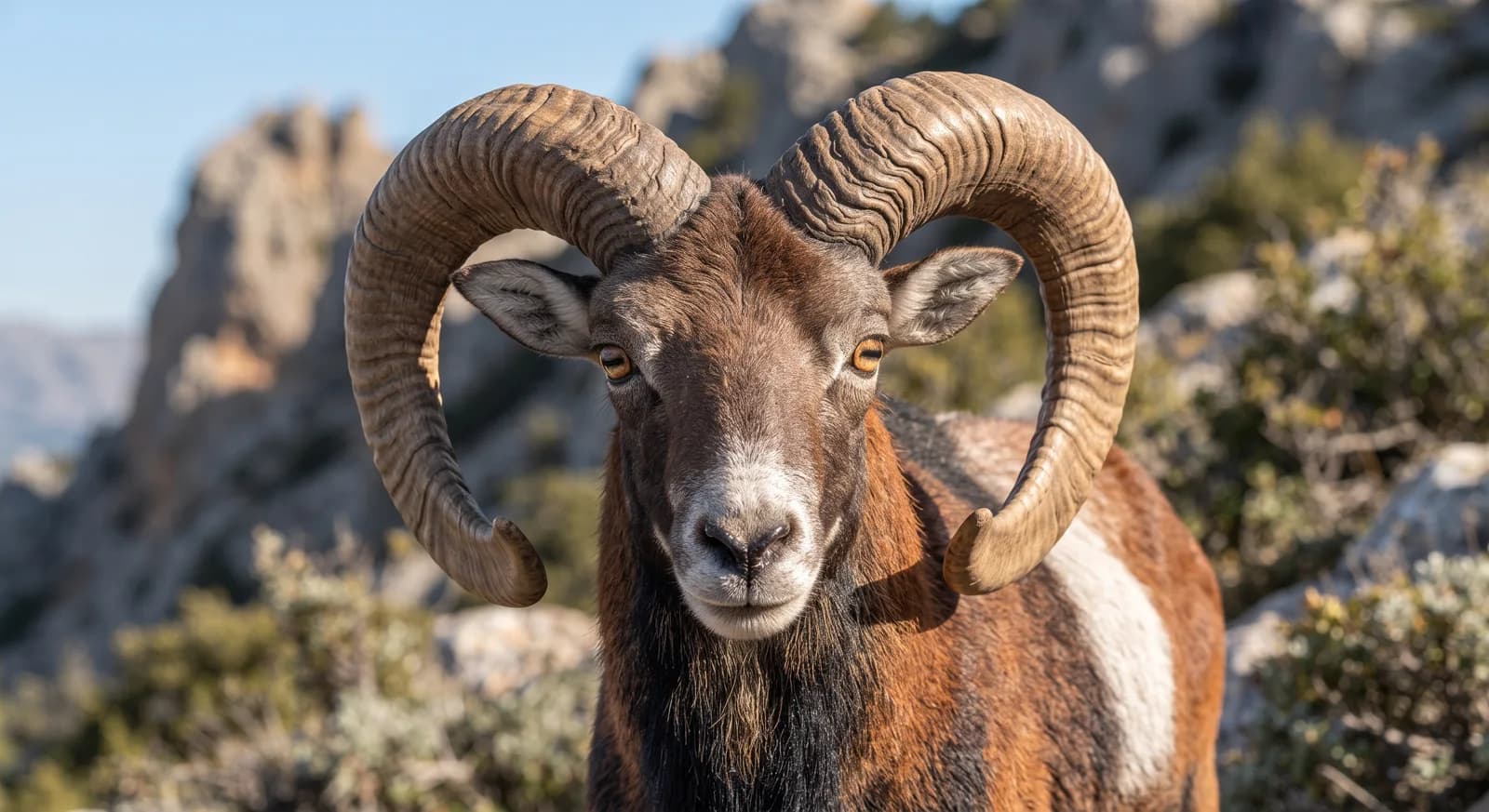
European Mouflon
Ovis aries musimon
It has not yet been assessed against the IUCN criteria. See full glossary
It is regarded as one of the most primitive forms of the domestic sheep, and males grow distinctive spiral horns up to 80 cm long.
Weight
25 kg – 55 kg
Size
up to 1.2 m
Lifespan
10 years
Diet
Herbivore
Feeds mainly on plants.
Activity
Diurnal
Active mainly during the day.
Social structure
Herd
Lives in large groups as a strategy against predators.
Sighting difficulty
Unknown
Fun facts
- Corsican females have no horns at all, unlike Sardinian ones, which have small curved horns.
- It feeds by grazing grasses and browsing mountain shrubs and herbs.
- It is native to western Asia but has been widely introduced to continental Europe since antiquity.
Life cycle & biology
- Skeleton type
- Vertebrate - internal bony skeleton (mammal)
- Habitat & environment
- Open mountain and wooded country; native to western Asia but widely introduced to continental Europe since antiquity
- Birth weight
- Born precocial
- Size at birth
- Born precocial
- Sexual maturity
- Female: ~1.5 years | Male: 2-3 years, although it does not gain access to breeding until later
- Gestation / incubation
- ~5 months
- Litter / clutch size
- 1 young per birth (twins occasional)
Sources consulted: Wikipedia (European mouflon); Wikipedia (Cyprus mouflon, comparative reference)
Where to find it
See its range on the interactive mapBest time: From October to December, during the rut, when the males clash head to head; in Spain there are introduced populations in many mountain ranges.
Where to watch it
Parks and dive sites where this species has been documented.
Related species
Other species in the catalogue with the most in common with European Mouflon — same habitat, park, country, tags or family.
 Least Concern
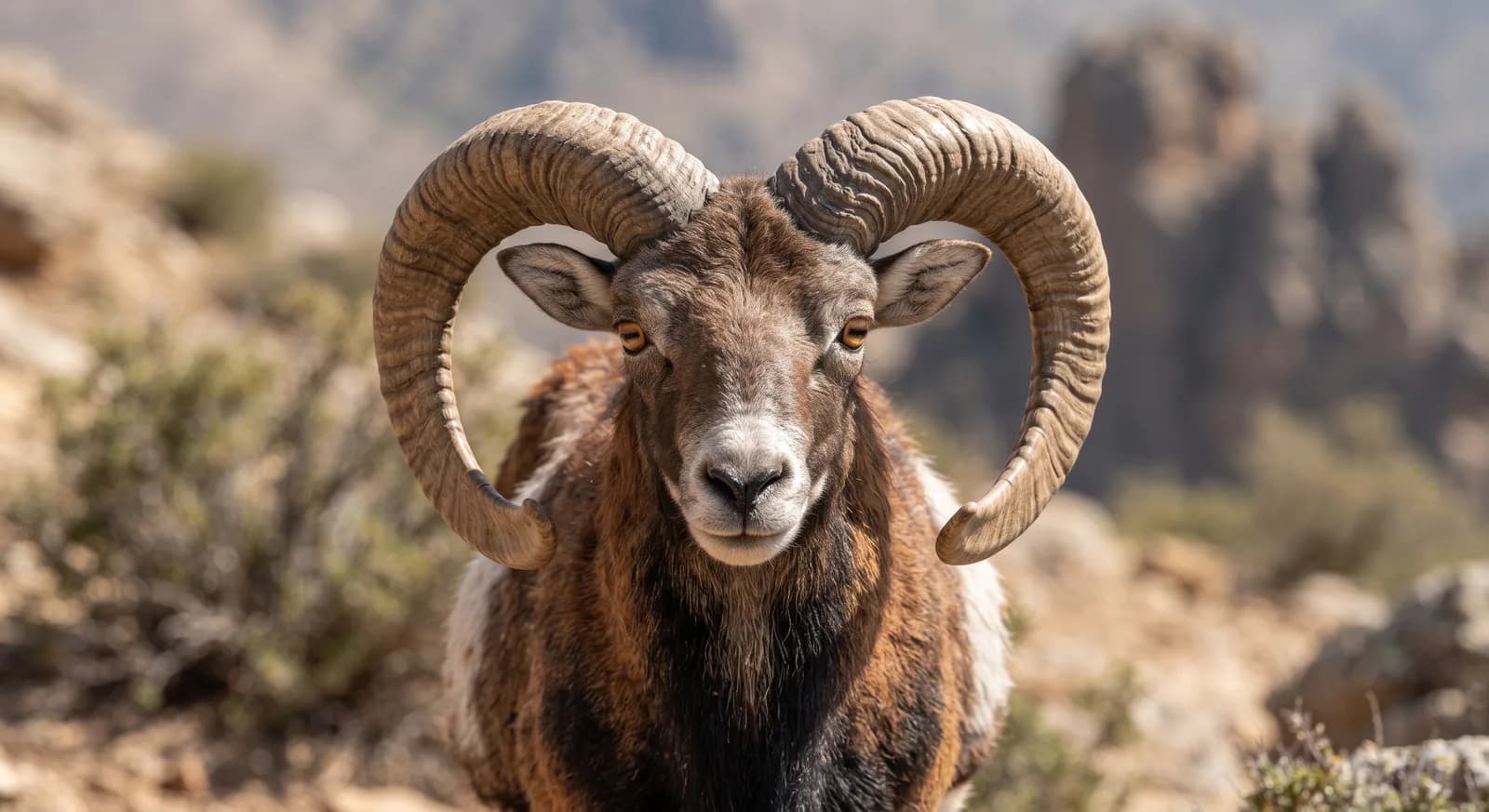
Mouflon
Ovis orientalis
Alpine Ibex
Capra ibex
Iberian Wild Goat
Capra pyrenaica
 Near Threatened
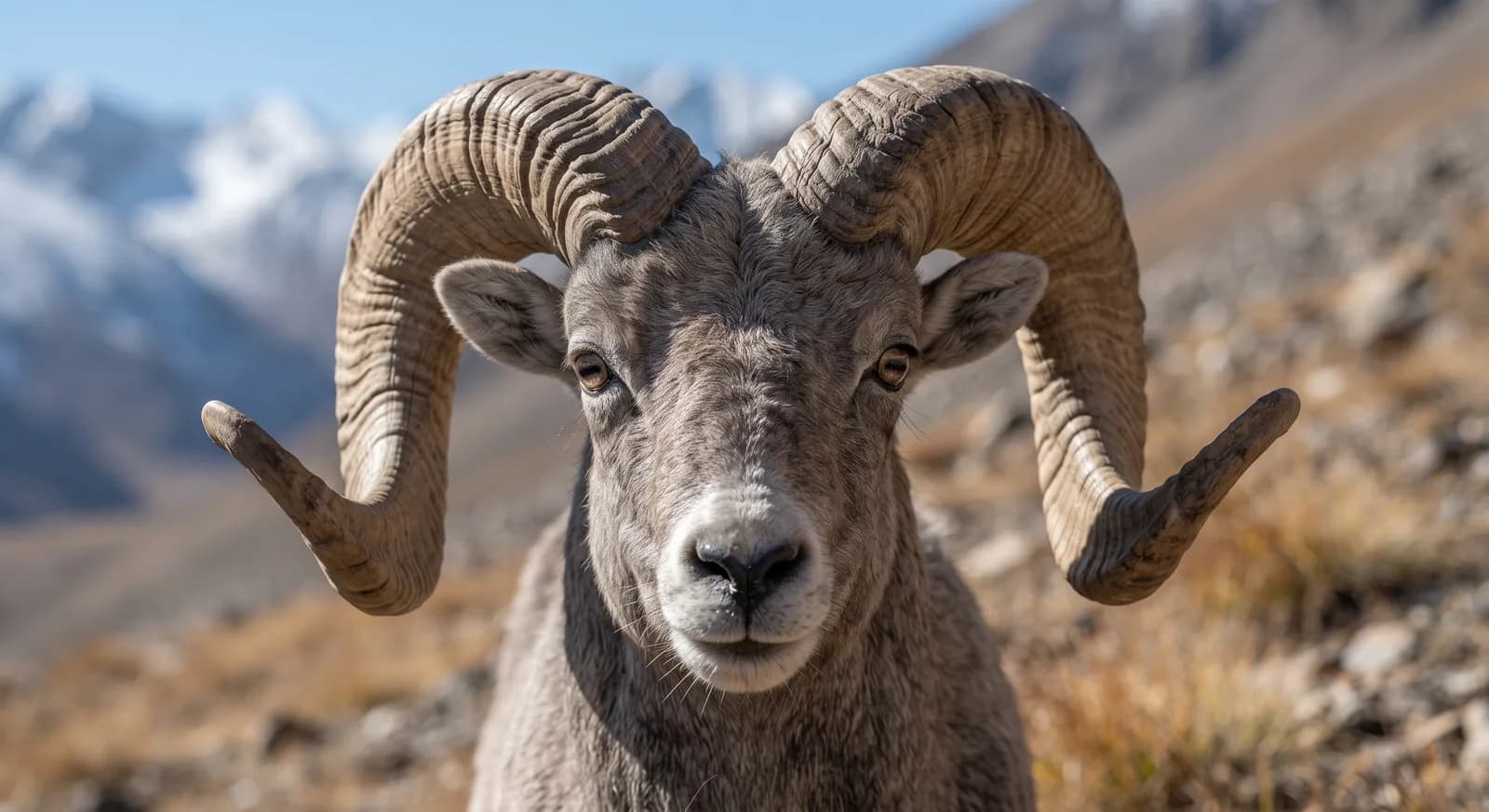
Argali
Ovis ammon
Markhor
Capra falconeri
Siberian Ibex
Capra sibirica
Keep exploring
Based on what we already know about european mouflon.
Comments
Share an experience, a fun fact or a tip for seeing the european mouflon.
Be the first to comment.