Birds · Passeriformes · Alaudidae
Greater Short-toed Lark
Calandrella brachydactyla
The species is abundant and widely distributed; it faces no significant short-term risk. See full glossary
A small, pale, round-headed lark that spends almost all its time on the ground, running between sparse vegetation. Its best identification mark is a small dark patch on each side of the neck, above a largely unmarked belly.
Weight
20 g – 25 g
Size
13 cm – 15 cm
Lifespan
5 years
Diet
Herbivore
Feeds mainly on plants.
Activity
Diurnal
Active mainly during the day.
Social structure
Solitary
Lives and hunts alone, joining others only to breed.
Sighting difficulty
Easy
Estimated population
Between 9.30 and 17.4 million individuals in Europe according to the 2021 European Red List of Birds
Fun facts
- GeneralOn migration it forms dense flocks that move as one.
- On migration it forms dense flocks that wheel and move as one, which is unusual among larks.
- It nests in a simple scrape in the ground lined with leaves, twigs and feathers, with no raised structure at all.
- It shares ground with the lesser short-toed lark, its sister species, from which it separates by choosing different microhabitats within the same landscape.
Life cycle & biology
- Skeleton type
- Vertebrate - internal bony skeleton (bird)
- Habitat & environment
- Cereal steppe, saltflats and fallow land
- Gestation / incubation
- 13 days, by the female alone. The chicks fledge at 12-13 days
- Litter / clutch size
- 3-6 greyish eggs with brown speckles, with up to two clutches a year from May on
Sources consulted: SEO/BirdLife (ficha y III Atlas, Herranz 2022); Lista Roja Europea de Aves 2021; Suárez, Garza y Morales 2002; Serrano y Astrain 2005; Carrascal y Palomino 2008
Where to find it
See its range on the interactive mapBest time: From late March to September in Spain, when it is a summer visitor
Where to watch it
Parques y spots de buceo donde se ha documentado esta especie — se muestran 10 de 35 documentados.
Related species
Other species in the catalogue with the most in common with Greater Short-toed Lark — same habitat, park, country, tags or family.
Calandra Lark
Melanocorypha calandra
Eurasian Skylark
Alauda arvensis
Woodlark
Lullula arborea
Crested Lark
Galerida cristata
 Least Concern
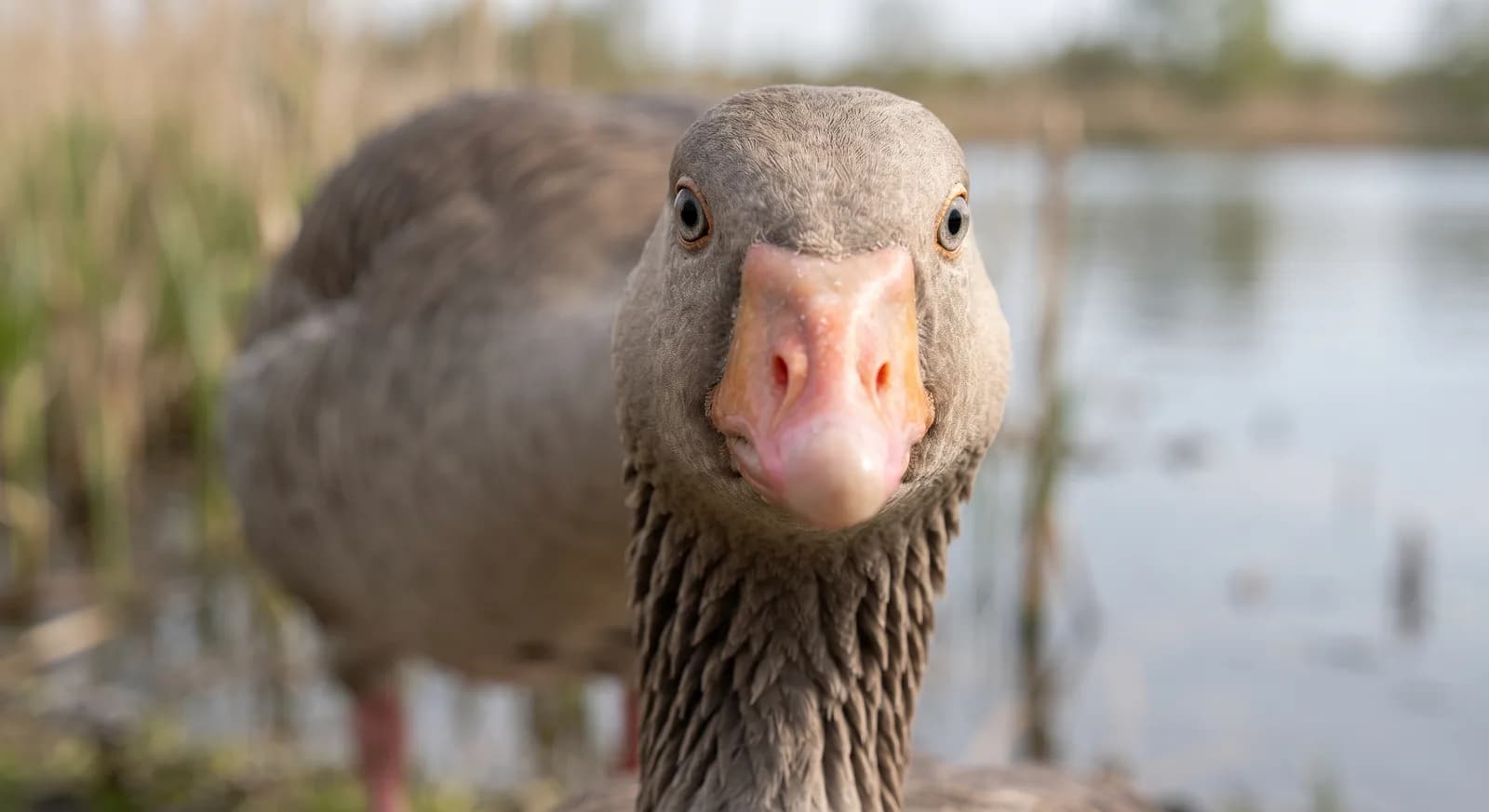
Greylag Goose
Anser anser
Eurasian Collared Dove
Streptopelia decaocto
Keep exploring
Based on what we already know about greater short-toed lark.
Comments
Share an experience, a fun fact or a tip for seeing the greater short-toed lark.
Be the first to comment.