One of the 3 grey geese on WAnimals
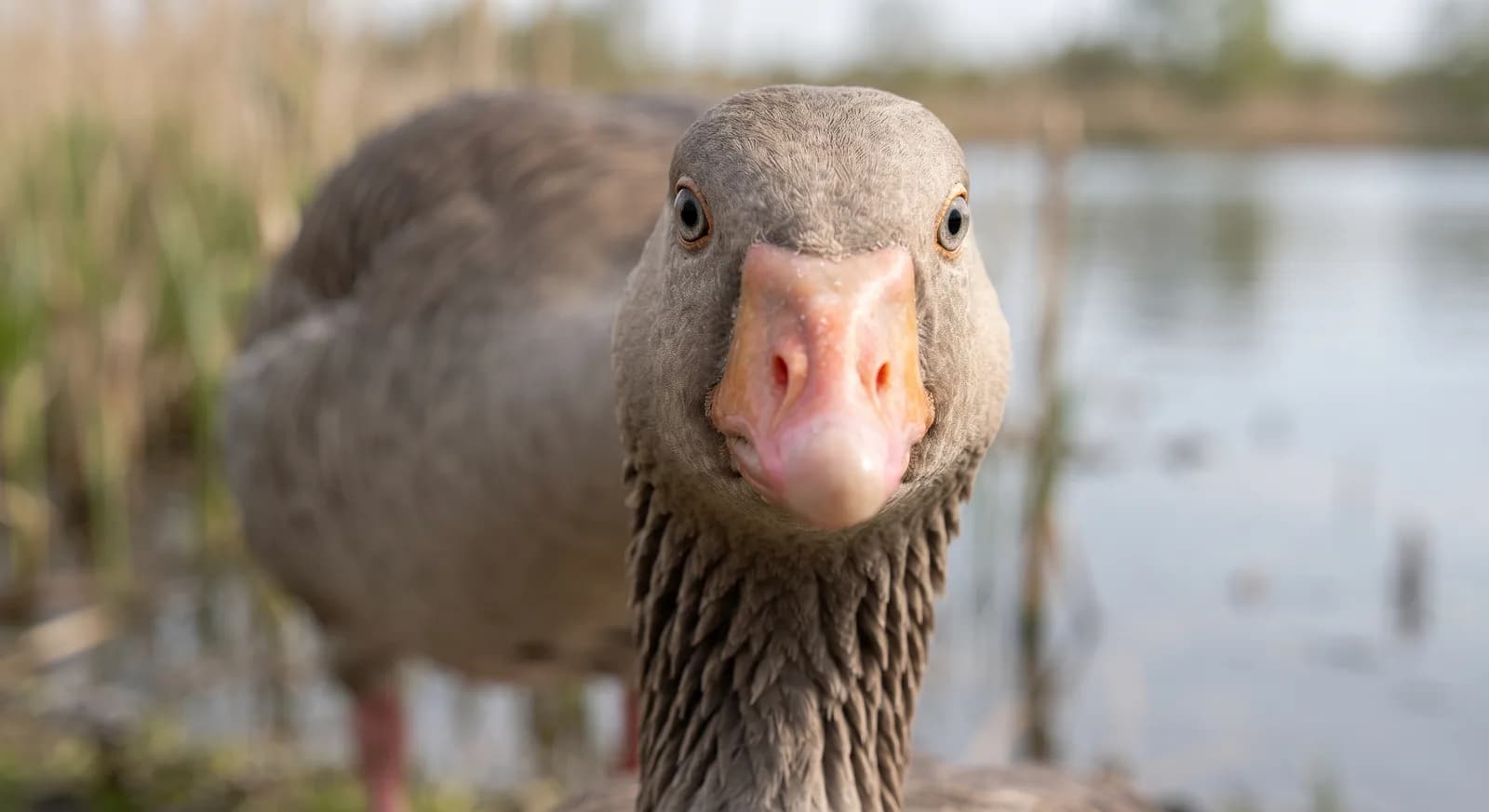
Birds · Anseriformes · Anatidae
Greylag Goose
Anser anser
The species is abundant and widely distributed; it faces no significant short-term risk. See full glossary
It is the wild ancestor of practically every breed of domestic goose, a process documented since at least 1360 BC. It practises 'egg adoption', gathering eggs from other species nesting nearby.
Weight
2.2 kg – 4.6 kg
Size
74 cm – 91 cm
Lifespan
20 years
Diet
Herbivore
Feeds mainly on plants.
Activity
Diurnal
Active mainly during the day.
Social structure
Herd
Lives in large groups as a strategy against predators.
Sighting difficulty
Easy
Estimated population
In the 2007 national survey the Spanish breeding population was put at a minimum of 10 pairs, though it has since spread through the centre and north of the peninsula
Fun facts
- inteligenciaIt can recognise and remember dozens of particular birds in its flock for years.
- It is considered the first bird domesticated by humans: there are records of its use as far back as Egyptian civilisation. All European domestic breeds belong to the subspecies Anser anser domesticus.
- At Doñana they swallow sand on the Cerro de los Ánsares, the largest dune in the park, because it helps them grind their food in the gizzard.
- They pair for life, though they replace a mate that dies, and the young stay with their parents until the following breeding season, migration included.
Life cycle & biology
- Skeleton type
- Vertebrate - pneumatised bony skeleton (bird)
- Habitat & environment
- Wetlands, grassland and farmland of Europe and Asia, moving south in winter
- Birth weight
- Exact weight at hatching not found as a precise figure
- Size at birth
- Precocial, covered in yellow down, able to walk and swim hours after hatching
- Sexual maturity
- 2-3 years
- Gestation / incubation
- 27-28 days
- Litter / clutch size
- 3 to 12 eggs per clutch (most commonly 4-6)
- Lifespan in captivity
- Documented record of up to 31 years in captivity
Sources consulted: AnAge; Animal Diversity Web; EBSCO Research Starters; Animal Spot; Animalia.bio; AnimalHub; Animal Kingdom; PMC
Where to find it
See its range on the interactive mapBest time: From August to March in Doñana and the large lagoons; it is essentially a winter visitor
Where to watch it
Parques y spots de buceo donde se ha documentado esta especie — se muestran 10 de 50 documentados.
Related species
Other species in the catalogue with the most in common with Greylag Goose — same habitat, park, country, tags or family.
Eurasian Wigeon
Mareca penelope
Gadwall
Mareca strepera
Whooper Swan
Cygnus cygnus
Tufted Duck
Aythya fuligula
Canada Goose
Branta canadensis
Red-crested Pochard
Netta rufina
Keep exploring
Based on what we already know about greylag goose.
Comments
Share an experience, a fun fact or a tip for seeing the greylag goose.
Be the first to comment.