One of the 3 cicadas on WAnimals
Insects · Hemiptera · Cicadellidae
Green Leafhopper
Cicadella viridis
It has not yet been assessed against the IUCN criteria. See full glossary
A small leafhopper, bright blue-green in the females and darker in the males, very abundant in damp grassland. It sucks phloem sap from rushes and grasses and jumps with enormous power at the slightest movement.
Size
6 cm – 9 cm
Diet
Herbivore
Feeds mainly on plants.
Social structure
Colony
Lives in large concentrations, often for breeding reasons.
Sighting difficulty
Unknown
Fun facts
- Using its saw-like ovipositor the female cuts a slit in stems and in the bark of young shoots to insert the eggs, which can damage willow and fruit tree saplings.
- Its body is coated in brochosomes, microscopic protein particles that it secretes and spreads with its legs, forming a water-repellent layer that sheds both water and its own honeydew.
- It jumps by driving off with its hind legs at accelerations of several hundred times gravity.
- It manufactures brochosomes: hollow protein particles shaped like microscopic footballs, which it secretes through specialised Malpighian tubules and with which it coats its body.
- That coating is superhydrophobic, and it keeps the insect from getting trapped in its own sticky honeydew or in water droplets — a serious problem for an insect that excretes sugars all day long.
- The structure of brochosomes is studied in materials science for its anti-reflective and water-repellent properties.
- The female also uses them to cover her clutch, protecting it from desiccation and from parasitoids.
- It leaps with extraordinary force for its size, propelling itself with its hind legs.
- Its bright bluish green with a yellow head makes it unmistakable in damp rush beds.
Life cycle & biology
- Skeleton type
- Invertebrate - chitin exoskeleton (insect)
- Habitat & environment
- Damp meadows, rush beds and the banks of rivers and irrigation channels
Sources consulted: Rakitov y Gorb (2013), Proceedings of the Royal Society B; Yang et al. (2017), Nature Communications; Buglife
Where to find it
See its range on the interactive mapBest time: Summer and autumn, in damp grassland
Related species
Other species in the catalogue with the most in common with Green Leafhopper — same habitat, park, country, tags or family.
Common Cockchafer
Melolontha melolontha
 Not Evaluated
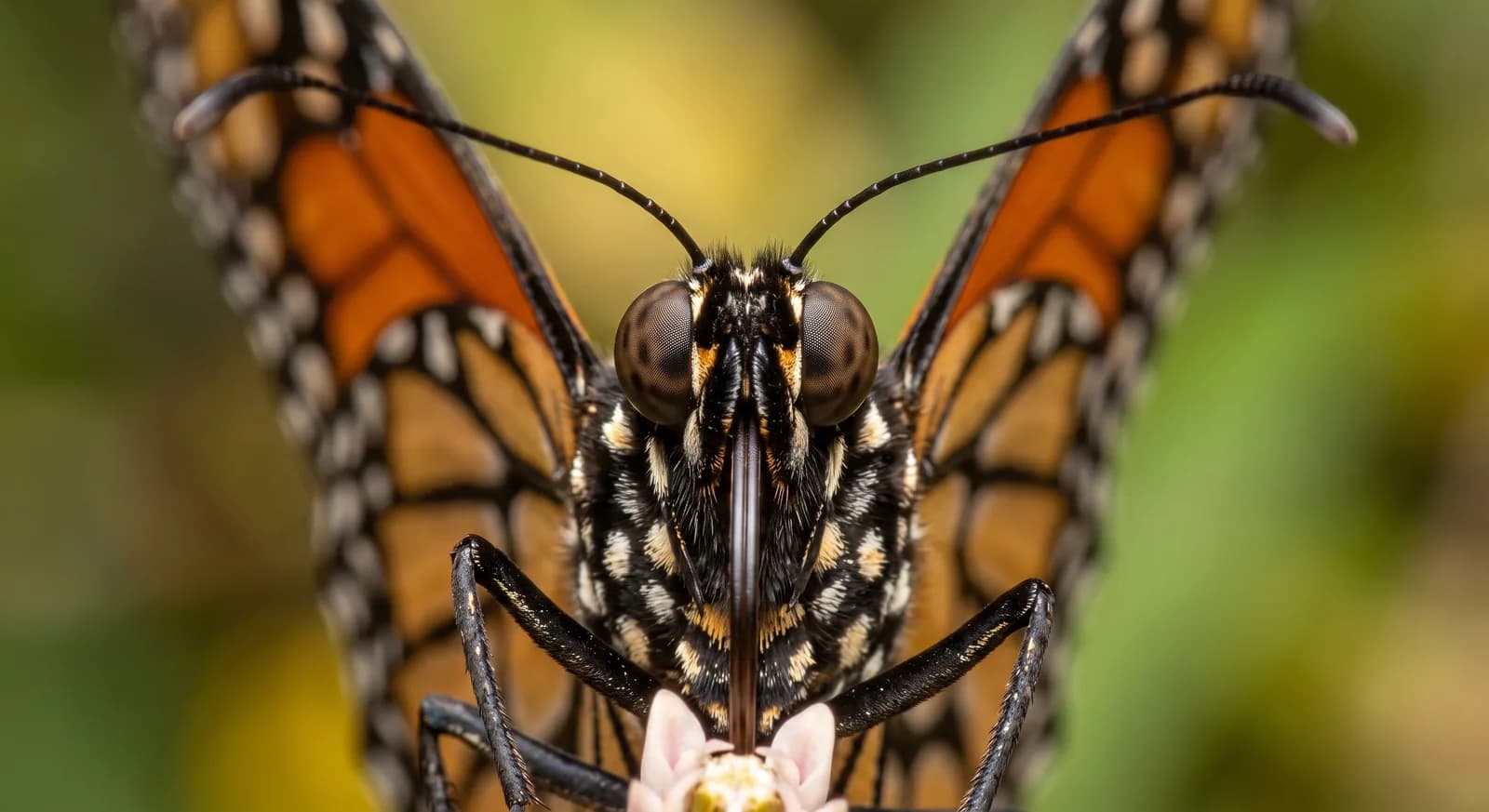
Monarch
Danaus plexippus
Pomace Fly
Drosophila melanogaster
Migratory Locust
Locusta migratoria
Black Bean Aphid
Aphis fabae
Japanese Beetle
Popillia japonica
Keep exploring
Based on what we already know about green leafhopper.
Comments
Share an experience, a fun fact or a tip for seeing the green leafhopper.
Be the first to comment.